Toggle light / dark theme

Finnish researchers claim quantum computing breakthrough

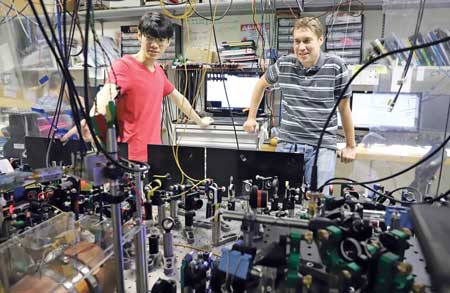
Scientists have created a device which could make it easier to harness super-fast quantum computers for real-world applications, a team at Finland’s Aalto University said on Wednesday.

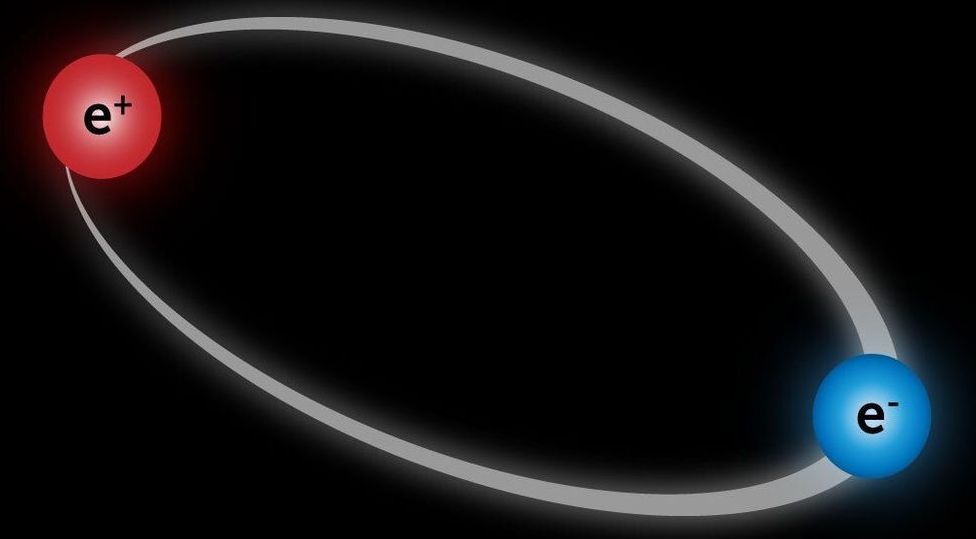
Quantum computers are a new generation of machines powered by energy transfers between so-called “”— a fraction of a millimetre across.

Scientists believe the devices will eventually be able to vastly outperform even the world’s most powerful conventional supercomputers.
A million pulses per second: How particle accelerators are powering X-ray lasers

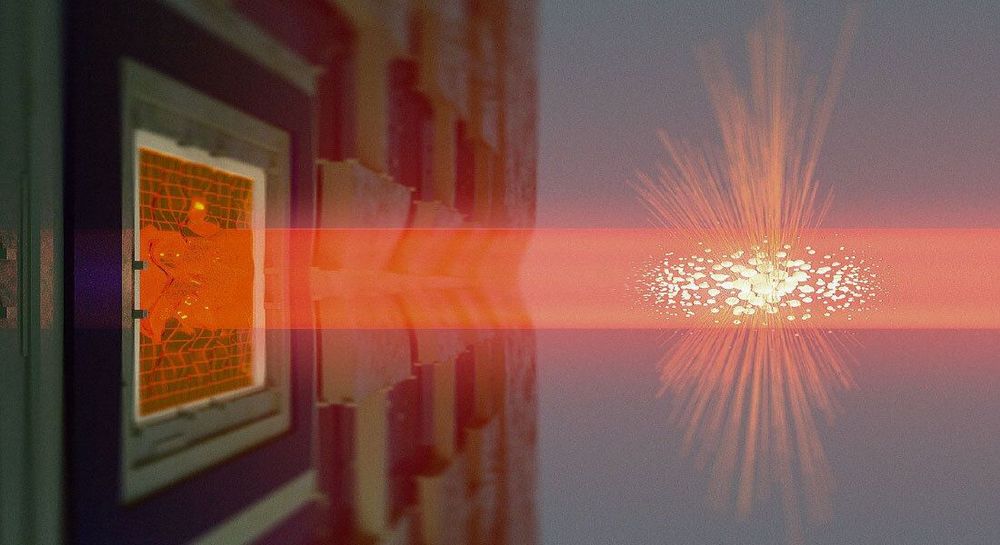
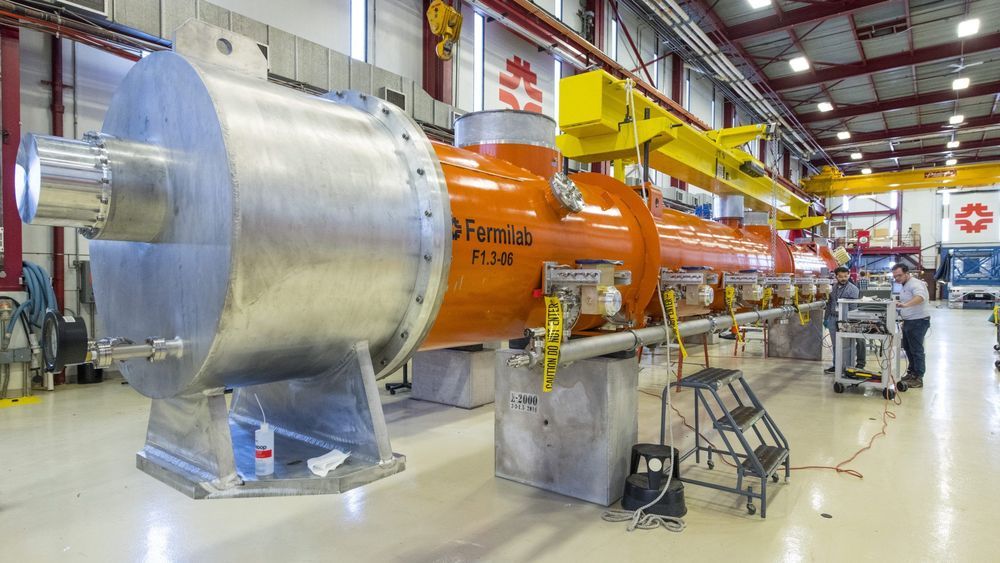
Three United States DOE national laboratories – SLAC, Fermilab and Jefferson Lab – have partnered to build an advanced particle accelerator that will power the LCLS-II X-ray laser. Thanks to technology developed for nuclear and high-energy physics, the new X-ray laser will produce a nearly continuous wave of electrons and allow scientists to peer more deeply than ever before into the building blocks of life and matter.

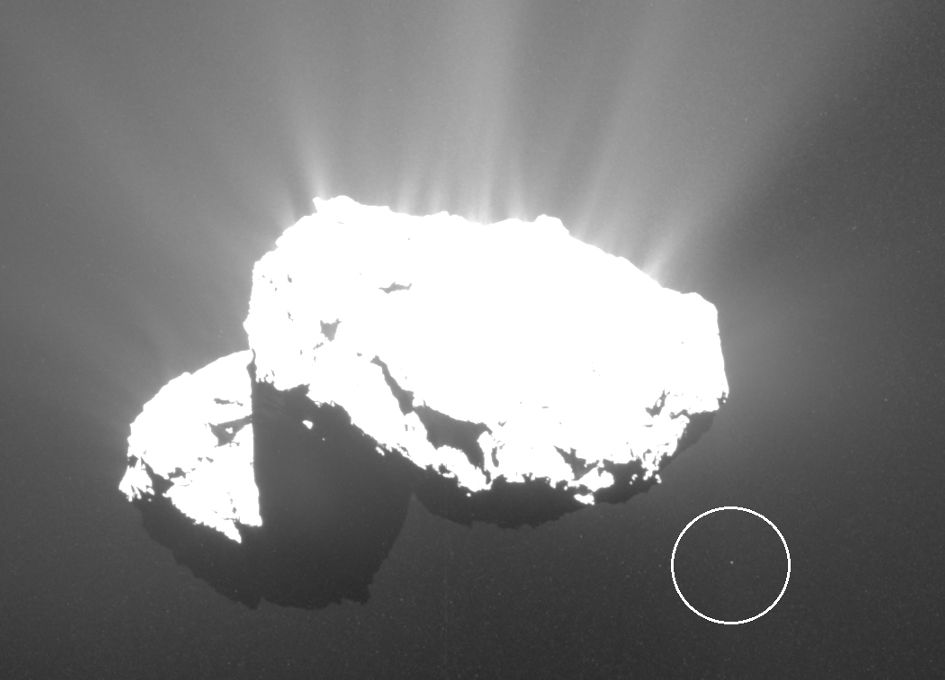
Comet 67P/Churyumov-Gerasimenko Has A Tiny Moon

Comet 67P/C-G is a dusty object. As it neared its closest approach to the Sun in late July and August 2015, instruments on Rosetta recorded a huge amount of dust enshrouding the comet.

This is tied to the comet’s proximity to our parent star, its heat causing the comet’s nucleus to release gases into space, lifting the dust along. Spectacular jets were also observed, blasting more dust away from the comet. This disturbed, ejected material forms the ‘coma’, the gaseous envelope encasing the comet’s nucleus, and can create a beautiful and distinctive tail.

A single image from Rosetta’s OSIRIS instrument can contain hundreds of dust particles and grains surrounding the 4 km-wide comet nucleus. Sometimes, even larger chunks of material left the surface of 67P/C-G — as shown here.

Quantum entanglement realized between distant large objects

A team of researchers at the Niels Bohr Institute, University of Copenhagen, have succeeded in entangling two very different quantum objects. The result has several potential applications in ultra-precise sensing and quantum communication and is now published in Nature Physics.

Entanglement is the basis for and quantum sensing. It can be understood as a quantum link between two objects which makes them behave as a single quantum object.

Researchers succeeded in making entanglement between a mechanical oscillator—a vibrating dielectric membrane—and a cloud of atoms, each acting as a tiny magnet, or what physicists call “spin.” These very different entities were possible to entangle by connecting them with photons, particles of light. Atoms can be useful in processing quantum information and the membrane—or mechanical quantum systems in general—can be useful for storage of quantum information.

Scientists precisely measure total amount of matter in the universe

A top goal in cosmology is to precisely measure the total amount of matter in the universe, a daunting exercise for even the most mathematically proficient. A team led by scientists at the University of California, Riverside, has now done just that.

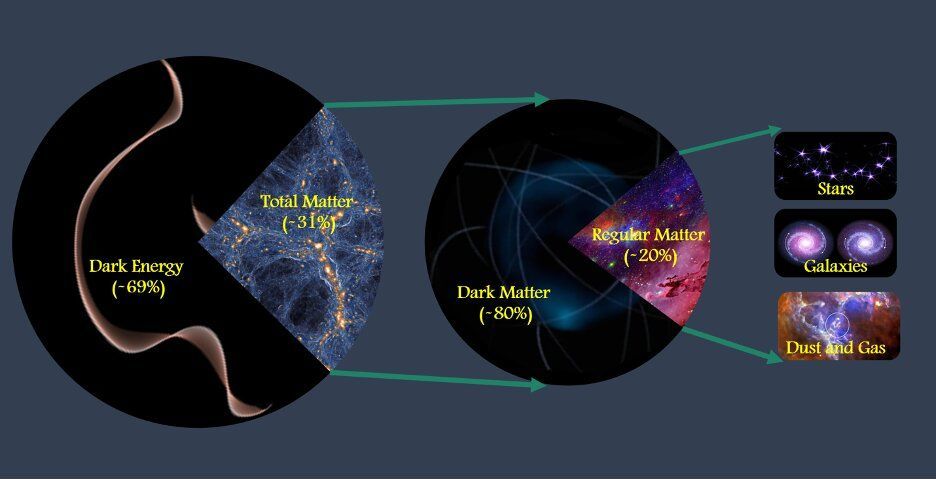
Reporting in the Astrophysical Journal, the team determined that matter makes up 31% of the total amount of matter and energy in the , with the remainder consisting of dark energy.

“To put that amount of matter in context, if all the matter in the universe were spread out evenly across space, it would correspond to an average mass density equal to only about six per cubic meter,” said first author Mohamed Abdullah, a graduate student in the UCR Department of Physics and Astronomy. “However, since we know 80% of matter is actually , in reality, most of this matter consists not of hydrogen atoms but rather of a type of matter which cosmologists don’t yet understand.”

Astrophysicists Prove That Water Ice Is Trapped in Star Dust

Astrophysicists at the University of Jena (Germany) prove that dust particles in space are mixed with ice.

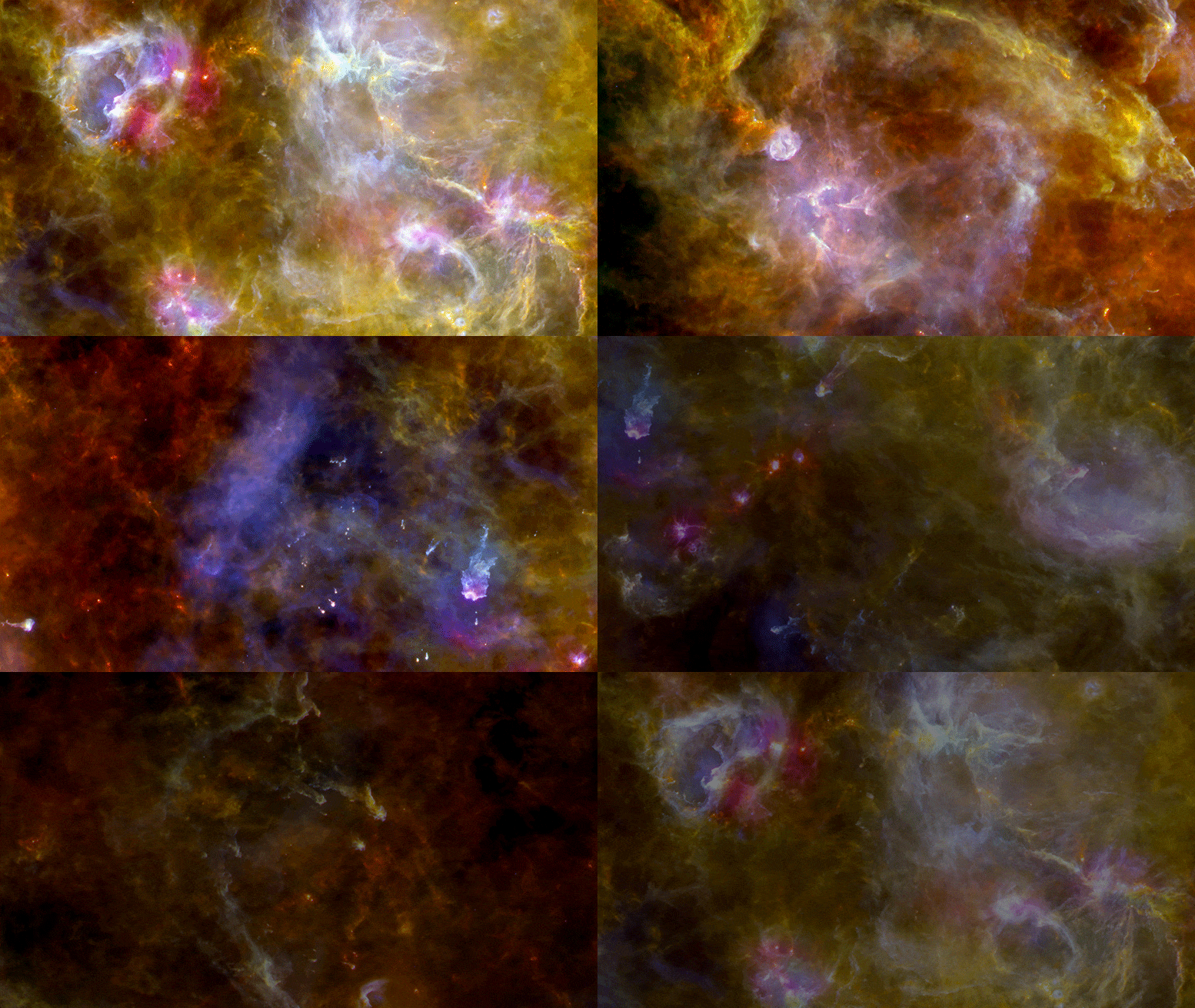
The matter between the stars in a galaxy – called the interstellar medium – consists not only of gas, but also of a great deal of dust. At some point in time, stars and planets originated in such an environment, because the dust particles can clump together and merge into celestial bodies. Important chemical processes also take place on these particles, from which complex organic – possibly even prebiotic – molecules emerge. However, for these processes to be possible, there has to be water. In particularly cold cosmic environments, water occurs in the form of ice. Until now, however, the connection between ice and dust in these regions of space was unclear. A research team from Friedrich Schiller University Jena and the Max Planck Institute for Astronomy has now proven that the dust particles and the ice are mixed. They report their findings in the current issue of the research journal Nature Astronomy.

Better modelling of physico-chemical processes in space.

Meet the quantum fridge — at three atoms in size, it’s much smaller than a minibar

Researchers in Singapore have built a refrigerator that’s just three atoms big.

This quantum fridge won’t keep your drinks cold, but it’s cool proof of physics operating at the smallest scales. The work is described in a paper published in Nature Communications (“Quantum absorption refrigerator with trapped ions”).

Researchers have built tiny ‘heat engines’ before, but quantum fridges existed only as proposals until the team at the Centre for Quantum Technologies at the National University of Singapore chilled with their atoms.

Scientists achieve higher precision weak force measurement between protons, neutrons

O,.o.


Through a one-of-a-kind experiment at the Department of Energy’s Oak Ridge National Laboratory, nuclear physicists have precisely measured the weak interaction between protons and neutrons. The result quantifies the weak force theory as predicted by the Standard Model of Particle Physics.

The team’s weak observation, detailed in Physical Review Letters, was measured through a precision experiment called n3He, or n-helium-3, that ran at ORNL’s Spallation Neutron Source, or SNS. Their finding yielded the smallest uncertainty of any comparable weak force measurement in the nucleus of an atom to date, which establishes an important benchmark.

The Standard Model describes the basic building blocks of matter in the universe and fundamental forces acting between them. Calculating and measuring the weak force between protons and neutrons is an extremely difficult task.

/* */