Toggle light / dark theme

Scientists create world’s first chip that combines 2D materials with conventional silicon circuitry

For the first time, scientists have created a fully functional memory chip only a few atoms thick and integrated it into conventional chips. This advance could pave the way for more powerful and energy-efficient electronic devices.

Decades of innovation have shrunk the circuits on a computer chip so that, nowadays, engineers can pack billions of tiny components onto a single thumbnail-sized silicon wafer. But are now reaching the physical limits of how small they can go while still performing reliably. The solution is two-dimensional (2D) materials, which are materials that are just a single layer of atoms thick that can be scaled down even further and have superior electronic properties.

However, the problem with 2D materials like graphene up until now has been that only simple chips could be constructed with them, and it wasn’t easy to connect them to traditional processors. Now, in research published in the journal Nature, Chunsen Liu at Fudan University in Shanghai and his colleagues have overcome these hurdles. They successfully combined atomically thin 2D memory cells directly onto a conventional silicon chip, creating the world’s first two-dimensional silicon-based hybrid architecture chip.
Tiny engine runs hotter than the sun to probe the frontiers of thermodynamics

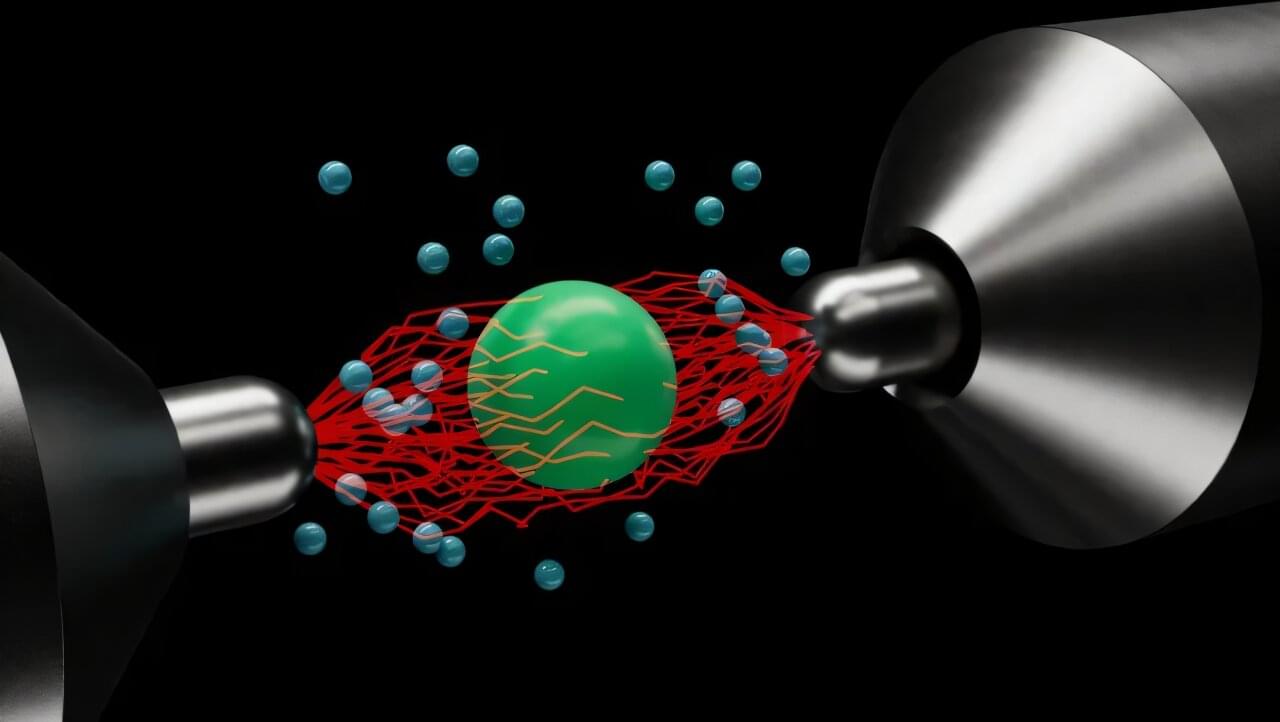
Scientists have created the world’s hottest engine running at temperatures hotter than those reached in the sun’s core. The team from King’s College London and collaborators believe their platform could provide an unparalleled understanding of the laws of thermodynamics on a small scale, and provide the foundation for a new, efficient way to compute how proteins fold—the subject of last year’s Nobel Prize in Chemistry.

Outlined in Physical Review Letters, the engine is a very small, microscopic particle suspended at a low pressure using . This electric trap is called a Paul Trap. The researchers can exponentially increase the heat of the trapped particle by applying a noisy voltage to one of the electrodes levitating it.

While traditionally engines have been associated with motors, in science their definition is much simpler—engines convert one form of energy to . Here, that is heat to movement.

Nanoscale X-ray imaging reveals bulk altermagnetism in MnTe

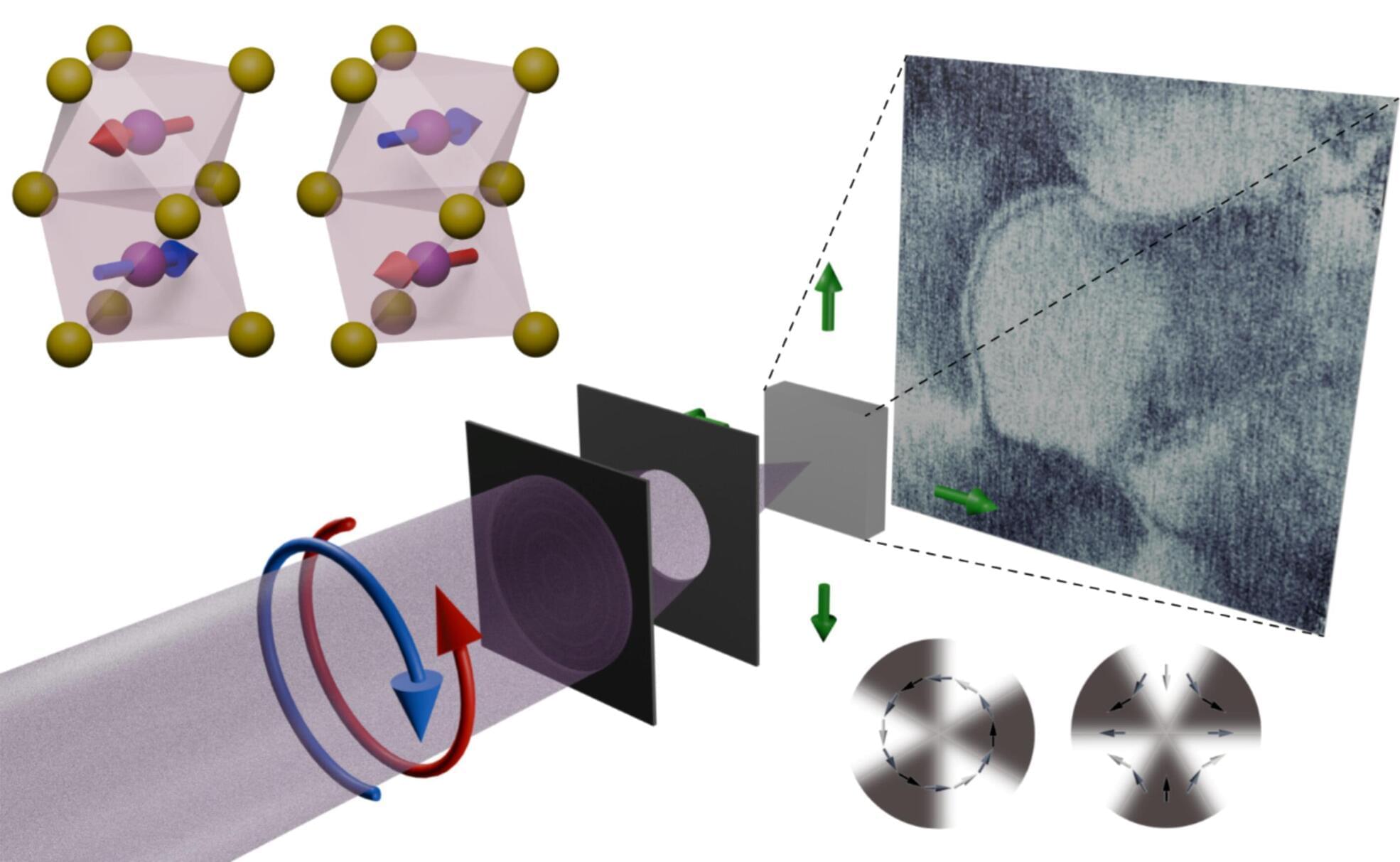
Magnetic materials have been known since ancient times and play an important role in modern society, where the net magnetic order offers routes to energy harvesting and data processing. It is the net magnetic moment of ferromagnets that has so far been key to their applications, with an alternative type of magnetic material, the antiferromagnet, deemed “useless” by their discoverer Louis Néel in his Nobel Prize lecture.

In recent years, there has been increasing interest in antiferromagnets, which offer a number of exciting advantages for technologies including robust order and ultrafast dynamics—however with the challenge that they are hard to detect and manipulate electrically.

The recent discovery of a new type of magnetic order—the altermagnet—has overturned this view: by combining antiferromagnetic ordering with ferromagnet-like properties such as spintronic effects, they promise a multitude of advantages for future applications.

Nobel Prize: Quantum Tunneling on a Large Scale

The 2025 Nobel Prize in Physics recognizes the discovery of macroscopic quantum tunneling in electrical circuits.

This story will be updated with a longer explanation of the Nobel-winning work on Thursday, 9 October.

Running up against a barrier, a classical object bounces back, but a quantum particle can come out the other side. So-called quantum tunneling explains a host of phenomena, from electron jumps in semiconductors to radioactive decays in nuclei. But tunneling is not limited to subatomic particles, as underscored by this year’s Nobel Prize in Physics. The prize recipients—John Clarke from the University of California, Berkeley; Michel Devoret from Yale University; and John Martinis from the University of California, Santa Barbara—demonstrated that large objects consisting of billions of particles can also tunnel across barriers [13]. Using a superconducting circuit, the physicists showed that the superconducting electrons, acting as a collective unit, tunneled across an energy barrier between two voltage states. The work thrust open the field of superconducting circuits, which have become one of the promising platforms for future quantum computing devices.

Plasma rampdown prediction model could improve reliability of fusion power plants

Tokamaks are machines that are meant to hold and harness the power of the sun. These fusion machines use powerful magnets to contain a plasma hotter than the sun’s core and push the plasma’s atoms to fuse and release energy. If tokamaks can operate safely and efficiently, the machines could one day provide clean and limitless fusion energy.

Today, there are a number of experimental tokamaks in operation around the world, with more underway. Most are small-scale research machines built to investigate how the devices can spin up and harness its energy.

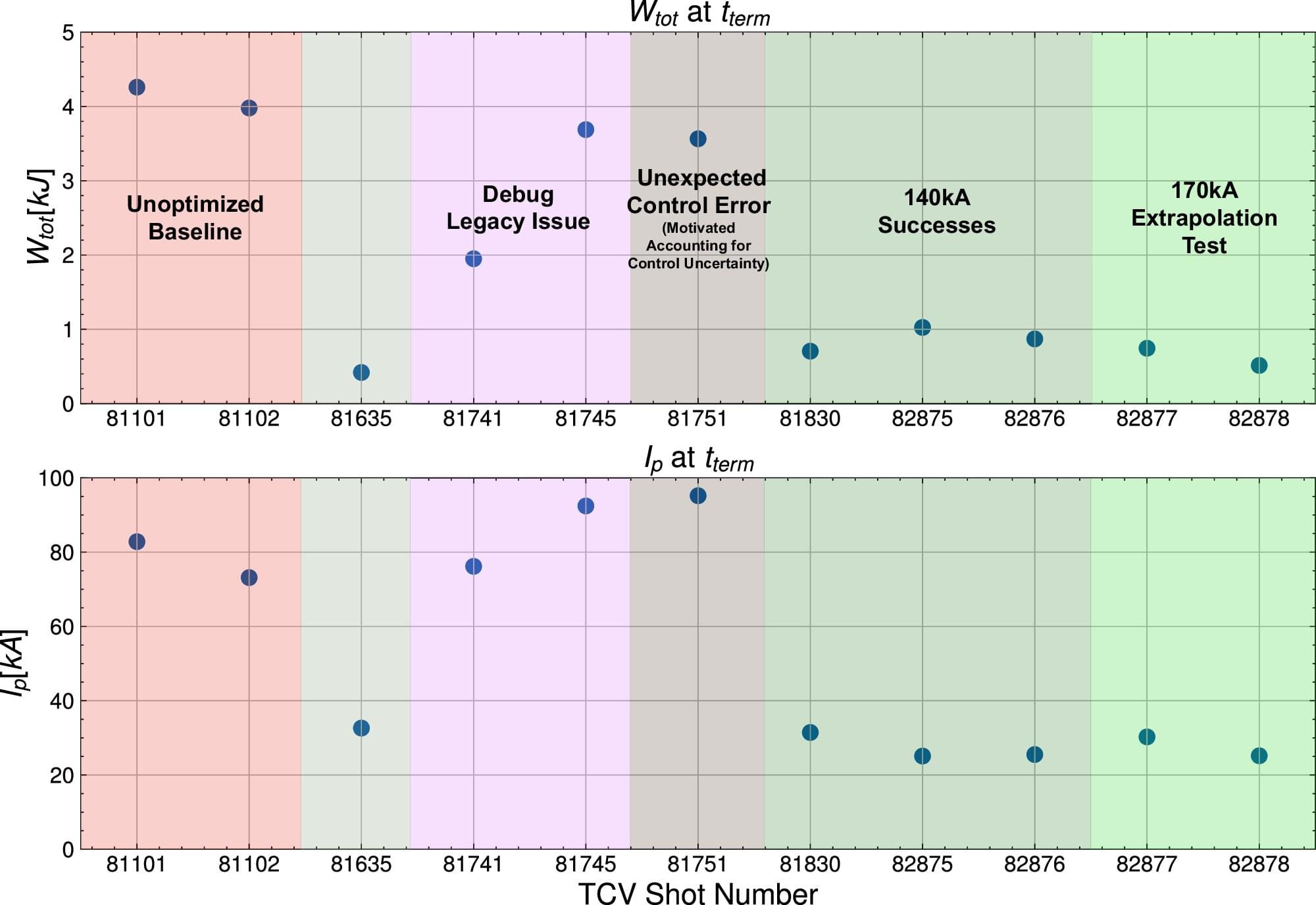
One of the challenges that tokamaks face is how to safely and reliably turn off a plasma current that is circulating at speeds of up to 100 kilometers per second, at temperatures of over 100 million degrees Celsius.

High-precision measurements reveal the energies of nuclear decays

Neutrinos are very common fundamental particles included in the Standard Model of particle physics. Measuring their properties allows for creating more accurate models of the birth of the universe, the life of stars and the interactions between fundamental particles. Some of the open questions include the absolute mass of the neutrino and whether neutrinos are their own antiparticles.

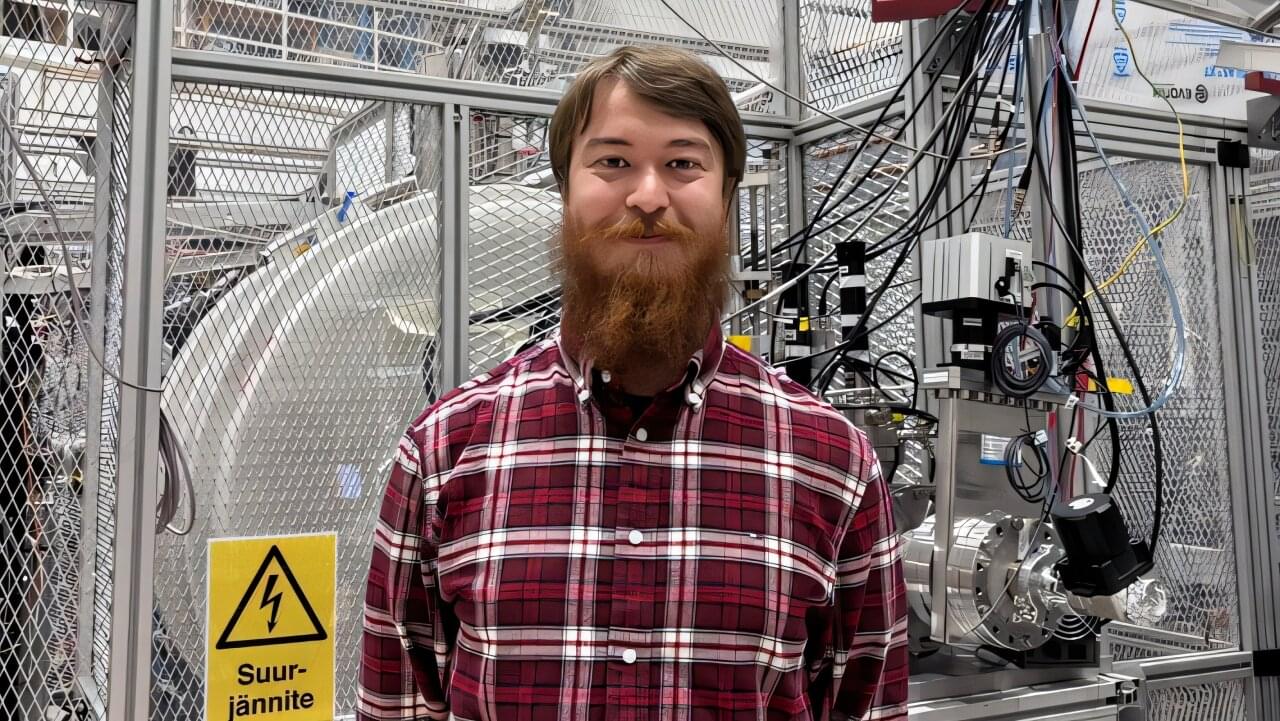
“The mass and the antiparticle nature of neutrinos can be studied by measuring the radioactive beta and double-beta decays of . There are likely some tens of suitable nuclei for such studies. The energy released in the decay, called the Q value, affects whether a nucleus can be used in the studies,” says Doctoral Researcher Jouni Ruotsalainen from the University of Jyväskylä, Finland.

Origami Patterns Solve a Major Physics Riddle

The amplituhedron is a geometric shape with an almost mystical quality: Compute its volume, and you get the answer to a central calculation in physics about how particles interact.

Now, a young mathematician at Cornell University named Pavel (Pasha) Galashin has found that the amplituhedron is also mysteriously connected to another completely unrelated subject: origami, the art of paper folding. In a proof posted in October 2024, he showed that patterns that arise in origami can be translated into a set of points that together form the amplituhedron. Somehow, the way paper folds and the way particles collide produce the same geometric shape.

“Pasha has done some brilliant work related to the amplituhedron before,” said Nima Arkani-Hamed, a physicist at the Institute for Advanced Study who introduced the amplituhedron in 2013 with his graduate student at the time, Jaroslav Trnka. “But this is next-level stuff for me.”

Physicists develop new quantum sensor at the atomic lattice scale

From computer chips to quantum dots—technological platforms were only made possible thanks to a detailed understanding of the used solid-state materials, such as silicon or more complex semiconductor materials. This understanding also includes being able to identify and control irregularities in the crystal lattice of such materials.

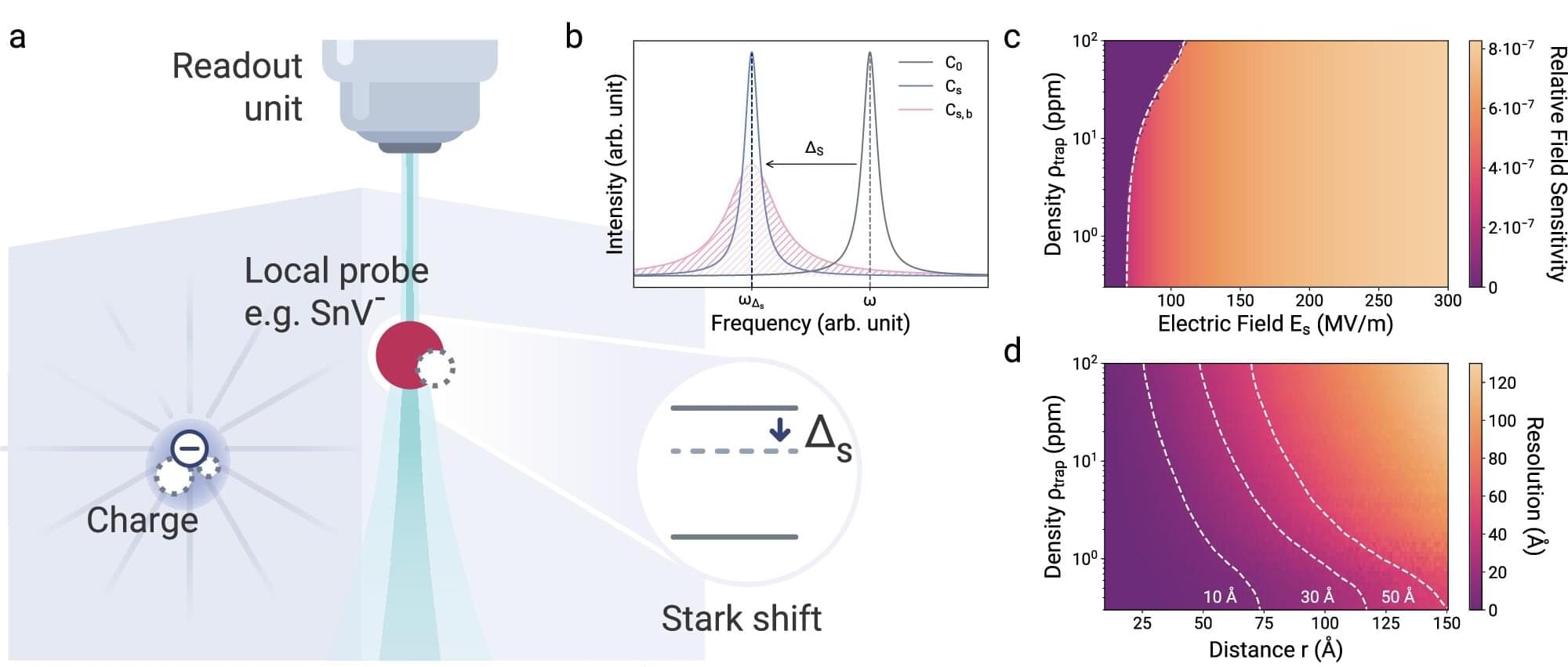
If, for example, an atom is missing in the lattice structure of the crystals, a and thus an can become trapped there. Such charge traps generate electromagnetic noise that limits the functionality of these materials. However, it is extremely difficult to locate these charge traps on an atomic scale.

Researchers from the “Integrated Quantum Photonics” group at the Department of Physics at Humboldt-Universität zu Berlin (HU) and the “Joint Lab Diamond Nanophotonics” at the Ferdinand-Braun-Institut, led by Prof. Dr. Tim Schröder, have developed a new sensor that can detect such individual electrical charges more precisely than ever before.

/* */