Toggle light / dark theme

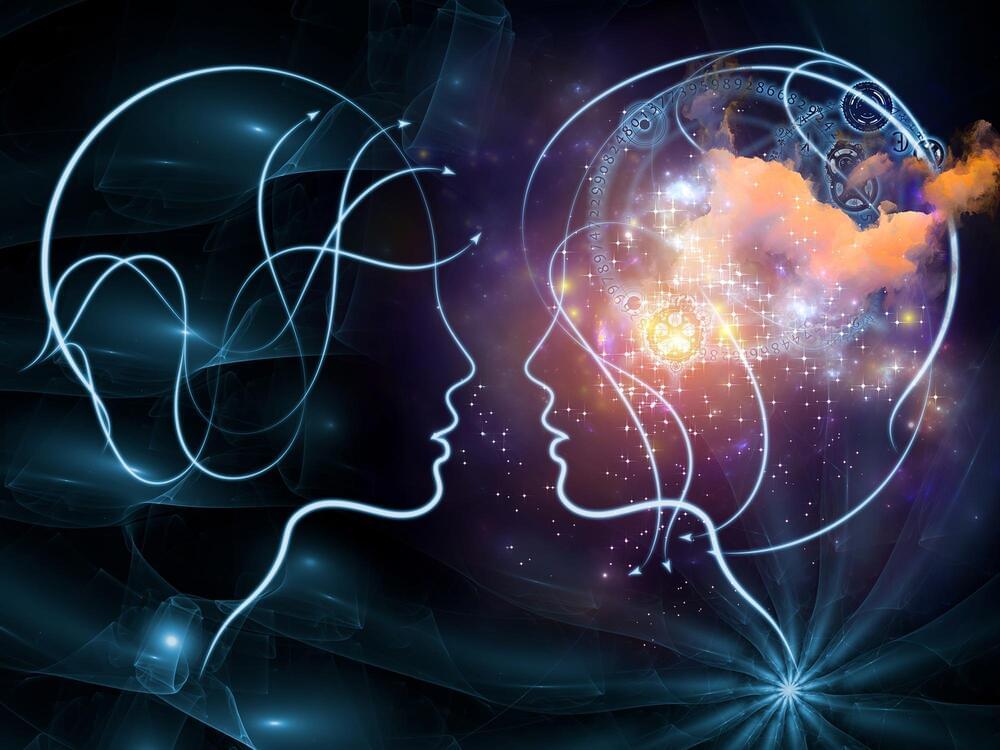
Frontiers: The purpose of the attention schema theory is to explain how an information-processing device

The brain, arrives at the claim that it possesses a non-physical, subjective awareness and assigns a high degree of certainty to that extraordinary claim. The theory does not address how the brain might actually possess a non-physical essence. It is not a theory that deals in the non-physical. It is about the computations that cause a machine to make a claim and to assign a high degree of certainty to the claim. The theory is offered as a possible starting point for building artificial consciousness. Given current technology, it should be possible to build a machine that contains a rich internal model of what consciousness is, attributes that property of consciousness to itself and to the people it interacts with, and uses that attribution to make predictions about human behavior. Such a machine would “believe” it is conscious and act like it is conscious, in the same sense that the human machine believes and acts.

This article is part of a special issue on consciousness in humanoid robots. The purpose of this article is to summarize the attention schema theory (AST) of consciousness for those in the engineering or artificial intelligence community who may not have encountered previous papers on the topic, which tended to be in psychology and neuroscience journals. The central claim of this article is that AST is mechanistic, demystifies consciousness and can potentially provide a foundation on which artificial consciousness could be engineered. The theory has been summarized in detail in other articles (e.g., Graziano and Kastner, 2011; Webb and Graziano, 2015) and has been described in depth in a book (Graziano, 2013). The goal here is to briefly introduce the theory to a potentially new audience and to emphasize its possible use for engineering artificial consciousness.

The AST was developed beginning in 2010, drawing on basic research in neuroscience, psychology, and especially on how the brain constructs models of the self (Graziano, 2010, 2013; Graziano and Kastner, 2011; Webb and Graziano, 2015). The main goal of this theory is to explain how the brain, a biological information processor, arrives at the claim that it possesses a non-physical, subjective awareness and assigns a high degree of certainty to that extraordinary claim. The theory does not address how the brain might actually possess a non-physical essence. It is not a theory that deals in the non-physical. It is about the computations that cause a machine to make a claim and to assign a high degree of certainty to the claim. The theory is in the realm of science and engineering.

The Donation of Human Biological Material for Brain Organoid Research: The Problems of Consciousness and Consent

Human brain organoids are three-dimensional masses of tissues derived from human stem cells that partially recapitulate the characteristics of the human brain. They have promising applications in many fields, from basic research to applied medicine. However, ethical concerns have been raised regarding the use of human brain organoids. These concerns primarily relate to the possibility that brain organoids may become conscious in the future. This possibility is associated with uncertainties about whether and in what sense brain organoids could have consciousness and what the moral significance of that would be. These uncertainties raise further concerns regarding consent from stem cell donors who may not be sufficiently informed to provide valid consent to the use of their donated cells in human brain organoid research.

Lab-grown human neuron assembloids effectively model synaptic plasticity

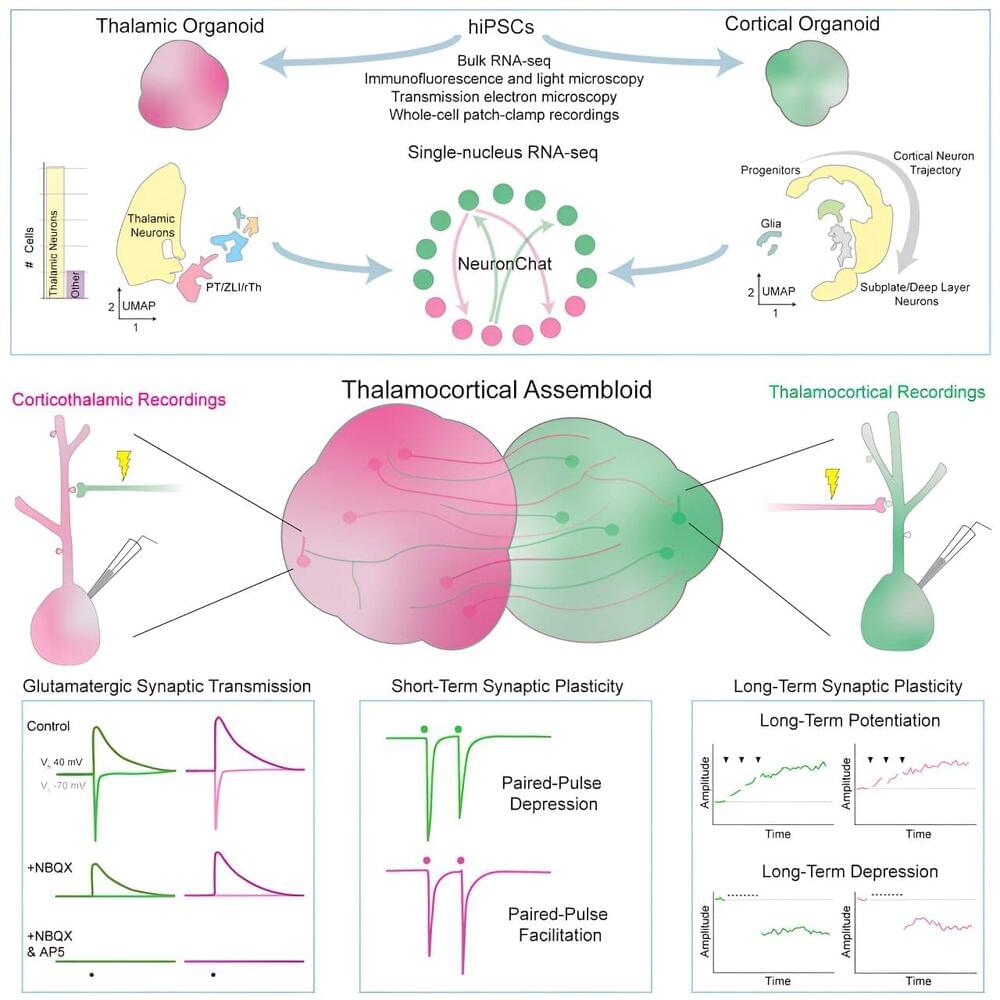
The ability to study human neurological systems depends on having viable, accurate models of brain function. St. Jude researchers have now created a model for such research by combining thalamic cells and cortical cells derived from human induced pluripotent stem cells.

The thalamocortical system mediates multiple sensory and , such as perception, learning and memory. The researchers developed a model of a primitive human thalamocortical system by maintaining thalamic and cortical cell masses known as organoids in close proximity in a culture dish.

In this model, the neurons in both organoids develop and grow long-ranging processes (axons) that extend to the opposite organoid and form functional connections (synapses). The researchers determined that when these synapses are stimulated, they undergo long-term strengthening and weakening of their electrical signals, which is the hallmark of , a process that underlies certain forms of learning and memory.

Study suggests prenatal diet may play a role in autism

A small team of public health specialists from the University of Glasgow and the Norwegian Institute of Public Health reports a possible link between some cases of autism and prenatal diet.

In their study, published in JAMA Network Open, the group analyzed information in two large databases of medical information on thousands of mothers and daughters in Norway and England.

Prior research has suggested that there appears to be diet, genetic and involved in the development of in children while they are still in the womb, though the exact cause is still unknown. For this new study, the research team looked more closely at the role of diet in its development.

Cambridge Study Reveals Mindfulness Can Trigger Profound Altered States of Consciousness

Mindfulness training may cause altered states of consciousness, including disembodiment and unity, according to a University of Cambridge study. While often positive, these experiences can sometimes be unsettling. Awareness and open communication about these potential side effects are essential for both teachers and students.

A new study from the University of Cambridge suggests that participants in mindfulness training may undergo altered states of consciousness, experiencing sensations of disembodiment and unity.

The team says that while these experiences can be very positive, that is not always the case. Mindfulness teachers and students need to be aware that they can be a side-effect of training, and students should feel empowered to share their experiences with their teacher or doctor if they have any concerns.

This Is Literally Your Brain on Drugs

From the article:

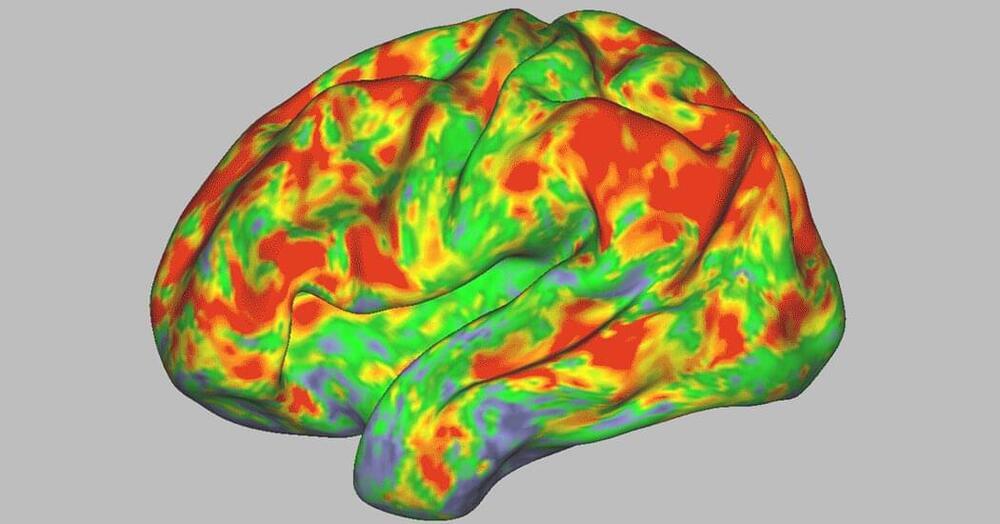
Ceyda Sayali, a cognitive neuroscientist at the Center for Psychedelic and Consciousness Research at Johns Hopkins University who was not involved with the study, said she was struck by the images that showed a marked change when participants on psilocybin were asked to answer…


A small new study shows reactions in the brain in people who were given psilocybin in a controlled setting.

Nano MIND: Scientists use magnetism to brain-control mice wirelessly

Unlocking the brain: how magnetic nanomaterials could transform neuroscience.

Mind-control magnet tech to regulate behavior, emotions, hunger.

Understanding the brain’s intricate networks and functions is a complex challenge.


Using magnetic fields and nanoparticles, researchers were able to increase and decrease feeding behavior and appetite in mice models.

Quantitative Justice: Using Data Science for Good

By Ariana Mendible

For the past several years, I have been closely involved with the Institute for the Quantitative Study of Inclusion, Diversity and Equity (QSIDE). This nonprofit organizes events and facilitates research in quantitative justice, the application of data and mathematical sciences to quantify, analyze and address social injustice. It uses the community-based participatory action research model to connect like-minded scholars, community partners, and activists together. Recently, QSIDE researchers met virtually in a Research Roundup to share our progress. Hearing all the incredible work that QSIDE has spawned and supported prompted me to reflect on the role that the group has played in my budding career and the ways in which the institute itself has grown since its founding in 2019.

Like many PhD candidates, my final year of graduate school was rife with burnout and uncertainty about post-graduation plans. Add to this mix a global pandemic, social isolation, and confinement to the same one-bedroom dwelling for the last year plus and you get a stew of anxiety. I was approaching my mental limit on the research I had been conducting, somewhere at the intersection of data science and fluid dynamics. While the problem I had been working on for my thesis was interesting, I was ready for a major change. I couldn’t picture myself in the usual post-graduate tracks: a post-doc at an R1 institution or working for a Big Tech company. These careers felt hyper-competitive, a turn-off during a period of significant burnout. I also couldn’t see their direct positive impact, which felt acutely important in this time of global social disarray.

/* */