Toggle light / dark theme

Light near surface of ultra-thin optical fibers can sort twisted nanoparticles

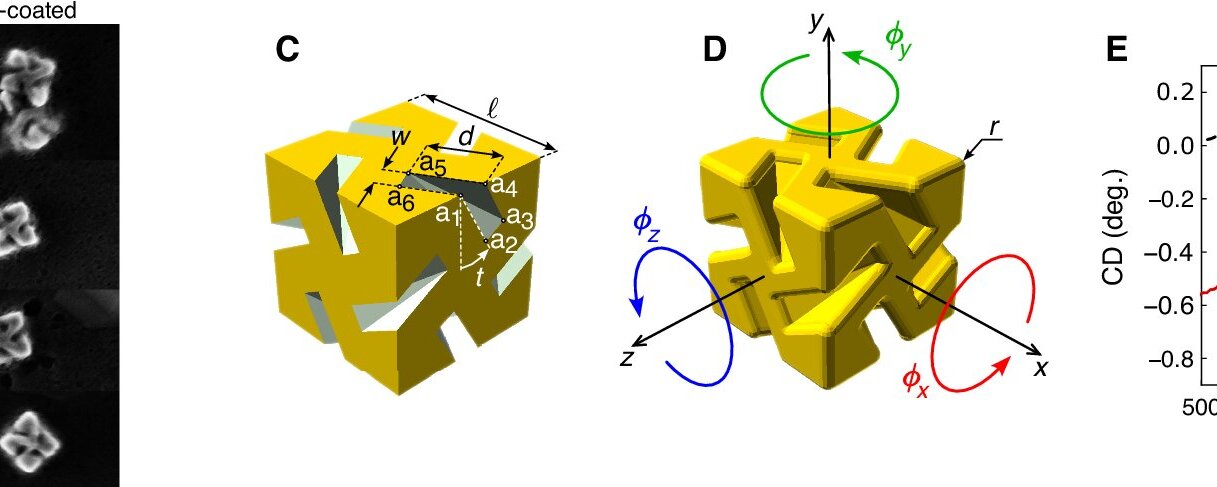
Many important objects in the world can be divided into two categories based on their chirality or handedness, including molecules important for life such as amino acids. Such chiral objects (formally defined as objects which are not identical to their mirror images) are often characterized by a structure which twists in a given direction.

An everyday example of a chiral object is a screw. A right-handed screw moves into a material when rotated clockwise, but its mirror image (i.e., a left-handed screw) moves out.

Just as right-and left-handed screws behave differently when turned, chiral particles behave differently when exposed to light with a circular polarization. This fact allows them to be sorted in principle, which is expected to be important for applications such as drug development, where the handedness of a chiral molecule determines how it interacts with biological systems.


How electron structure affects light responses in moiré materials

In materials science, if you can understand the “texture” of a material—how its internal patterns form and shift—you can begin to design how it behaves. That’s the focus of the work of Zhenglu Li, assistant professor in the Mork Family Department of Chemical Engineering and Materials Science at USC Viterbi School of Engineering. Li’s recently published paper in PNAS, titled “Moiré excitons in generalized Wigner crystals,” demonstrates that the way electrons organize themselves inside a material determines how that material responds to light—and how this organization can be engineered.

“Moiré” is a word that will be familiar to anyone who follows fashion. In the context of textiles, it refers to a larger-scale interference pattern that appears when two repeating patterns are slightly misaligned. Imagine brushing a swatch of velvet in different directions; the material reveals different properties depending on how it is ruffled.

Likewise, in the context of nanoscale materials science, an independent, shimmering or wavelike pattern is formed when two overlapping atomically thin layers are overlaid at an acute angle. The new pattern, moiré superlattice, changes how electrons move, which can give the material unusual properties.

First direct nanomagnet measurement finds switching attempts far slower than long-assumed

A compass always points north—or does it? Magnets normally maintain a stable direction of magnetization, pointing from south to north (S→N). However, this direction can change under strong magnetic fields or heat. For example, a compass placed near a strong magnet may no longer point in the right direction.

Magnets can also lose their magnetism when exposed to high levels of heat. This isn’t just relevant to wayfinding during your camping trips—if the magnets in hard drives and memory storage devices are affected, it could mean losing all of your precious data.

Researchers at Tohoku University sought to better understand the intricate ways in which this thermally-activated switching occurs in nanomagnets, and successfully measured it experimentally for the very first time. The results are published in Communications Materials.

Scientists invent artificial neurons that ‘talk’ to real brain cells, paving way to better brain implants

Engineers have printed tiny, artificial neurons that can “talk” to mouse brain cells, and the development could pave the way to innovations in computing and medicine.

The work, published April 15 in the journal Nature Nanotechnology, adds to a growing field that aims to build computers that mimic the inner workings of the brain.

Quasiparticles reveal a magneto-optical transport phenomenon

Excitons are being explored in materials science and information technology as a means of storing light. These luminous quasiparticles move through individual layers of quantum materials and can absorb and emit light with high efficiency. They form when a laser pulse excites an electron, leaving behind a positively charged “hole.” The electron and hole attract each other and behave together like a new, independent particle. When the quasiparticle recombines, it emits light and can be detected in high-tech laboratories.

Excitons in ultrathin quantum materials have been intensively studied for more than a decade, including by Alexey Chernikov and his team. At the Cluster of Excellence ctd.qmat—Complexity, Topology and Dynamics in Quantum Matter—at the Universities of Würzburg and Dresden, Chernikov and an international research team based in Dresden have now made a surprising discovery: excitons can be carried along by the magnetic excitations of a quantum material and, as a result, accelerated to ultrahigh speeds. The findings are published in the journal Nature Nanotechnology.

“The fact that the motion of optical particles can be controlled by magnetism is new. Until now, we only knew that the transport of electrons could be controlled by the magnetic order in a quantum material—this is how some sensors in smartphones work, for example. This newly discovered link between optics and magnetism could open up entirely new technological possibilities,” explains Florian Dirnberger, head of an Emmy Noether Junior Research Group at the Technical University of Munich and formerly a postdoctoral researcher in Alexey Chernikov’s Chair of Ultrafast Microscopy and Photonics, where he was responsible for carrying out the research project.

Why does life prefer one ‘hand’ over the other? New study points to electron spin

A team of scientists has identified a new physical mechanism that could help explain one of the most persistent mysteries in science: why life consistently uses one “handed” version of its molecules and not the other. In a new study led by Prof. Yossi Paltiel of the Center for Nanoscience and Nanotechnology at Hebrew University and Prof. Ron Naaman of the Weizmann Institute, researchers show that electron spin, a fundamental quantum property, can cause mirror-image molecules to behave differently during dynamic processes, even though they are otherwise identical. The work appears in Science Advances.

Many molecules essential to life come in two mirror-image forms, known as enantiomers. Chemically, these forms are nearly indistinguishable. Yet in living systems, only one version is typically used: amino acids are almost exclusively one type, while sugars follow the opposite pattern.

This phenomenon, known as homochirality, has puzzled scientists for more than a century. Existing explanations have struggled to account for why one specific version was selected globally.

Put a nanodiamond under intense pressure and it becomes flexible

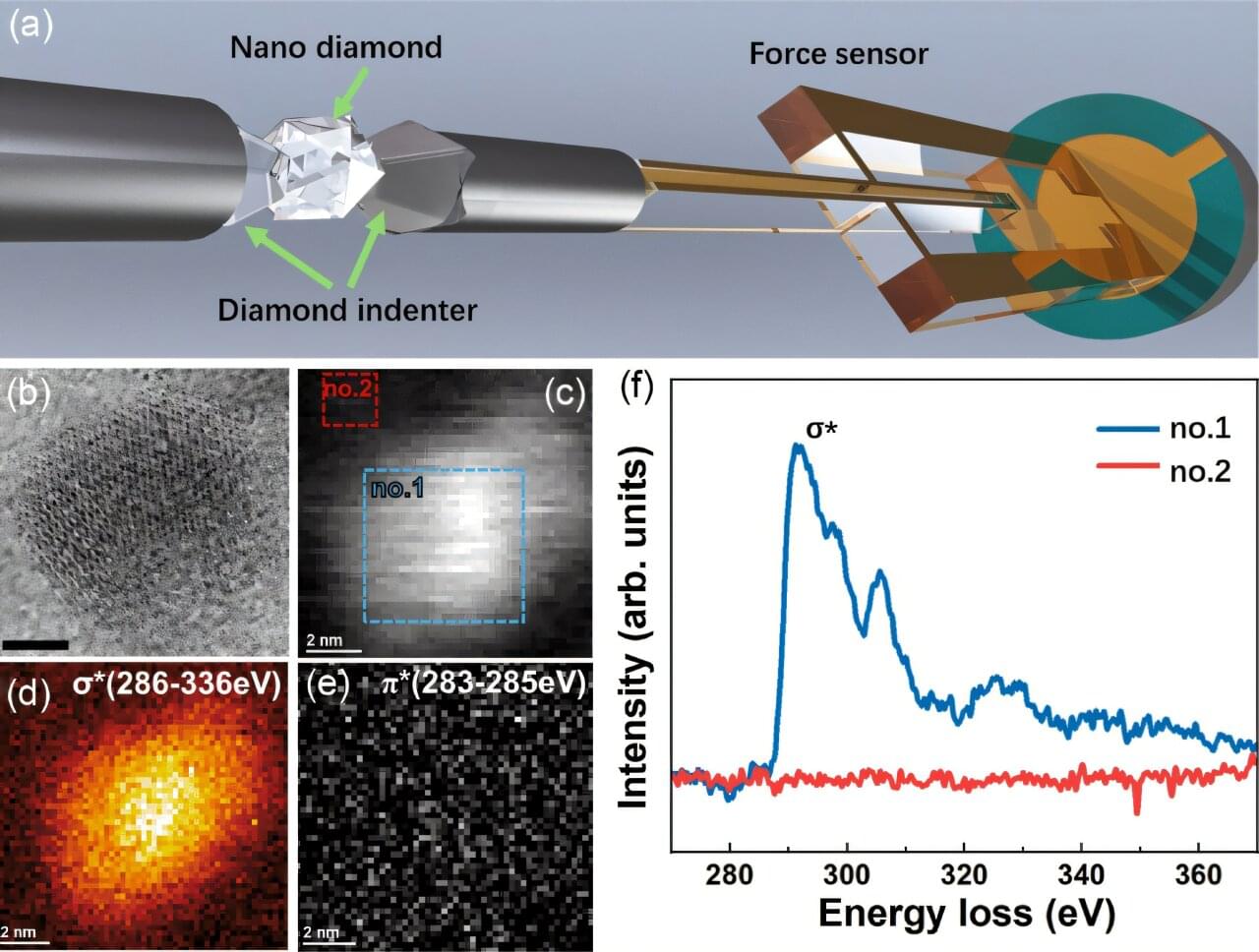
Diamond is among the hardest naturally occurring substances on Earth, but if you shrink it down to the nanoscale, it is surprisingly elastic. And that could be useful for a host of applications such as quantum computing. In a paper published in the journal Physical Review X, Chongxin Shan at Zhengzhou University in China and colleagues studied diamonds as small as four nanometers across to see how they respond to pressure.

Scientists already know that nanodiamonds, which are thousands of times smaller than a grain of sand, can survive being stretched or squeezed in ways that destroy a regular diamond. But nobody knew how.

So the team placed individual nanodiamonds (ranging from 4 to 13 nanometers across) inside a transmission electron microscope between two diamond indenters and compressed them. These were connected to a sensor that measured how strongly each nanodiamond resisted being squeezed while a high-resolution camera imaged diamond atoms as they moved. The researchers backed up their observations with computer simulations.

Tiny ‘light-concentrating’ particles boost terahertz technology, study shows

Scientists have found a way to boost terahertz technology using particles thousands of times smaller than a grain of sand. Research published in Scientific Reports by Loughborough University’s Emergent Photonics Research Center shows how a sparse layer of nanoparticles can make materials that produce terahertz radiation more efficient.

Terahertz radiation sits between microwaves and infrared on the electromagnetic spectrum and has a range of potential uses. It can “see” through materials like clothing or plastic and detect chemical fingerprints, with applications in security screening, medical imaging, materials testing, and wireless communications.

But existing devices are limited by how efficiently they can generate terahertz waves.

Laser bursts flip nanoscale magnetic vortices at blistering speeds, opening a path to brain-like spintronics

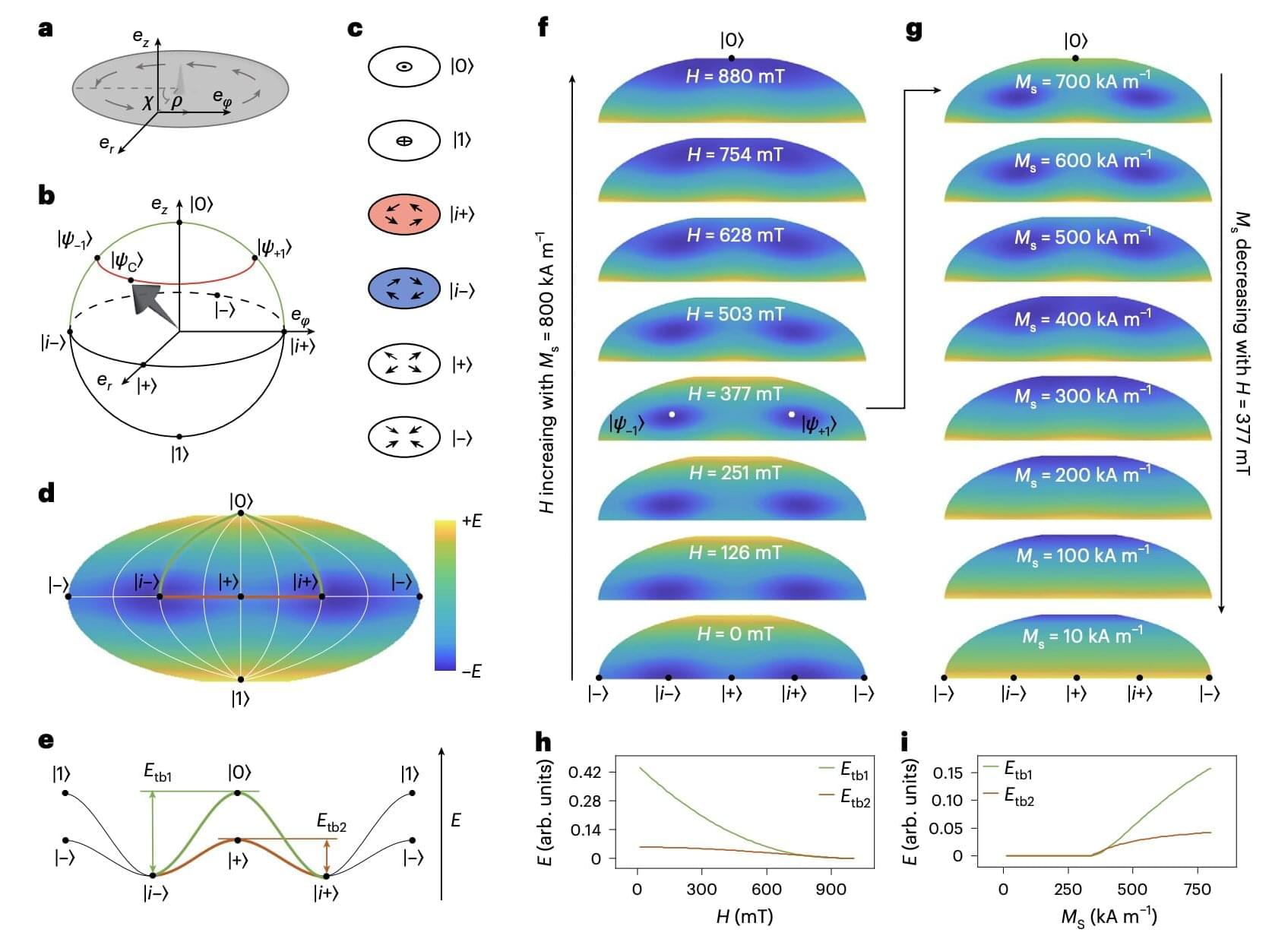
Spintronics are devices that operate leveraging the spin, an intrinsic form of angular momentum, of electrons. The ability to switch magnetic states is central to the functioning of these devices, as it ultimately allows them to represent binary digits (i.e., “0” and “1”) when processing or storing information.

Some of these devices rely on magnetic vortices, nanoscale whirlpool-like patterns of magnetization that influence the alignment of spins. These vortices possess a property known as helicity, which is essentially the direction in which they rotate.

Reliably switching the helicity of magnetic vortices could open new possibilities for both neuromorphic computing systems, devices that mimic the brain’s neural organization, and multi-state memories. So far, however, this has proved challenging, mainly because it requires a synchronized wave-like rotation of spins without disrupting the geometric structure of vortices.

Sprinkling nanoparticles on spintronics

Today, I want to walk you through a deceptively simple innovation from the lab at Loughborough University (PI: Prof Marco Peccianti): what happens when we decorate a spintronic heterostructure with a sparse layer of plasmonic nanoparticles? This isn’t just a lab curiosity—it’s a step toward making terahertz sources more efficient, compact, and practical for real-world applications like high-speed communications, noninvasive imaging, and advanced spectroscopy.

Spintronic terahertz emitters rely on a thin, multilayer stack—typically heavy metal like tungsten (W), a ferromagnetic layer such as iron (Fe), and a platinum (Pt) cap. A femtosecond laser pulse strikes the structure, rapidly heating electrons and generating a pure spin current through spin-orbit torque effects.

This spin current converts into broadband terahertz radiation at the interfaces, bypassing the need for cumbersome phase-matching crystals used in traditional optical rectification. It’s elegant and scalable, but most laser light reflects off or transmits through without effectively coupling to the magnetic layer, limiting spin injection and THz output power.

/* */