Toggle light / dark theme

Self-Driving Farm Robot Uses Lasers To Kill 100,000 Weeds An Hour, Saving Land And Farmers From Toxic Herbicides

The nutrient content of our vegetables is down 40% over the last two decades and our soil health is suffering due to increasingly harsh herbicide use, according to Carbon Robotics founder Paul Mikesell. And farmers are increasingly concerned about the long-term health impacts of continually spraying chemicals on their fields.

But not weeding will cost half your crop, killing profitability.

The solution?

Making science serve humanity: Jennifer Doudna, PhD, says CRISPR gene-editing technology should be accessible to all

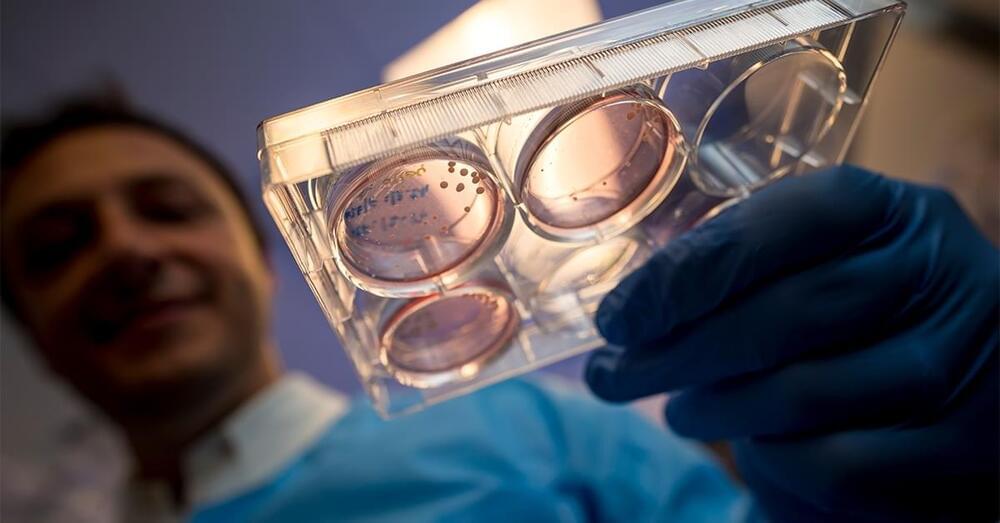
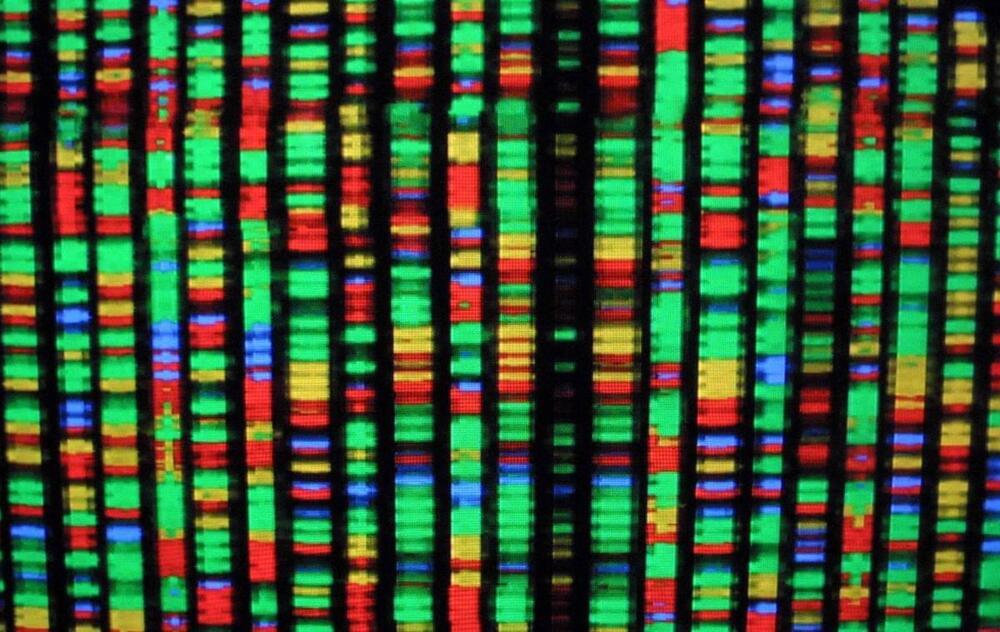
The path that led Jennifer Doudna, PhD, and her colleagues to the development of CRISPR, the gene-editing tool that has revolutionized science and earned her a Nobel Prize, started with their deep curiosity and drive to understand how the most basic building blocks of life function.

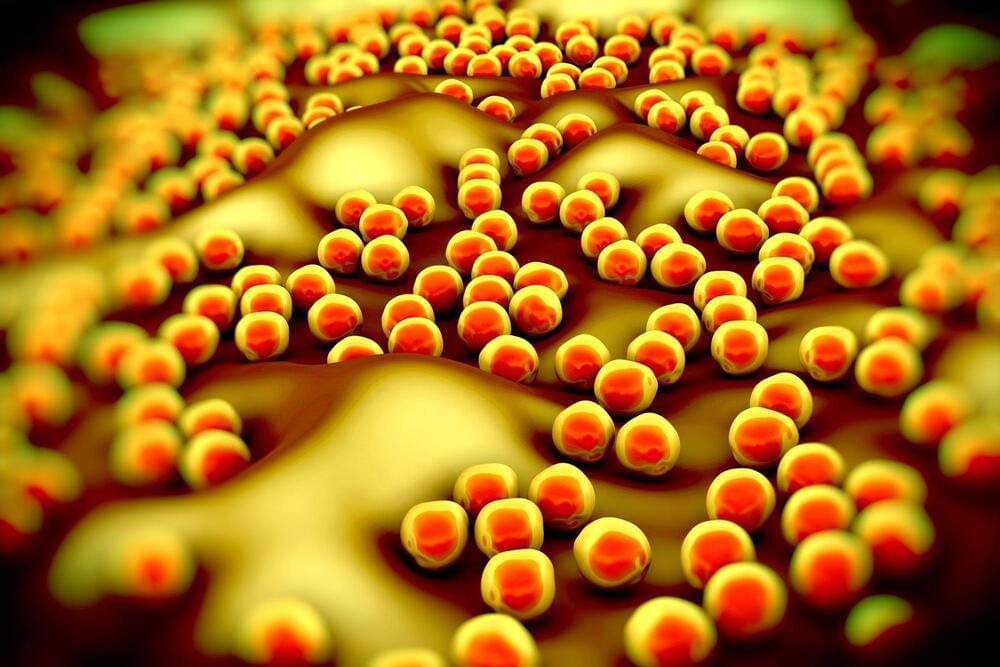
When Doudna first decided to investigate precisely what systems bacteria use to adapt their immune systems to fight off viral infections, she had little expectation that the findings would ultimately provide the key to technology that could be used to safely alter genetic code.

“All of us [on the research team] realized that what had started as a fundamental research question was morphing into a very different kind of project; namely, one with enormous technical potential and also risks and opportunities that we had not appreciated when we started the work,” Doudna explained during a conversation with J. Larry Jameson, MD, PhD, chair of the AAMC Board of Directors and executive vice president of the University of Pennsylvania Health System, at the opening plenary of Learn Serve Lead 2021: The Virtual Experience, on Monday, Nov. 8.

Brain Structure is Key to Understanding Human Cognition

A CNS 2021 provided an incredible opportunity to learn more how the anatomy and integrity of brain networks impact higher-level cognition.


In the 19th and 20th century, cases of individuals with brain injury, such as Phineas Gage or Henry Molaison, have advanced our understanding of the relationship between the anatomy of the brain and its function. Back then, methods were limited to investigate whole-brain structure and function. Now, cognitive neuroscientists have some ability to visualize and measure activity of the whole brain at once, as well as the computational tools to investigate complex network-level relationships between brain structure, brain function, and behavior.

As a doctoral student working on stroke recovery, attending the CNS 2021 symposium led by Danielle Bassett was an incredible opportunity to learn more about some of the most recent methods that have been developed to understand how the anatomy and integrity of brain networks impact higher-level cognition. Strokes highly disrupt anatomical and functional connectivity, leading to cognitive and motor impairments. In individuals with post-stroke language impairments, namely aphasia, evidence shows that the more functional brain networks recover an organization similar to healthy individuals the better the recovery (Kiran et al., 2019). Understanding the relationship between brain structure and function in health and disease is therefore essential to develop appropriate treatments.

At this CNS symposium, the speakers showed how different models can help us better understand brain structural organization and how this particular organization constrains cognitive processes. They also showed direct relationships between alteration of anatomical networks, caused by disease or behavioral training, and changes in behavioral performance.

China struggles to contain Delta variant of COVID

China’s zero-COVID-19 policy is showing strain as health authorities struggle to contain the growing spread of the Delta variant.
At least 1,000 locally-transmitted infections have been reported since mid-October in 20 provinces, prompting strict quarantine periods and area-specific lockdowns.
The onset of winter in China’s north is also helping disperse the disease.
Al Jazeera’s Katrina Yu reports from Beijing, China.

- Follow us on Twitter: https://twitter.com/AJEnglish/
- Find us on Facebook: https://www.facebook.com/aljazeera/
- Check our website: https://www.aljazeera.com/

#China #COVID #Delta

As the U.K. nears elimination of cervical cancer, the U.S. isn’t close

A decade ago, a London cancer prevention researcher predicted that the United Kingdom’s national HPV vaccination campaign would take more than 15 years to prevent a majority of cervical cancers. So when he analyzed the data this year, he was stunned to find that the vaccine may already have nearly eliminated cervical cancer in the U.K. among young women.

“If this is right,” Peter Sasieni of King’s College London said of his findings, cervical cancers “could be reduced to about 50 – just 50 cancers in the whole of the U.K. for women under 30. It’s really quite exciting to see that day come – excitement and just joy.”

That joy was tempered with envy in the United States, where some of Sasieni’s peers lamented that the HPV vaccination rate for teenage girls lags far behind — about 59% in the U.S. vs. more than 85% in the U.K. The analysis, published last week in the Lancet, suggests the U.K. has notched a major public health victory against cancer through vaccinating the vast majority of young women against HPV, said Allison Kempe, a pediatrics professor at the University of Colorado School of Medicine who did not work on the study.

Health Canada adds autoimmune disorder warning to AstraZeneca, J&J COVID-19 vaccines

Health Canada is updating the labels for the AstraZeneca and Johnson & Johnson COVID-19 vaccines to add immune thrombocytopenia (ITP), an autoimmune condition, as a potential side effect.

In a statement on Tuesday, the agency said very rare cases of ITP have been reported internationally after receiving the Vaxzevria (AstraZeneca) and Janssen (J&J) COVID-19 vaccines.

ITP is a disorder that can cause easy or excessive bruising and bleeding, which results from unusually low blood platelet levels.

NASA And SpaceX’s Delayed ‘Halloween’ Mission Is Finally Going Skywards. Here’s When And Where To Watch Four Astronauts Blast-Off

After a series of delays for bad weather, the ill-health of an astronaut and then a wait for the splashdown of the previous mission this morning the world’s only re-usable orbital rocket take four astronauts to the International Space Station (ISS) as SpaceX and NASA launch the Crew-3 mission.

Originally due to launch on October 27 2021 from NASA’s Kennedy Space Center in Florida, NASA has now confirmed that its SpaceX Crew-3 mission will take-off no earlier than 9:03 p.m. EST on Wednesday, November 10 2021.

After the night launch the Falcon 9 rocket will attempt to land on a drone-ship in the Atlantic.

It will be SpaceX’s fourth NASA flight with astronauts, though last month it also successfully launched and landed the first all-civilian private astronaut crewed mission to orbit Earth.

Full Story:

Tracking Coronavirus Via The Sewer System

Wastewater samples are being used to track the spread of SARS-CoV-2.

It’s sometimes called ‘wastewater-based epidemiology’ (WBE) – a scientific and public health field that involves detecting and monitoring specific molecules in untreated wastewater, to determine how prevalent they are. First proposed more than 70 years ago as a way to track the spread of the deadly poliovirus, WBE has since been used to measure human population exposure to pollutants, and even to estimate the level of drug consumption in major cities. In 2,020 it hit global news headlines when it was first proposed as a way to track SARS-CoV-2, the virus that causes COVID-19.

$1.1M NIH Grant Will Further AI-powered Research Analysis

A team of scientists from the University of Florida (UF) will use a $1.1 million grant to further their work on the use of artificial intelligence-or AI-powered medical research for predicting and diagnosing Parkinson’s disease while maintaining patient privacy.

This grant, from the National Institutes for Health (NIH), will allow the scientists to train artificial neural network models — computer systems modeled on the human brain and nervous system — and further develop AI technologies that can predict and diagnose Parkinson’s, according to a press release.

“The proposed research will remove a major roadblock that restricts medical data accessibility and hinders cloud-based operations of deep-learning artificial neural networks for biomedical research,” the investigators said.

/* */