Toggle light / dark theme

Tech Millionaire Bryan Johnson Claims His “Super Plasma” Reversed His Father’s Age By 25 Years

Bryan Johnson, a millionaire tech entrepreneur dedicated to reversing ageing, recently took to social media to boast about his “super clean plasma.” In a detailed post on X, he shared that a lab technician couldn’t bring himself to dispose of the plasma after a total plasma exchange (TPE) procedure.

Johnson claims to have reduced his epigenetic age through his comprehensive regimen called Project Blueprint. He follows a strict diet and exercise routine, spends over $2 million annually on a team of doctors and medical equipment, and undergoes both experimental and conventional treatments-including the recent TPE procedure.

TPE, a procedure often used in regenerative medicine and anti-ageing treatments, involves replacing a patient’s plasma with donor plasma or a substitute fluid. In Johnson’s case, his plasma was replaced with albumin.

23andMe agrees to $30m settlement over data breach targeting Jewish and Chinese users

Genetic testing company settles with plaintiffs over breach that was revealed when hacker published link to database labeled ‘ashkenazi DNA Data of Celebrities’

The breach, which occurred last October, affected more than 6.9 million customers and included users’ personal details such as their location, name and birthdate, as well as some information about their family trees. That data was shared on BreachForums, an online forum used by cybercriminals.

According to court documents, the data breach was revealed October 6 after a hacker going by the pseudonym Golem, a reference to the Jewish mythical defender made of clay, published a link to a database labeled ashkenazi DNA Data of Celebrities. According to the lawsuit, the hacker referred to the list as the most valuable data you’ll ever see, though most of the names were not famous.

Compact ‘Gene Scissors’ enable Effective Genome Editing, may offer Future Treatment of High Cholesterol Gene Defect

CRISPR-Cas is used broadly in research and medicine to edit, insert, delete or regulate genes in organisms. TnpB is an ancestor of this well-known “gene scissors” but is much smaller and thus easier to transport into cells.

Using protein engineering and AI algorithms, University of Zurich researchers have now enhanced TnpB capabilities to make DNA editing more efficient and versatile, paving the way for treating a genetic defect for high cholesterol in the future. The work has been published in Nature Methods.

CRISPR-Cas systems, which consist of protein and RNA components, were originally developed as a natural defense mechanism of bacteria to fend off intruding viruses. Over the last decade, re-engineering these so-called “gene scissors” has revolutionized genetic engineering in science and medicine.

New study challenges longstanding assumption about the cause of the genome’s most common mutation

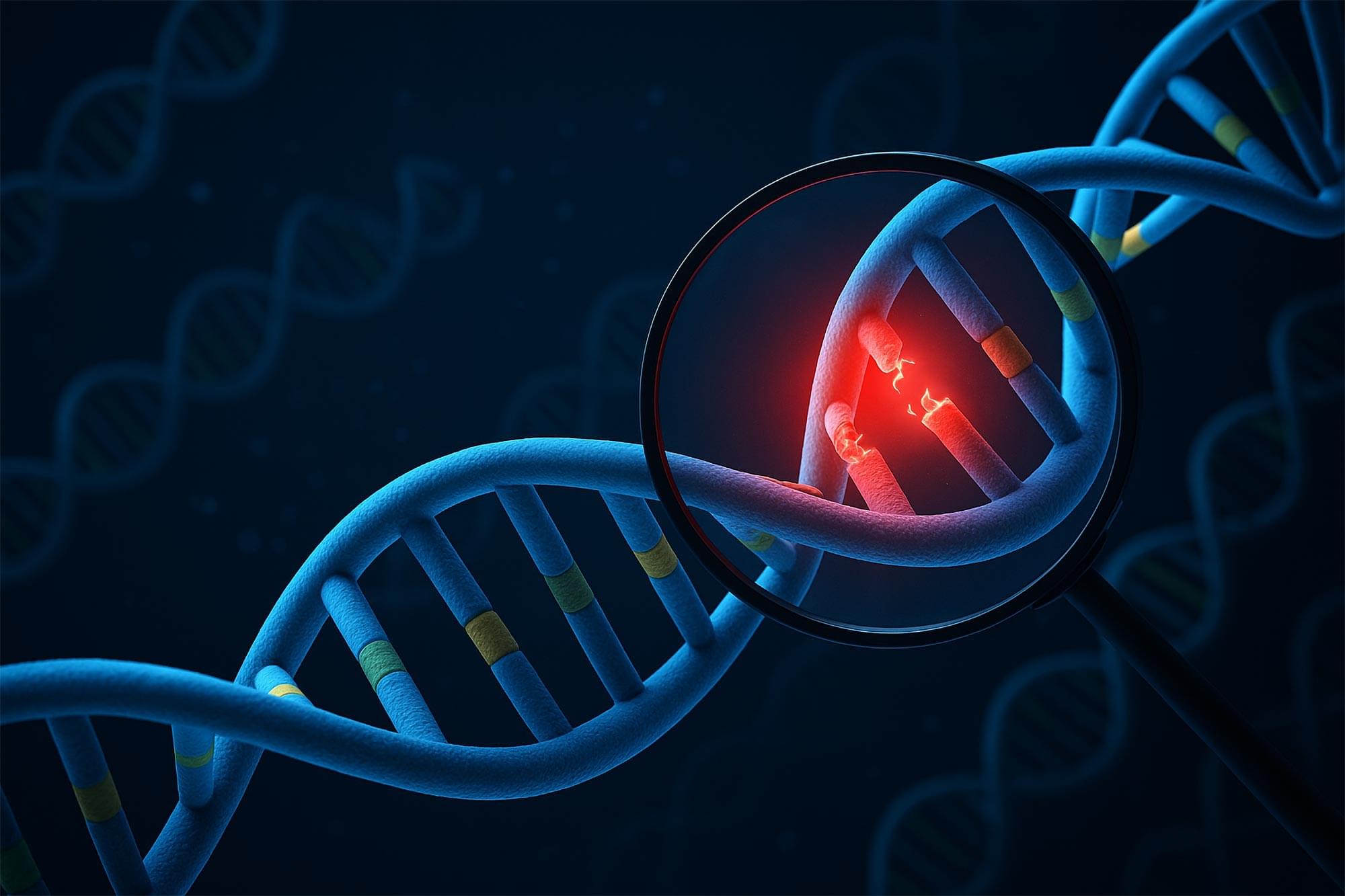
A Ludwig Cancer Research study has punctured a longstanding assumption about the source of the most common type of DNA mutation seen in the genome—one that contributes to many genetic diseases, including cancer.

Led by Ludwig Oxford Leadership Fellow Marketa Tomkova, postdoc Michael McClellan, Assistant Member Benjamin Schuster-Böckler and Associate Investigator Skirmantas Kriaucionis, the study has implications not only for basic cancer biology but also for such things as assessments of carcinogenic risk associated with environmental factors and our understanding of the emergence of drug resistance during . Its findings are reported in the current issue of Nature Genetics.

The mutation in question—in which cytosine ©, one of the four bases of DNA that spell out our genes, is erroneously switched to thymine (T)—was thought to be primarily the result of a spontaneous chemical reaction with water. This reaction, deamination, is about twice as likely to happen when a cytosine is chemically tagged by the addition of a molecule known as a to create 5-methylcytosine, which occurs in DNA at so-called “CpG” positions, where C is followed by the base guanine (G).

What If We Became A Type 3 Civilization? 15 Predictions

This video explores what life would be like if we became a Type 3 Civilization. Watch this next video about us becoming a Type 2 civilization: • What If We Became A Type 2 Civilizati…
🎁 5 Free ChatGPT Prompts To Become a Superhuman: https://www.futurebusinesstech.com/su
🤖 AI for Business Leaders (Udacity Program): https://bit.ly/3Qjxkmu.
☕ My Patreon: / futurebusinesstech.
➡️ Official Discord Server: / discord.

SOURCES:
https://www.futuretimeline.net.
• The Singularity Is Near: When Humans Transcend Biology (Ray Kurzweil): https://amzn.to/3ftOhXI
• The Future of Humanity (Michio Kaku): https://amzn.to/3Gz8ffA

💡 Future Business Tech explores the future of technology and the world.

Examples of topics I cover include:
• Artificial Intelligence \& Robotics.
• Virtual and Augmented Reality.
• Brain-Computer Interfaces.
• Transhumanism.
• Genetic Engineering.

SUBSCRIBE: https://bit.ly/3geLDGO

Disclaimer:

Study finds genetics shape caloric restriction’s impact on lifespan

While caloric restriction (CR) has long been associated with increased lifespan, the study found that its effectiveness is highly influenced by individual genetic factors; some mice on restrictive diets experienced a notable lifespan extension, while others saw minimal gains.


New research on mice suggests that while extreme caloric restriction may extend lifespan, genetic resilience plays a critical role.

How far till Longevity Escape Velocity?

They say aging is just a part of life, but have you ever wondered if it really has to be? What if getting older isn’t just something we accept but something we could actually treat?

In this riveting episode of Peak Human Labs Podcast, Dr. Sanjeev Goel, sits down with Dr. Aubrey de Grey, a trailblazing biomedical gerontologist and Chief Science Officer of the SENS Research Foundation. They dive deep into the revolutionary idea of treating aging as a medical condition. They explore how damage accumulates in our bodies over time and discuss the groundbreaking medical advancements that could extend our healthy lifespans. Dr. de Grey sheds light on the crucial need for investing in underfunded research and shares insights into the future of longevity science. Tune in and envision a future where health and longevity are not just aspirations but achievable realities!

Click https://dublinlongevitydeclaration.or… to sign in for Dublin Longevity Declaration.

In This Episode:

[00:00:00] Introduction to longevity research.
[00:00:51] Guest introduction.
[00:01:17] Personal connection.
[00:02:04] Dr. de Grey’s background.
[00:03:14] Early research stages.
[00:04:05] Understanding aging as a machine.
[00:05:22] Accumulated damage mechanism.
[00:06:15] Comprehensive medical control.
[00:07:13] Categories of damage.
[00:07:55] Wear and tear concept.
[00:09:20] Epigenetic changes discussion.
[00:11:31] Partial reprogramming concept.
[00:13:30] Addressing multiple mechanisms.
[00:14:31] Longevity escape velocity.
[00:15:43] Initial pushback on longevity ideas.
[00:17:51] Positive outlook on aging research.
[00:19:51] The future of longevity research.
[00:20:54] Funding disparities in research.
[00:21:10] Business models in longevity research.
[00:21:58] Combining existing therapies.
[00:23:47] Current longevity therapies.
[00:24:56] Caloric restriction vs. drugs.
[00:25:36] Dublin Longevity Declaration.
[00:26:39] Community building through conferences.
[00:28:09] Anticipating longevity breakthroughs.
[00:29:12] Access to longevity therapies.
[00:30:58] Epigenetic clocks and age reversal.
[00:32:24] Retroviruses and aging.
[00:34:56] Persistent viral infections.
[00:37:24] Hyperbaric oxygen therapy.
[00:37:49] Therapeutic blood exchange.
[00:39:37] Discussion on active ingredients.
[00:40:41] Bone marrow transplant experimentation.
[00:42:09] Health benefits of bone marrow transplants.
[00:43:05] Personal health practices.
[00:43:55] Advice for maximizing healthy lifespan.
[00:45:01] Microbiome and longevity.

3D Gene Regulation Map Sheds Light on Brain Development

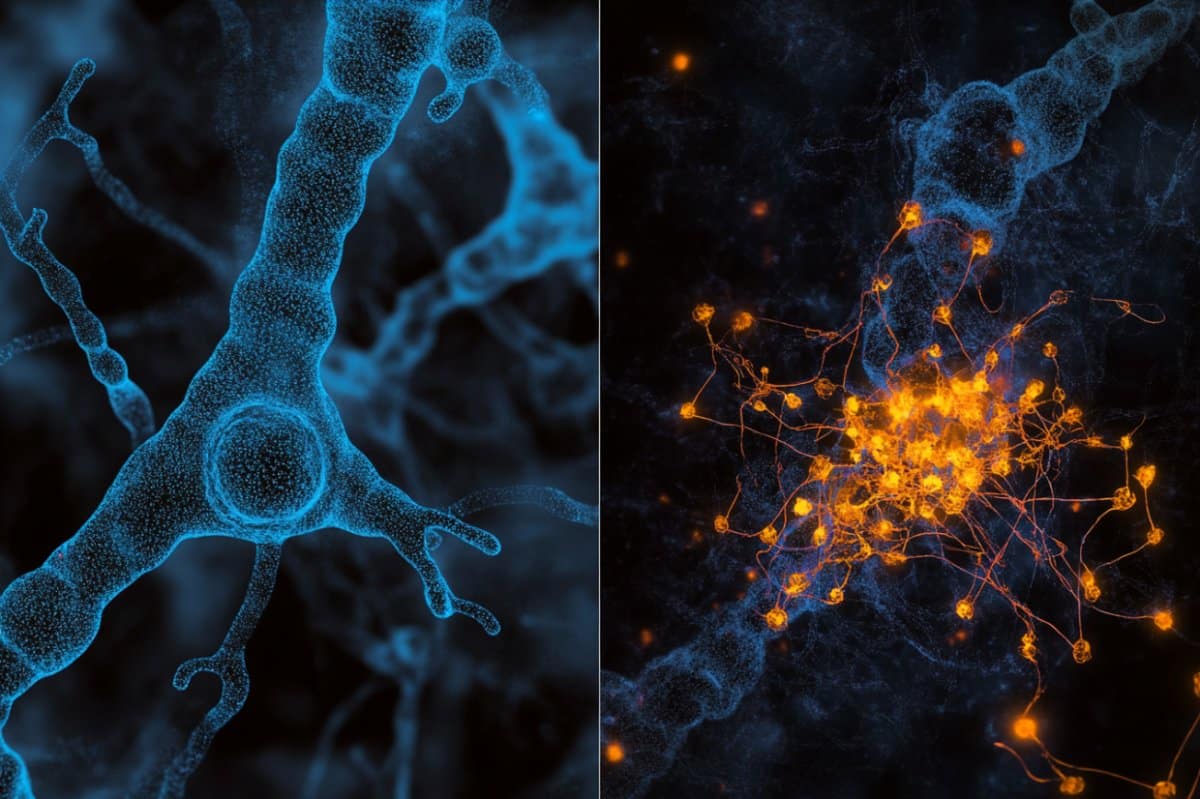
Summary: Researchers have developed the first 3D map of gene regulation in the human brain, offering insights into how early brain development influences lifelong mental health. This map, focusing on regions tied to memory and emotional regulation, reveals how chromatin structure controls gene activity, especially during key developmental stages.

These findings may help identify when and where genetic variants linked to autism and schizophrenia disrupt normal development. By understanding these early influences, scientists hope to improve neurodevelopmental disorder research and stem-cell models, potentially paving the way for earlier intervention strategies.

/* */