Toggle light / dark theme

Tesla’s Game-Changing Impact on Investor Mindset

Tesla’s popularity among retail investors and its significant net inflows indicate a shift in investor mentality towards seeking outsider opportunities and a strong belief in the company’s disruptive technology and future potential.

Questions to inspire discussion.

Why are retail investors heavily investing in Tesla stock?
—Retail investors are heavily investing in Tesla stock due to its disruptive technology and potential for future growth, with one investor doubling his position and believing that competitors won’t be able to beat Tesla’s technology.


AI and Us: Overcoming Concerns to Embrace the Future of Technology

As the prominence of Artificial Intelligence (AI) continues to rise in our society, so do the concerns about its implications. Therefore, addressing these fears requires a multi-faceted approach, combining careful design, transparent practices, robust regulation, and thoughtful ethical guidelines.

Below is a list of 20 potential effects AI could have on society, concerns raised by many, and how they could or are currently being overcome.

Ultimately, the goal is to navigate the AI-driven future responsibly, building a society where technology serves human needs effectively and ethically.

Google Gemini Pro falls behind free ChatGPT, says study

A recent study by Carnegie Mellon University (CMU) shows that Google’s latest large language model, Gemini Pro, lags behind GPT-3.5 and far behind GPT-4 in benchmarks.

The results contradict the information provided by Google at the Gemini presentation. They highlight the need for neutral benchmarking institutions or processes.

Gemini Pro loses out to GPT-3.5 in benchmarks.

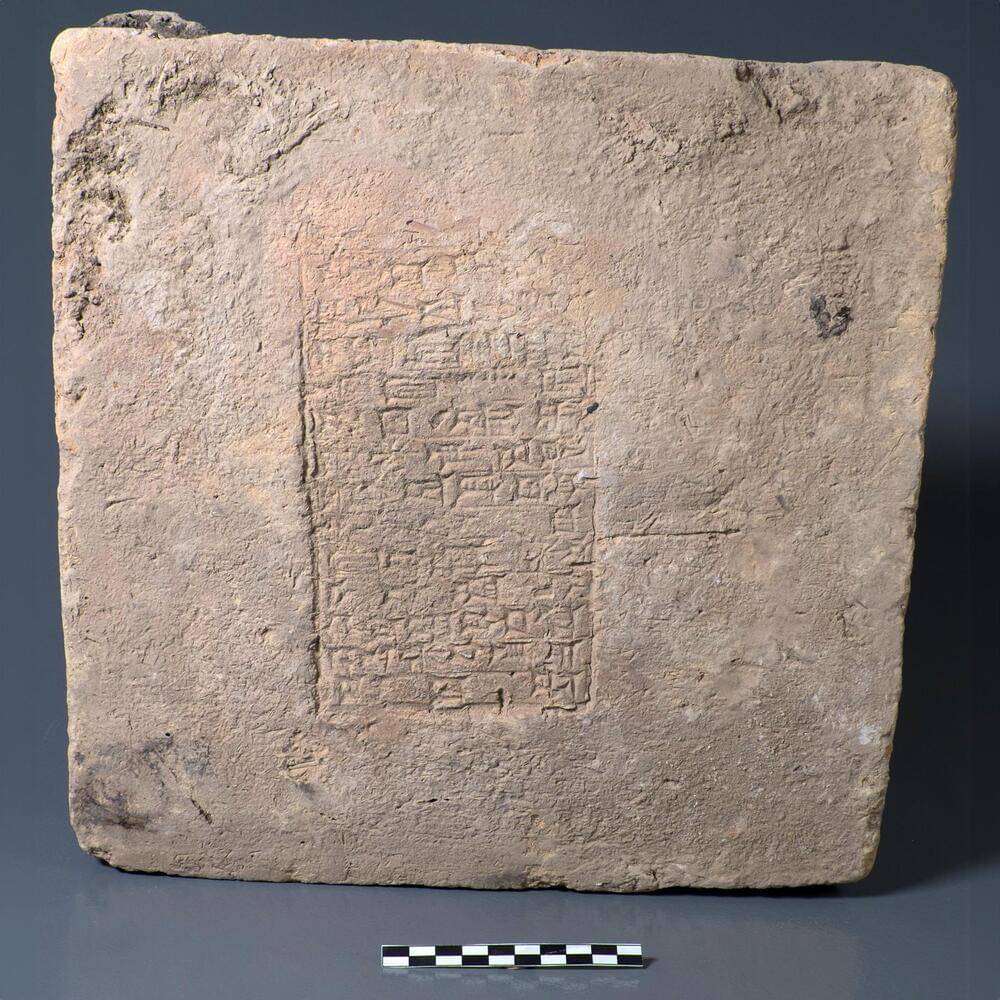
Deciphering Earth’s Magnetic Mysteries: Mesopotamian Bricks Reveal Ancient Secrets

In a novel study, researchers utilized ancient Mesopotamian bricks to gain insights into Earth’s magnetic field changes 3,000 years ago. This archaeomagnetic approach provides a more precise method for dating ancient artifacts and understanding historical magnetic field fluctuations.

Ancient bricks inscribed with the names of Mesopotamian kings have yielded important insights into a mysterious anomaly in Earth’s magnetic field 3,000 years ago, according to a new study involving UCL researchers.

The research, published on December 18 in the Proceedings of the National Academy of Sciences (PNAS), describes how changes in the Earth’s magnetic field imprinted on iron oxide grains within ancient clay bricks, and how scientists were able to reconstruct these changes from the names of the kings inscribed on the bricks.

/* */