We are already gene editing humans. You just haven’t noticed.
George Church, Harvard geneticist and Human Genome Project pioneer, explains why CRISPR wasn’t the real breakthrough, how multiplex gene editing unlocked organ transplants and de-extinction, and why aging will likely require rewriting many genes at once.
0:00 — Gene Editing Mammals → Humans 8:36 — Germline vs Somatic 14:56 — Modified Humans Are Already Here 18:50 — Enhancing Healthy Humans 25:00 — Aging Therapies vs Cognitive Enhancement 30:20 — Embryo Selection 38:10 — Is US Losing To UAE? 42:33 — Biotech Failures 49:31 — Next Dire Wolf Moment 54:21 — AI x Science 1:02:07 — Synthetizing Entire Genomes.
The Accelerate Bio Podcast explores the future of humanity in the age of Artificial Intelligence. Subscribe for deep-dive conversations with founders, scientists, and investors shaping AI, biotechnology, and human progress.
This episode discusses George Church, gene editing, CRISPR, human enhancement, longevity, aging, embryo selection, synthetic biology, multiplex editing, AI biotech.
Do you believe alien life could be completely unlike anything we’ve ever imagined? In this Science Documentary, we explore forms of life that may not need light, oxygen, or even a recognizable body—glowing through chemistry, drifting like gel in endless darkness, or existing as silent, stone-like structures. This Science Documentary follows the latest discoveries as telescopes probe distant worlds for signs of life. And closer to home, beneath thick ice, hidden oceans may already hold the first alien organisms humanity could reach. Join this Science Documentary as we challenge everything we think life should be. 1:04 The Nearest Life – Europa 4:30 Ocean Worlds – Life Without Light 8:30 Tidally Locked Worlds 12:41 Life in the Atmosphere – Creatures That Never Touch the Ground 15:23 Extreme Gravity – When the Shape of Life Is Rewritten by an Invisible Force 19:11 Non-Carbon Life – When Biology Moves Beyond Our Definition 23:04 The Fermi Paradox – If They Are Everywhere… Why Do We See No One? 26:37 Conclusion.
Welcome to WUFO, your space documentary channel dedicated to both education and entertainment. WUFO explores the outer reaches of space, the craziness of astrophysics, the possibilities of sci-fi, and anything else you can think of beyond Planet Earth.
Each video space documentary is crafted to inspire curiosity, bring scientific knowledge to life, and make learning about space exciting and enjoyable.
Whether you’re passionate about astronomy, planetary science, or simply love exploring the cosmos, WUFO channel offers engaging journeys that expand your mind and spark your imagination.
Watch more science videos here: • Space Documentary Moon Documentary: • Moon Documentary — WUFO
Make sure to subscribe and turn on notifications and don’t miss out WUFO — Space Documentary!
🚨 THE UNIVERSE NEVER FORGETS. NOT A SINGLE MOMENT. You burned a book. The words are gone. The pages are ash. But physics says every letter still exists — scattered across trillions of particles, encoded in the quantum state of reality. And it’s not just books. Every breath you’ve ever taken. Every word you’ve ever spoken. Every person you’ve ever lost. The information is still here. Right now. Permanently. 🔴 WHAT YOU’LL DISCOVER: 🔴 Why burning something doesn’t destroy its information. 🔴 How Stephen Hawking lost the biggest bet in physics history. 🔴 The black hole war that nearly broke quantum mechanics. 🔴 Why spacetime itself is made of information. 🔴 What this means about death — and why nothing truly disappears. ⚠️ WARNING: After this video, you will never look at destruction the same way again. Like and subscribe for more reality-breaking physics. physics, quantum mechanics, information paradox, black holes, Hawking radiation, holographic principle, entropy, universe, science, reality, quantum information, spacetime, Leonard Susskind, Stephen Hawking, ER EPR.
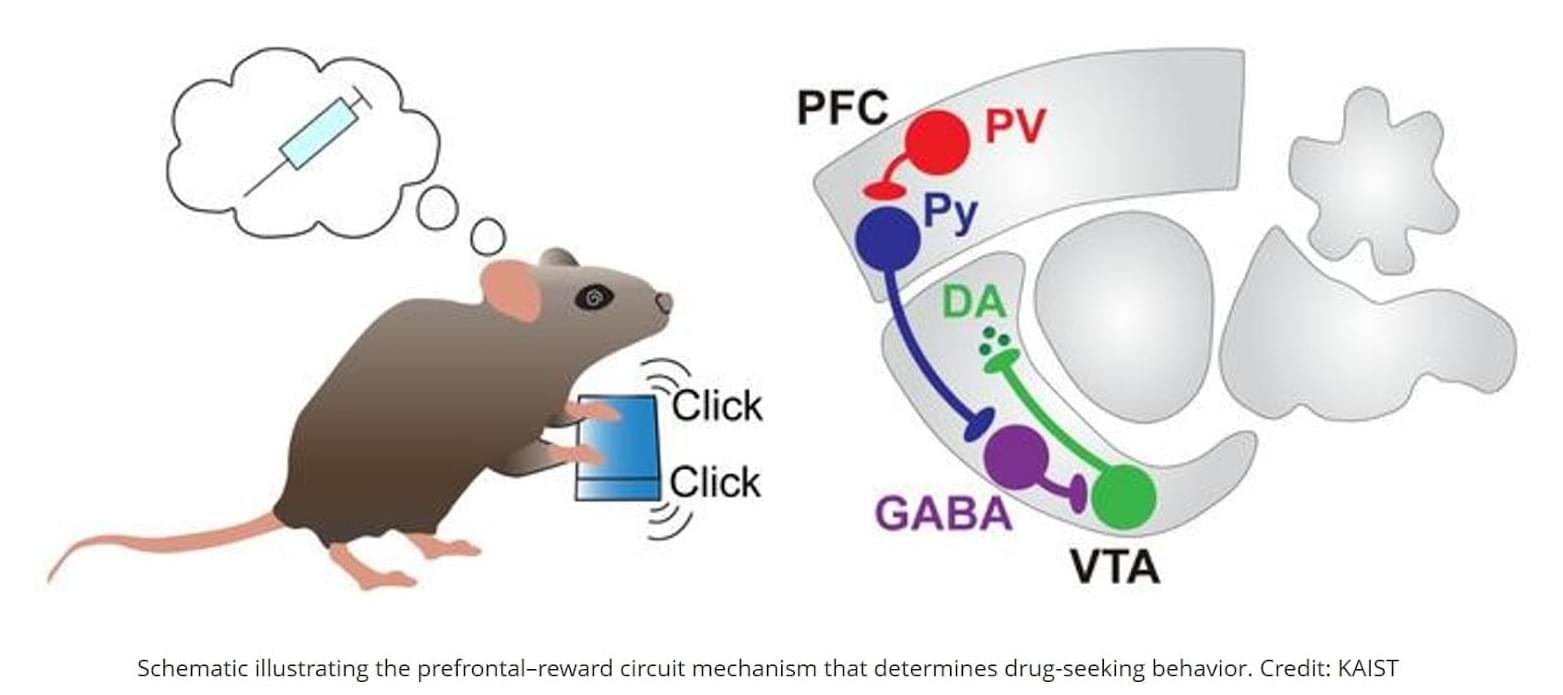
The prefrontal cortex (PFC) of our brain can properly perform its “braking” function to suppress impulses when excitatory and inhibitory signals are in balance. To investigate how chronic drug exposure disrupts this balance, the research team conducted cocaine administration experiments on mice. During this process, they tracked when inhibitory neurons in the PFC were activated and how they sent signals to downstream brain regions.
The experimental results showed that parvalbumin (PV) cells, which account for about 60–70% of the inhibitory neurons in the PFC, were highly active when the mice attempted to seek cocaine. However, when “extinction training”—training to stop seeking the drug—was conducted, the activity of these cells significantly decreased. This demonstrates that the activity patterns of PV cells are not permanently fixed by addiction but can be readjusted through the extinction process.
The research team confirmed that artificially suppressing PV cell activity significantly reduced cocaine-seeking behavior in mice. Conversely, activating these cells caused the drug-seeking behavior to persist even after the extinction process. This effect was specifically observed in drug-addiction behavior and did not appear with general rewards like sugar water. Furthermore, this phenomenon was not observed in somatostatin (SOM) cells—another type of inhibitory neuron—indicating that PV cells selectively regulate drug addiction behavior.
The team also identified the specific brain circuit through which these PV cells operate. Signals originating from the prefrontal cortex are transmitted to the reward circuit of the Ventral Tegmental Area (VTA), a key brain region related to reward. This pathway emerged as the central channel for regulating addiction behavior, determining whether or not to seek the drug again. In this process, PV neurons act as a “regulatory switch,” controlling the flow of signals to influence dopamine signaling and deciding whether to maintain or suppress addictive behavior. ScienceMission sciencenewshighlights.
Drug addiction carries an extremely high risk of relapse, as cravings can be reignited by minor stimuli even long after one has stopped using. Previously, this phenomenon was attributed to a decline in the function of the prefrontal cortex (PFC), which regulates impulses. However, a joint international research team has recently revealed that the cause of addiction relapse is not a simple decline in brain function, but rather an imbalance in specific neural circuits.
The researchers have identified the core principle by which specific inhibitory neurons in the prefrontal cortex regulate cocaine-seeking behavior.
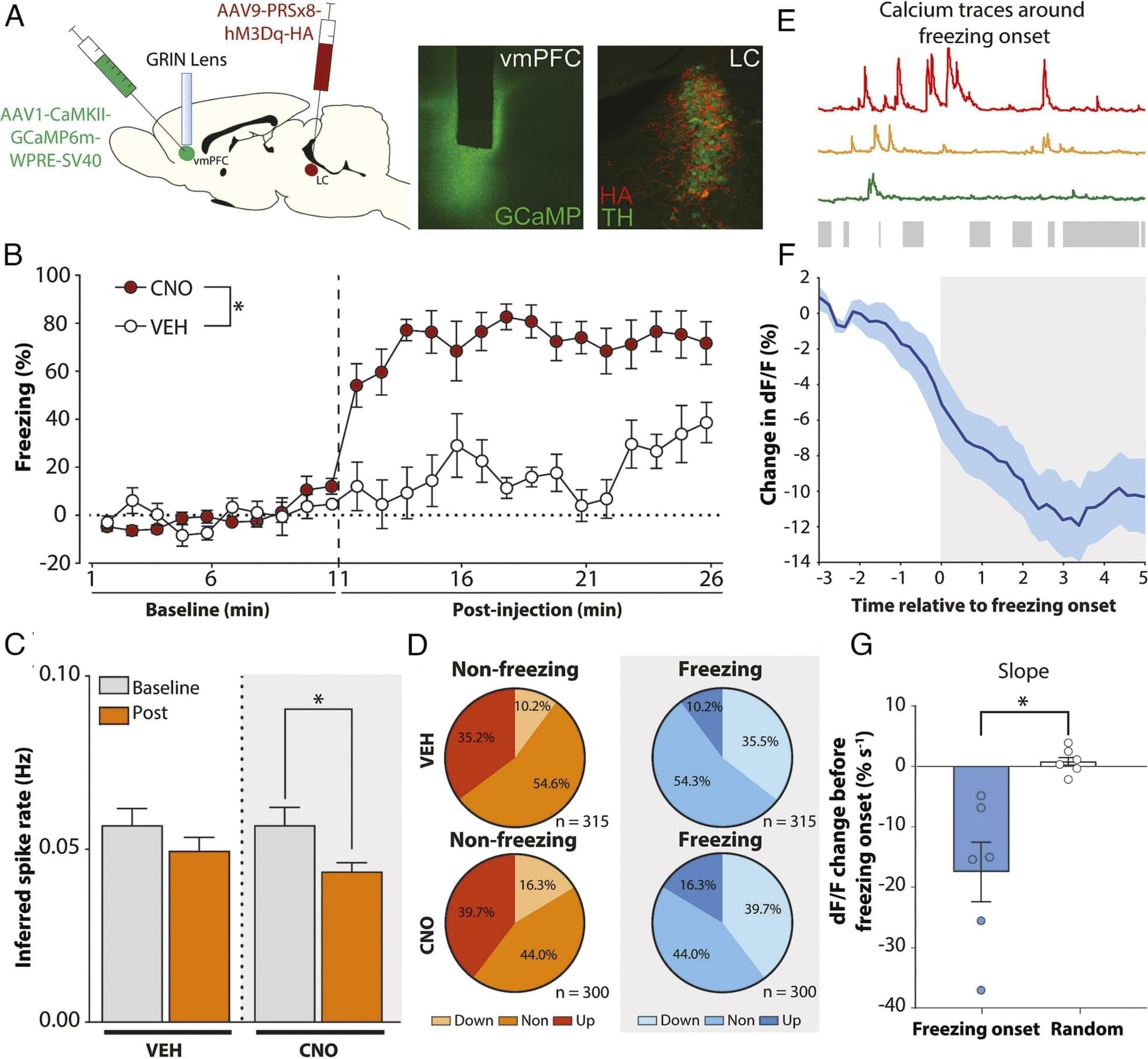
One of the most-viewed PNAS articles in the last week is “Locus coeruleus–amygdala circuit disrupts prefrontal control to impair fear extinction.” Explore the article here: https://ow.ly/yFH250Ywubb.
Stress undermines extinction learning and hinders exposure-based clinical therapies for a variety of neuropsychiatric disorders. In both animals and humans, dysfunction in the ventromedial prefrontal cortex (vmPFC) contributes to stress-impaired extinction, but the neural circuit by which stress modulates vmPFC function is not known. We hypothesize that locus coeruleus (LC) norepinephrine undermines extinction learning by recruiting projections from the basolateral amygdala (BLA) to vmPFC. Using a combination of circuit-specific chemogenetics and calcium imaging, we find that activation of LC noradrenergic neurons mimics a behavioral stressor (footshock), induces freezing behavior, reduces spontaneous neuronal activity in the vmPFC, impairs extinction learning, and alters the population dynamics of vmPFC ensembles.
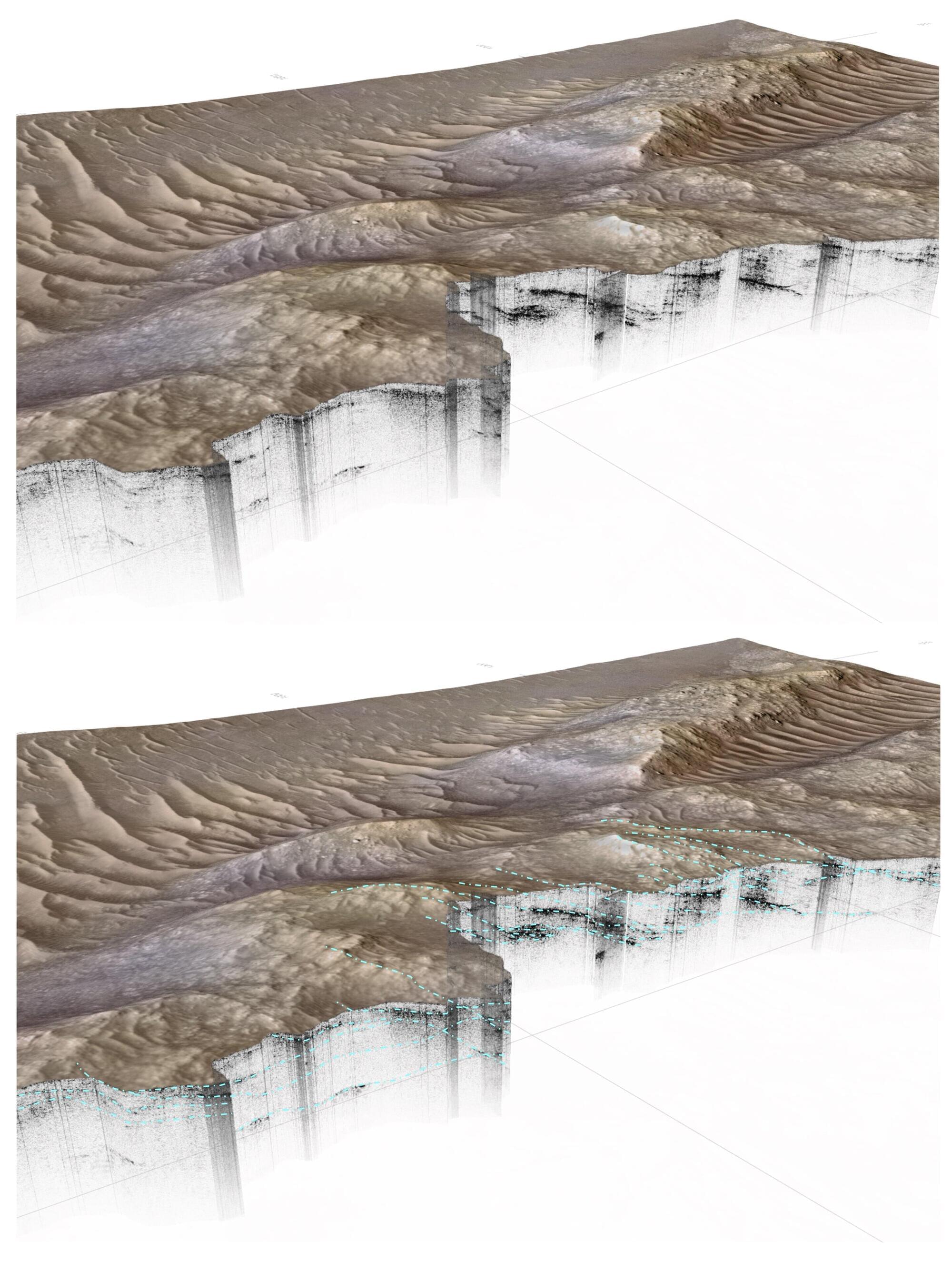
There’s more evidence that water once flowed on Mars with the discovery of an ancient river delta deep below the surface. NASA’s Perseverance rover found it more than 35 meters beneath Jezero Crater using ground-penetrating radar. Perseverance was launched in 2020 to search for signs of ancient life on the red planet. Since landing in February 2021, it has been exploring Jezero Crater and collecting rock samples.
The crater, which is approximately 45 kilometers (28 miles) in diameter, lies north of the Martian equator and was formed by an asteroid impact almost 4 billion years ago. NASA chose this spot to explore because numerous geological features suggest that water once flowed here and may have supported ancient life, specifically, a part of the crater called the Margin Unit. This area is packed with carbonates, which on Earth, usually form in stable aqueous environments, such as shallow seas or lakebeds.
The new research is published in the journal Science Advances and is based on data from 78 traverses of the area from September 2023 to February 2024.
Does the universe need observers to exist? Neil deGrasse Tyson and co-hosts Chuck Nice and Gary O’Reilly explore questions about entropy, spontaneous symmetry breaking, spectroscopy and more with astrophysicist Charles Liu.
Does the universe require observers for information to exist? From Niels Bohr and the Copenhagen interpretation to modern neuroscience and philosophy, the crew explores whether measurement creates reality or reveals it. How does the double-slit experiment fit into this? Are wave and particle behaviors determined by how we measure them?
The conversation turns to information itself. What do physicists mean by “information”? How is entropy connected to hidden information in a system? We discuss entropy through everyday examples like coin flips, burning wood, and boiling water. How does this relate to quantum computing? We explore how astronomers separate cosmic redshift from stellar motion using spectroscopy, how interstellar dust and extinction curves complicate observations, and why mapping that dust is both a challenge and a source of discovery.
We discuss why the Big Bang didn’t form a black hole, how spontaneous symmetry breaking may have split the fundamental forces, and whether science can meaningfully investigate the universe’s earliest moments. Wrapping up, the team looks ahead to multi-messenger astronomy, next-generation telescope technology, exotic ideas about the speed of light, and how information continues to reshape what we know about the cosmos.
Thanks to our Patrons Avery Ellis, Markus Riegler, Linda Tullberg, Gami Lannin, Arief Aziz, Ron Lawhon, Corie Prater, Patrick McNaught, FracturedEquality, Spengler, Peter Harbeson, Oddron86, Hudson Lowe, Drew Romaniak, V2022, Kyle Ferchen, Branko Denčić, Patrick Borgquist, DJ Sipe, Andy Blair, Alan Keizer, SR, Nihat Cubukcu, Greg Lance, Diwas Pandit, Anik Kasumi, Alexander Albert, Kodai, Dyonne Peters Lewoc AKA DPTaterTot, Adrian, Ben Goff, Jose Barreiro, Saurabh Chaudhari, Wimberley Children’s House, Jean Arthur Deda, Jerrel Thomas, Serkan Ergenc, Douglas Kennedy, Lee Browner, Manuel Palmer, Dans Jansons, Russell Harvey, BladiX, Lars-Ove Torstensson, Norman Weizer, Arian Farkhoy, S. Madge, Pavel Seraphimov, Amanda Wolfe, Heisenberg, Mattchew Phillips, Caleb Berumen, Sretooh, Gary Tabbert, Oscar Abreu Lamas, Kevin Attebury, Volker Haberlandt, SeaGolly, B. Shoemaker, Ruben Ferrer, Steven Adams, Daniel Hintz, Nathaniel Richardson, Nick Griffiths, Adam Schmidt, Scott Plummer, Northernlight, JoMama, Beth, Frank Cottone, Yinj, Betty Anderson, Paul Smith, John Little, Emad Uddin, Brian O’Brien, Jayden Moffatt, Kevin Mace, Zara DeBresoc, Rain Bresee, Mara (Farmstrong), Rose, Stiven, Demethius Jackson, Alejandro Rodriguez, J Davis, Chris Buhler, Nathan Davieau, Sourav Prakash Patra, Wayne Rasmussen, John from Bavaria, Stephanie Phillips, Yohojones, Josh Farrell, John, Oo-De-Lally, Millie Richter, Montague Films, Lawrey Goodrick, and John Giovannettone for supporting us this week.
Nanotechnology is moving from the realm of science fiction to reality, and in the process, these tiny technologies are offering giant opportunities.
Watch my exclusive video The Fermi Paradox: Air https://nebula.tv/videos/isaacarthur–… Nebula using my link for 40% off an annual subscription: https://go.nebula.tv/isaacarthur Credits: Nanotechnology: The Future of Everything Episode 481a; January 12, 2025 Produced, Narrated & Written: Isaac Arthur Select imagery/video supplied by Getty Images Music Courtesy of Epidemic Sound http://epidemicsound.com/creator Stellardrone, “In Time”, “Red Giant” Aerium, featuring Sieger, “Deiljocht“ Get Nebula using my link for 40% off an annual subscription: https://go.nebula.tv/isaacarthur.
Credits: Nanotechnology: The Future of Everything. Episode 481a; January 12, 2025 Produced, Narrated & Written: Isaac Arthur. Select imagery/video supplied by Getty Images. Music Courtesy of Epidemic Sound http://epidemicsound.com/creator. Stellardrone, \
From abiogenesis to AI, we rank the top Great Filter candidates and test them against the data to see which best explains the Fermi Paradox. Is the universe empty, or just dangerous? We explore ten filters—cosmic, biological, and civilizational—that could silence civilizations before they spread.
Visit our Website: http://www.isaacarthur.net Join Nebula: https://go.nebula.tv/isaacarthur Support us on Patreon: / isaacarthur Support us on Subscribestar: https://www.subscribestar.com/isaac-a… Group: / 1,583,992,725,237,264 Reddit: / isaacarthur Twitter: / isaac_a_arthur on Twitter and RT our future content. SFIA Discord Server: / discord . Credits: Could We Accidentally Destroy the Universe? Written, Produced & Narrated by: Isaac Arthur Select imagery/video supplied by Getty Images Music Courtesy of Epidemic Sound http://epidemicsound.com/creator.
Chapters 0:00 Intro 5:08 #10 The Fine-Tuned Universe & Rare Earth 12:55 #9 Abiogenesis (The Origin of Life) 16:29 #8 Complex Cells & Eukaryotes 20:14 #7 Multicellularity and Specialization 22:39 #6 Sexual Reproduction & Genetic Innovation 23:54 #5 Complex Animal Life 25:24 Curiosity 26:39 #4 Extended Childhood & Cooperative Rearing 29:17 #3 Long-Term Climate Stability 31:40 #2 Intelligence That Produces Technology 35:11 #1 The Late Filters: Surviving Technology, Ourselves, and Expanding Beyond the Home System.
Wildlife populations that become small and isolated, often due to habitat loss, inevitably experience inbreeding which can lead to the loss of fitness and eventual extinction. One solution is to perform a genetic rescue: a management intervention where new blood is brought in by introducing outsiders to a population to reduce inbreeding and restore diversity. But how do researchers know the inbreeding problem has been solved?
A new long-term study from Western, led by biology professor and chair David Coltman, shows DNA-based tools detected changes in inbreeding more accurately than traditional pedigree methods in a wild population of bighorn sheep that was recently genetically rescued. The study was published in the journal Evolutionary Applications.
Pedigree approaches estimate genetic health from family history, whereas genomic approaches directly analyze DNA.