According to files accessed by journalist Jack Poulson, Microsoft presented OpenAI’s DALL-E as a tool to conduct Advanced Computer Vision Training of Battle Management Systems (BMS).
A BMS is a software suite that provides military leaders with an overview of a combat situation and helps them plan troop movements, artillery fire, and air strike targets. According to Microsoft’s presentation, the DALL-E tool could generate artificial images and train BMS to visualize the ground situation better and identify appropriate strike targets.
Marshal Brain’s 2003 book Manna was quite ahead of its time in foreseeing that eventually, one way or another, we will have to confront and address the phenomenon of technological unemployment. In addition, Marshall is a passionate brainiac with a jovial personality, impressive background and a unique perspective. And so I was very happy to meet him in person for an exclusive interview. [Special thanks to David Wood without whose introduction this interview may not have happened!]
During our 82 min conversation with Marshall Brain we cover a variety of interesting topics such as: his books The Second Intelligent Species and Manna; AI as the end game for humanity; using cockroaches as a metaphor; logic and ethics; simulating the human brain; the importance of language and visual processing for the creating of AI; marrying off Siri to Watson; technological unemployment, social welfare and perpetual vacation; capitalism, socialism and the need for systemic change …
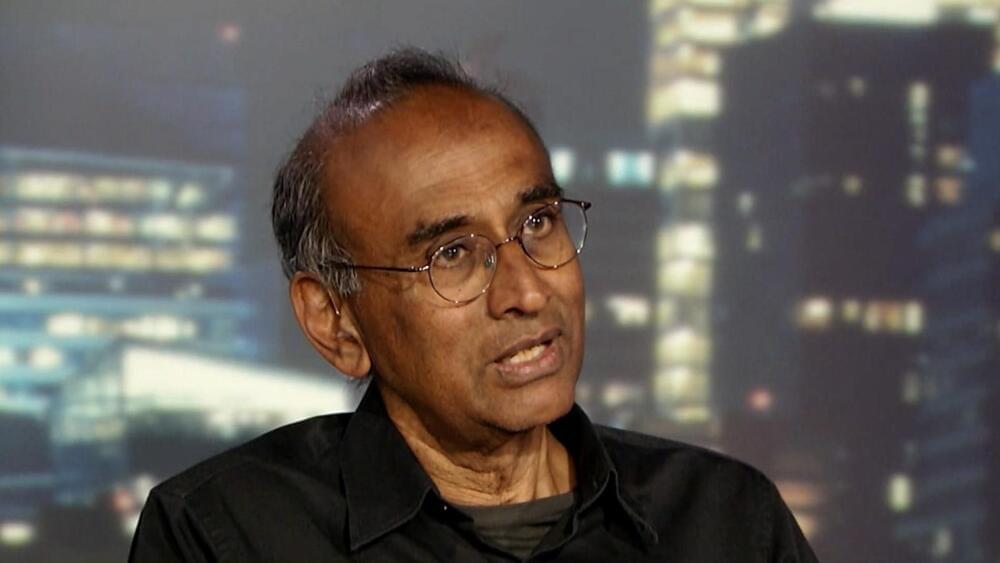
Nobel Prize-winning molecular biologist Venki Ramakrishnan sat down with ABC News Live to discuss the science and ethics of extending the human lifespan.
In his new book, “Why We Die: The New Science of Aging and the Quest for Immortality,” Ramakrishnan explains why we may not want to lengthen our lives much longer.
Ramakrishnan’s thought-provoking argument is that a society where people lived for hundreds of years could potentially become stagnant, as it would consist of the same group of people living longer, raising important questions about societal dynamics and progress.
People like the veteran computer scientist Ray Kurzweil had anticipated that humanity would reach the technological singularity (where an AI agent is just as smart as a human) for yonks, outlining his thesis in ‘The Singularity is Near’ (2005) – with a projection for 2029.
Disciples like Ben Goertzel have claimed it can come as soon as 2027. Nvidia’s CEO Jensen Huang says it’s “five years away”, joining the likes of OpenAI CEO Sam Altman and others in predicting an aggressive and exponential escalation. Should these predictions be true, they will also introduce a whole cluster bomb of ethical, moral, and existential anxieties that we will have to confront. So as The Matrix turns 25, maybe it wasn’t so far-fetched after all?
Sitting on tattered armchairs in front of an old boxy television in the heart of a wasteland, Morpheus shows Neo the “real world” for the first time. Here, he fills us in on how this dystopian vision of the future came to be. We’re at the summit of a lengthy yet compelling monologue that began many scenes earlier with questions Morpheus poses to Neo, and therefore us, progressing to the choice Neo must make – and crescendoing into the full tale of humanity’s downfall and the rise of the machines.
Researchers from the Oxford Martin Programme on Ethical Web and Data Architectures (EWADA), University of Oxford, have called for a more considered approach when embedding ethical principles in the development and governance of AI for children.
“We usually conform to the views of others for two reasons. First, we succumb to group pressure and want to gain social acceptance. Second, we lack sufficient knowledge and perceive the group as a source of a better interpretation of the current situation,” explains Dr. Konrad Bocian from the Institute of Psychology at SWPS University.
So far, only a few studies have investigated whether moral judgments, or evaluations of another person’s behavior in a given situation, are subject to group pressure. This issue was examined by scientists from SWPS University in collaboration with researchers from the University of Sussex and the University of Kent. The scientists also investigated how views about the behavior of others changed under the influence of avatar pressure in a virtual environment. A paper on this topic is published in PLOS ONE.
“Today, social influence is increasingly as potent in the digital world as in the real world. Therefore, it is necessary to determine how our judgments are shaped in the digital reality, where interactions take place online and some participants are avatars, not real humans,” points out Dr. Bocian.
Professor Ronjon Nag presents about his project on AI and healthcare, aiming at creating a multi-faceted approved therapy for extending lifespan and curing aging.
Dr. Ronjon Nag is an inventor, teacher and entrepreneur. He is an Adjunct Professor in Genetics at the Stanford School of Medicine, becoming a Stanford Distinguished Careers Institute Fellow in 2016. He teaches AI, Genes, Ethics, Longevity Science and Venture Capital. He is a founder and advisor/board member of multiple start-ups and President of the R42 Group, a venture capital firm which invests in, and creates, AI and Longevity companies. As an AI pioneer of smartphones and app stores, his companies have been sold to Apple, BlackBerry, and Motorola. More recently he has worked on the intersection of AI and Biology. He has numerous interests in the intersection of AI and Healthcare including being CEO of Agemica.ai working on creating a therapy for aging.