Researchers uncovered a CrashFix campaign where a fake Chrome ad blocker crashes browsers to trick users into installing the ModeloRAT malware.
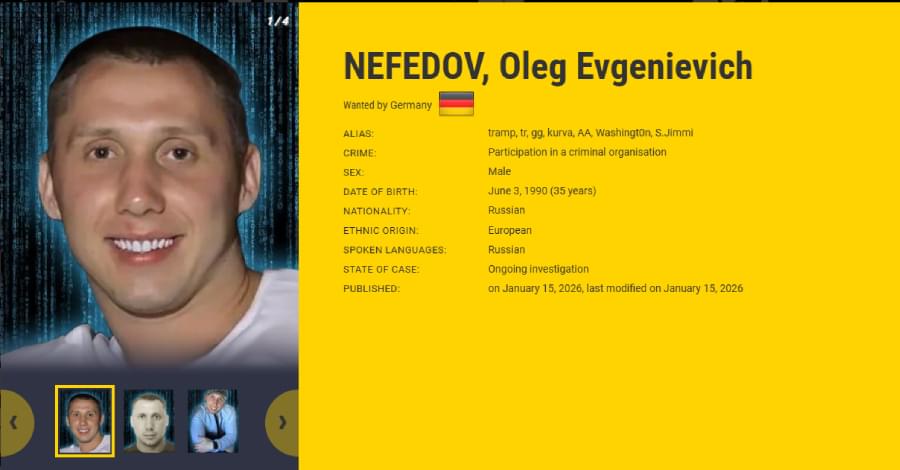
Ukrainian and German law enforcement authorities have identified two Ukrainians suspected of working for the Russia-linked ransomware-as-a-service (RaaS) group Black Basta.
In addition, the group’s alleged leader, a 35-year-old Russian national named Oleg Evgenievich Nefedov (Нефедов Олег Евгеньевич), has been added to the European Union’s Most Wanted and INTERPOL’s Red Notice lists, authorities noted.
“According to the investigation, the suspects specialized in technical hacking of protected systems and were involved in preparing cyberattacks using ransomware,” the Cyber Police of Ukraine said in a statement.

Information technology giant Ingram Micro has revealed that a ransomware attack on its systems in July 2025 led to a data breach affecting over 42,000 individuals.
Ingram Micro, one of the world’s largest business-to-business service providers and technology distributors, has over 23,500 associates, more than 161,000 customers, and reported net sales of $48 billion in 2024.
In data breach notification letters filed with Maine’s Attorney General and sent to those affected by the incident, the company said the attackers stole documents containing a wide range of personal information, including Social Security numbers.
Malicious Chrome extensions on the Chrome Web Store masquerading as productivity and security tools for enterprise HR and ERP platforms were discovered stealing authentication credentials or blocking management pages used to respond to security incidents.
The campaign was discovered by cybersecurity firm Socket, which says it identified five Chrome extensions targeting Workday, NetSuite, and SAP SuccessFactors, collectively installed more than 2,300 times.
“The campaign deploys three distinct attack types: cookie exfiltration to remote servers, DOM manipulation to block security administration pages, and bidirectional cookie injection for direct session hijacking,” reports Socket.

Ransomware attackers targeting a Fortune 100 company in the finance sector used a new malware strain, dubbed PDFSider, to deliver malicious payloads on Windows systems.
The attackers employed social engineering in their attempt to gain remote access by impersonating technical support workers and to trick company employees into installing Microsoft’s Quick Assist tool.
Researchers at cybersecurity company Resecurity found PDFSider during an incident response and describe it as a stealthy backdoor for long-term access, noting that it shows “characteristics commonly associated with APT tradecraft.”

Sharing my latest Forbes article: by Chuck Brooks.
Thanks for reading and sharing!
#cybersecurity #tech #ai #quantum #space Forbes
Artificial intelligence and quantum computing are no longer speculative technologies. They are reshaping cybersecurity, economic viability, and managing risk in real time.
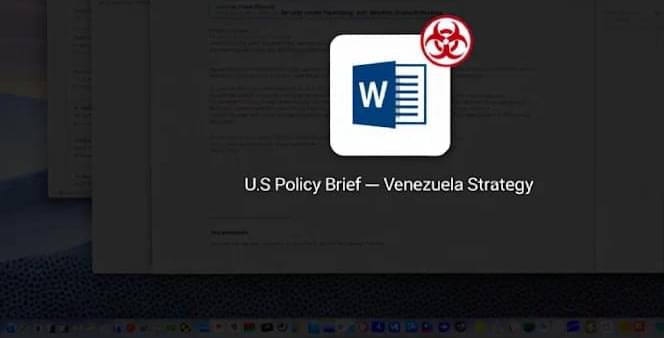
Security experts have disclosed details of a new campaign that has targeted U.S. government and policy entities using politically themed lures to deliver a backdoor known as LOTUSLITE.
The targeted malware campaign leverages decoys related to the recent geopolitical developments between the U.S. and Venezuela to distribute a ZIP archive (“US now deciding what’s next for Venezuela.zip”) containing a malicious DLL that’s launched using DLL side-loading techniques. It’s not known if the campaign managed to successfully compromise any of the targets.
The activity has been attributed with moderate confidence to a Chinese state-sponsored group known as Mustang Panda (aka Earth Pret, HoneyMyte, and Twill Typhoon), citing tactical and infrastructure patterns. It’s worth noting that the threat actor is known for extensively relying on DLL side-loading to launch its backdoors, including TONESHELL.

A cross-site scripting (XSS) flaw in the web-based control panel used by operators of the StealC info-stealing malware allowed researchers to observe active sessions and gather intelligence on the attackers’ hardware.
StealC emerged in early 2023 with aggressive promotion on dark web cybercrime channels. It grew in popularity due to its evasion and extensive data theft capabilities.
In the following years, StealC’s developer added multiple enhancements. With the release of version 2.0 last April, the malware author introduced Telegram bot support for real-time alerts and a new builder that could generate StealC builds based on templates and custom data theft rules.