Everyone has their favourite example of a trick that reliably gets a certain job done, even if they don’t really understand why. Back in the day, it might have been slapping the top of your television set when the picture went fuzzy. Today, it might be turning your computer off and on again.
Quantum mechanics — the most successful and important theory in modern physics — is like that. It works wonderfully, explaining things from lasers and chemistry to the Higgs boson and the stability of matter. But physicists don’t know why. Or at least, if some of us think we know why, most others don’t agree.
The person in the video is Su Ji, the founder of Garage Café. After struggling to keep his business afloat, he turned to smuggling high-tech products from the US and created a platform called Kunlun Nest. In another video, Su Ji continued to boast about smuggling, explaining how he bypassed US sanctions to acquire 200 NVIDIA H200 graphics cards. Join this channel to get access to perks: / @chinaobserver0
Stefanie Mueller is a prominent computer scientist and associate professor at CSAIL and EECS, MIT. Known for her research in the field of human-computer interaction (HCI) and digital fabrication. Her work focuses on designing and developing novel interactive systems and fabrication techniques that enable users to create personalized and customizable physical objects, advancing the field of HCI and bridging the gap between the digital and physical worlds.
Fuel your success with Forbes. Gain unlimited access to premium journalism, including breaking news, groundbreaking in-depth reported stories, daily digests and more. Plus, members get a front-row seat at members-only events with leading thinkers and doers, access to premium video that can help you get ahead, an ad-light experience, early access to select products including NFT drops and more:
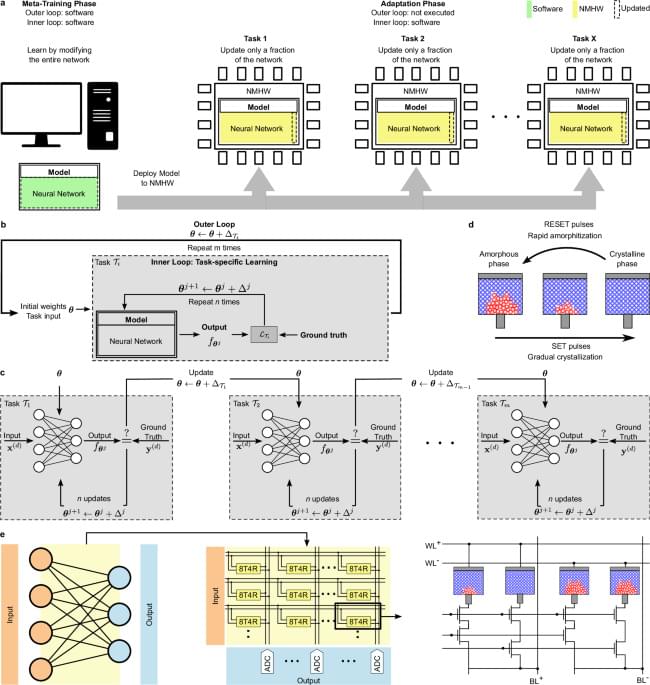
The authors combine biologically-inspired learning techniques with neuromorphic hardware to implement an energy-efficient system that demonstrates rapid learning of unseen tasks across various domains.
BCIs, Brain-Computer Interfaces, are no longer the technology of the future but of today. As this these devices improve and move from the lab to humans, what challenges and advantages will we gain, and how do they work?
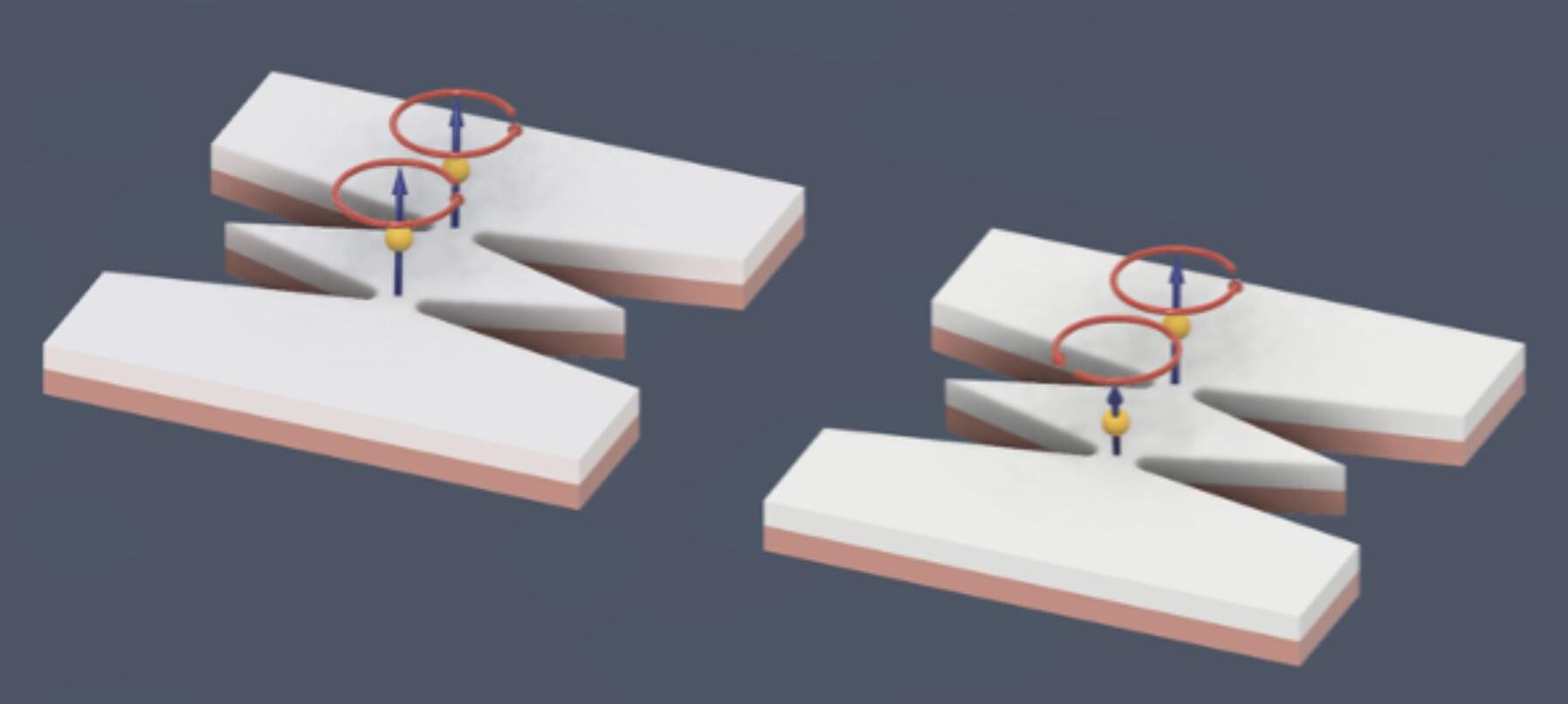
Spin Hall nano-oscillators (SHNOs) are nanoscale spintronic devices that convert direct current into high-frequency microwave signals through spin wave auto-oscillations. This is a type of nonlinear magnetization oscillations that are self-sustained without the need for a periodic external force.
Theoretical and simulation studies found that propagating spin-wave modes, in which spin waves move across materials instead of being confined to the auto-oscillation region, can promote the coupling between SHNOs.
This coupling may in turn be harnessed to adjust the timing of oscillations in these devices, which could be advantageous for the development of neuromorphic computing systems and other spintronic devices.
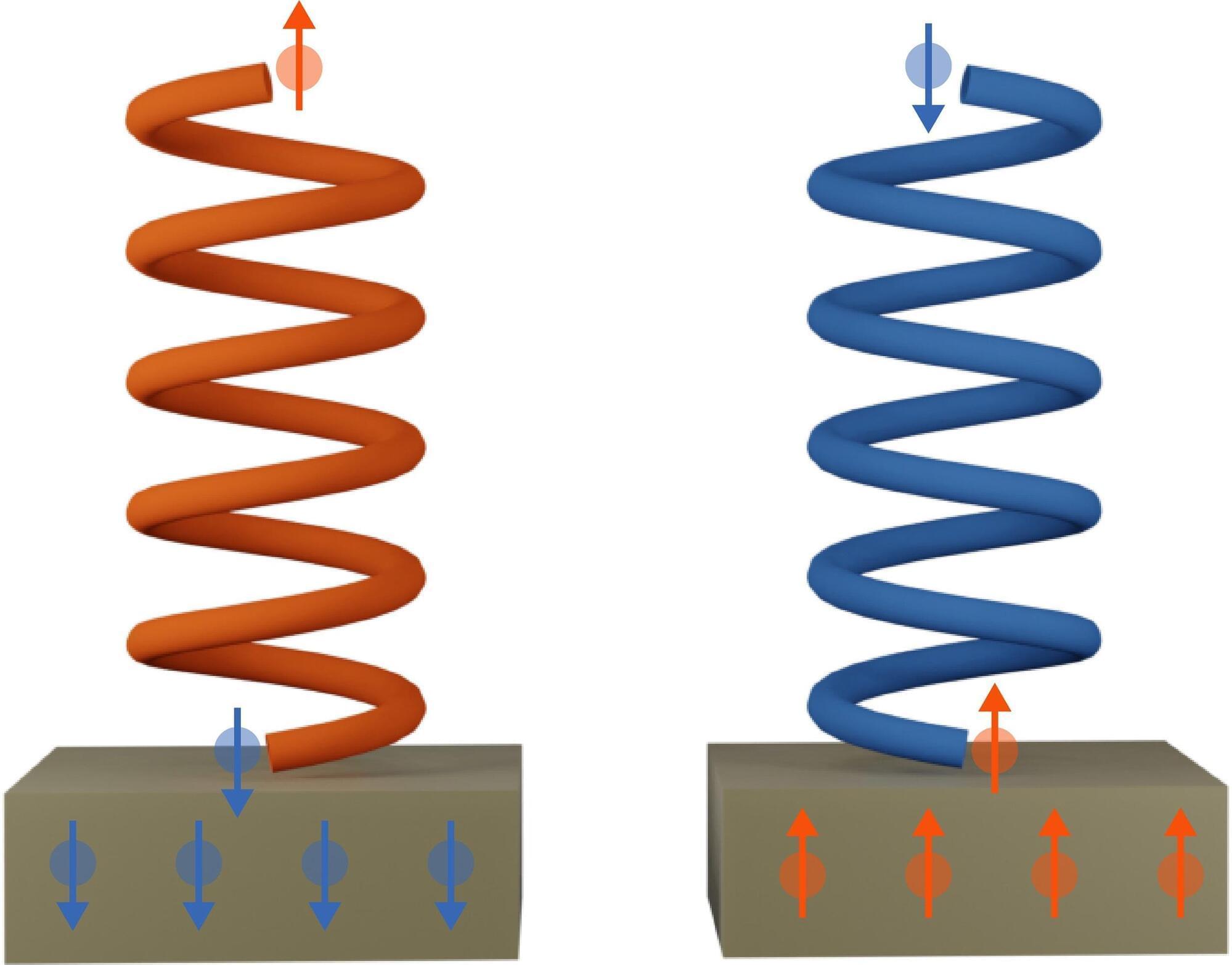
Electrons have a hidden feature — spin — that could revolutionize technology. Magnets can control it, but researchers are now exploring chiral molecules as an alternative. These uniquely shaped molecules might help direct electron spin just as well, opening new possibilities for future electronics.
Electrons are well known for their negative charge, which plays a key role in electric currents. However, they also possess another important property: spin, or magnetic moment. This characteristic has significant potential for improving data storage technologies, but controlling electron spin has proven challenging.
Specifically, isolating electrons with a particular spin direction, such as spin-up, is difficult. One established method involves passing an electric current through a ferromagnetic material, like iron. This process aligns the spin polarization of the electrons with the material’s magnetic field.
Researchers have uncovered a way to manipulate DNA
DNA, or deoxyribonucleic acid, is a molecule composed of two long strands of nucleotides that coil around each other to form a double helix. It is the hereditary material in humans and almost all other organisms that carries genetic instructions for development, functioning, growth, and reproduction. Nearly every cell in a person’s body has the same DNA. Most DNA is located in the cell nucleus (where it is called nuclear DNA), but a small amount of DNA can also be found in the mitochondria (where it is called mitochondrial DNA or mtDNA).