Toggle light / dark theme

Self-repairing batteries: engineers develop a way to create high-capacity long-life batteries

Engineers at the University of Tokyo continually pioneer new ways to improve battery technology. Professor Atsuo Yamada and his team recently developed a material that can significantly extend the life of batteries and afford them higher capacities, as well.

From smartphones to pacemakers and cars, batteries power much of our world and their importance only continues to grow. There are two particular aspects of batteries that many believe need to improve to meet our future needs. These are the longevity of the and also its capacity—how much charge it can store.

The chances are your devices use a type of battery called a . But another kind based on sodium rather than lithium may become commonplace soon. Both kinds of battery can store and deliver a large amount of charge, thanks to the way constituent materials pass electrons around. But in both lithium and in sodium batteries, repeated cycles of charging and usage can significantly reduce the storage capacity over time.

Read more

Researchers have identified the first human-specific fusion gene

University at Buffalo researchers have identified the first human-specific fusion gene—a hybrid of two genes—implicated in Alzheimer’s disease. The finding suggests that a neurotransmitter receptor, previously successful in animal studies but that failed in human trials for Alzheimer’s, might still turn out to be a valuable therapy.

In a paper published in February in Translational Psychiatry, the UB researchers reported that this human gene acts on a receptor for the neurotransmitter acetylcholine, which is involved in memory and learning, and which is reduced in people with Alzheimer’s.

The fusion gene is CHRFAM7A, which is very common in people and has been implicated in many , such as schizophrenia and bipolar disease.

Read more

Scientists create mind-controlled hearing aid

A mind-controlled hearing aid that allows the wearer to focus on particular voices has been created by scientists, who say it could transform the ability of those with hearing impairments to cope with noisy environments.

The device mimics the brain’s natural ability to single out and amplify one voice against background conversation. Until now, even the most advanced hearing aids work by boosting all voices at once, which can be experienced as a cacophony of sound for the wearer, especially in crowded environments.

Nima Mesgarani, who led the latest advance at Columbia University in New York, said: “The brain area that processes sound is extraordinarily sensitive and powerful. It can amplify one voice over others, seemingly effortlessly, while today’s hearing aids still pale in comparison.”

Read more

CRISPR catches out critical cancer changes

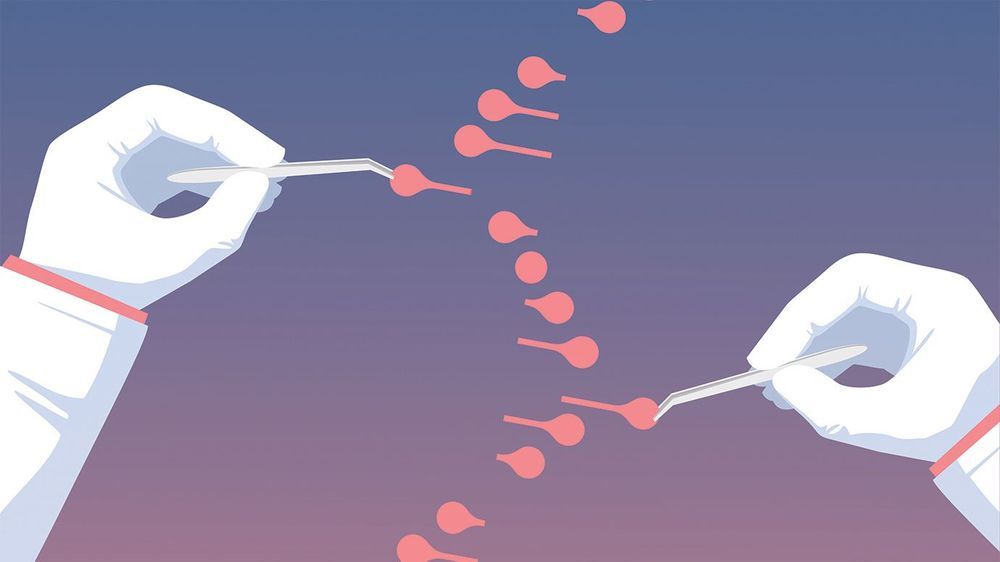
In the first large-scale analysis of cancer gene fusions, which result from the merging of two previously separate genes, researchers at the Wellcome Sanger Institute, EMBL-EBI, Open Targets, GSK and their collaborators have used CRISPR to uncover which gene fusions are critical for the growth of cancer cells. The team also identified a new gene fusion that presents a novel drug target for multiple cancers, including brain and ovarian cancers.

The results, published today (16 May) in Nature Communications, give more certainty for the use of specific to diagnose and guide the treatment of patients. Researchers suggest existing drugs could be repurposed to treat some people with pancreatic, breast and lung cancers, based on the gene fusions found in their tumours.

Gene fusions, caused by the abnormal joining of two otherwise different , play an important role in the development of . They are currently used as diagnostic tools to predict how particular cancer patients will respond to drugs, as well as prognostics, to estimate the outcome for a patient given the best possible care. They are also the targets of some of the latest targeted treatments for cancer.

Read more

Is Comprehensive Damage Repair Feasible?

Earlier this year at the Undoing Aging conference in Berlin, I had the opportunity to listen to a debate between Dr. Vadim Gladyshev of Harvard Medical School and Aubrey de Grey of the SENS Research Foundation. The topic was “Is comprehensive damage repair feasible?”

What followed was a friendly and interesting discussion about the three main approaches that might be applied to aging in order to delay, prevent, or reverse age-related diseases.

Read more

New York’s First Proton Therapy Center to Open in July

New York City is set to get a new radiation-treatment center, nearly a decade in the making, that uses proton beams to treat cancerous tumors.

Called the New York Proton Center, it is a for-profit partnership of Memorial Sloan Kettering Cancer Center, Montefiore Health System and Mount Sinai Health System, managed by the ProHEALTH company. Financing for the center was provided in part by the hospitals.

Item”].

Read more

/* */