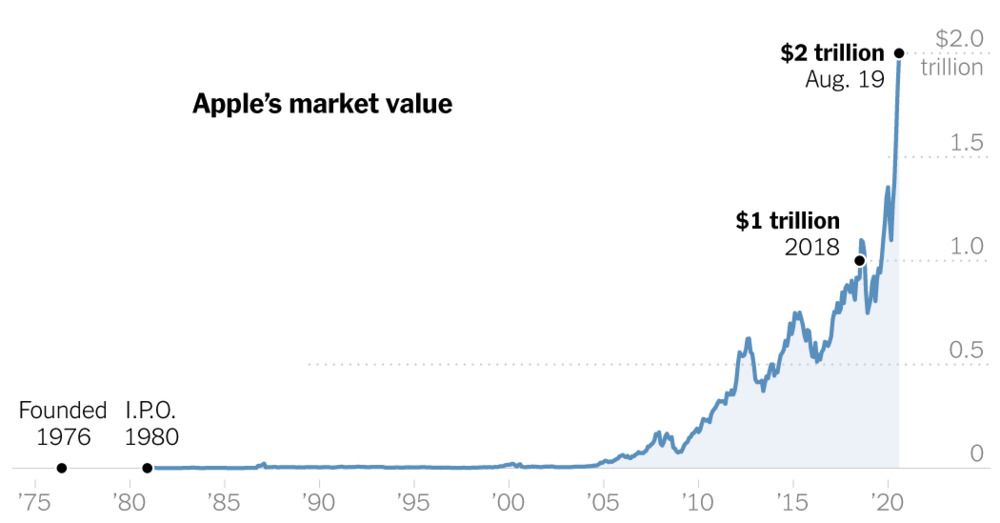
Apple is the first U.S. company to hit that value, a staggering ascent that began in the pandemic.

Circa 2013
Amazingly a man’s severed finger grew back thanks to one South Florida doctor and a little pig bladder.
Jockey Paul Halpern was feeding a horse when the animal managed to bite off one of his fingers.
“One of the guys that worked with me reached his hand in the horse’s mouth, took the fingertip out, and I jumped in the car, grabbed the rest of my finger wondering what we should do,” Halpern told CBS Miami.
According to the U.S. Centers For Disease Control (CDC), in 2018, over 36,000 people were killed, and over 2 million were injured, from motor vehicle crashes, costing the nation $44 billion in medical expenses and work loss.
The American Automobile Association (pronounced “Triple A”) is a federation of motor clubs throughout North America, and is a privately held, not-for-profit national member association and service organization, with over 60 million members in the United States and Canada, and provides a variety of services to its members, including roadside assistance and others.
The AAA Foundation for Traffic Safety is a not-for-profit, publicly supported charitable research and education organization dedicated to saving lives by preventing traffic crashes and reducing injuries when crashes occur.
Initially emphasizing projects related to safety patrols and driver education, today the Foundation has expanded its scope of work and has long been recognized as a leader in traffic safety, with a focus on four research priorities: Driver behavior and performance, Emerging technologies, Roadway systems and drivers, and Vulnerable road users.
Dr. David Yang, is Executive Director at AAA Foundation for Traffic Safety (and assumed this role in October 2016)
Previously, Dr. Yang worked for the U.S. Department of Transportation and private consulting firms.
Circa 2018
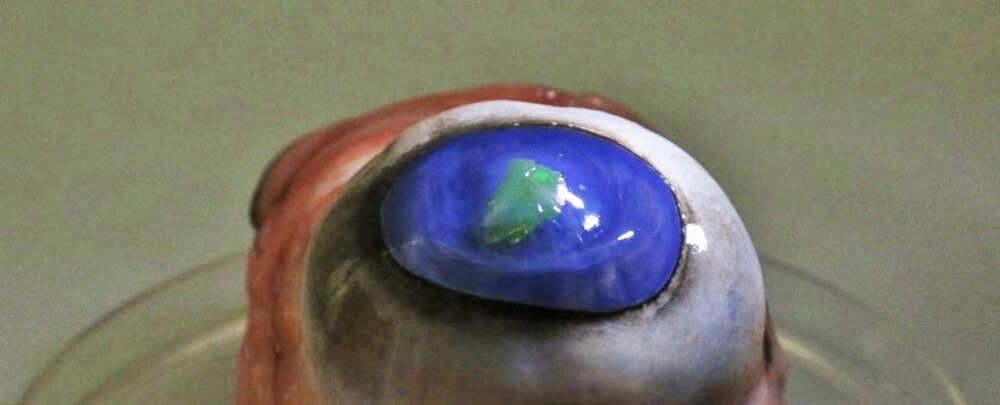
Scientists have created an ultrathin, flexible film that can emit laser light — and successfully tested it on a contact lens, demonstrating the possibility of laser eye-beams.
Before you rush out and buy a Cyclops-style visor, it’s not even close to powerful enough to cause damage. Instead, the researchers say, the technology has potential for use as wearable security tags, or even as a type of laser barcode.
The membranes containing the material are less than a thousandth of a millimetre thick, and flexible, which means they can easily be stuck to, or embedded into, polymer banknotes, or the soft plastics used for flexible contact lenses.
O,.o.
Livescience.com | By LIVESCIENCE
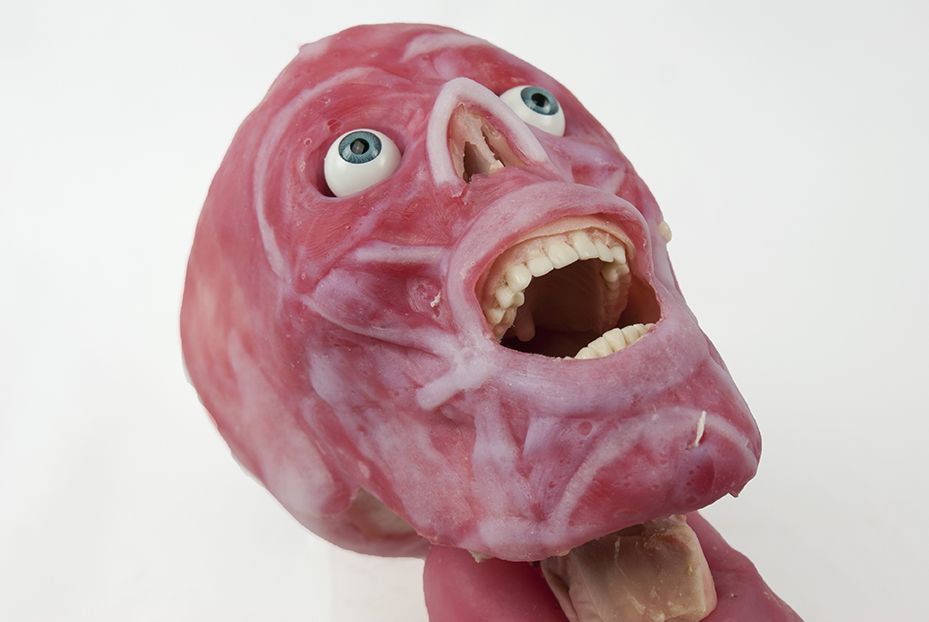
A high-tech model with the look and feel of actual human tissue helps medical professionals train to perform surgery on the real thing.
Part of my series to give a good grounding in the basics surrounding the subject of human health and longevity, for anyone interested, this week it is Sirtuins.
Are they one of the keys to the door towards ending aging?
I give a basic explanation of what sirtuins are and how they are being investigated for their influence on health span and length of life.
Sirtuin signaling in cellular senescence and aging
http://www.bmbreports.org/journal/view.html?uid=1333&vmd=Full&
Sirtuins and NAD+ in the Development and Treatment of Metabolic and Cardiovascular Diseases
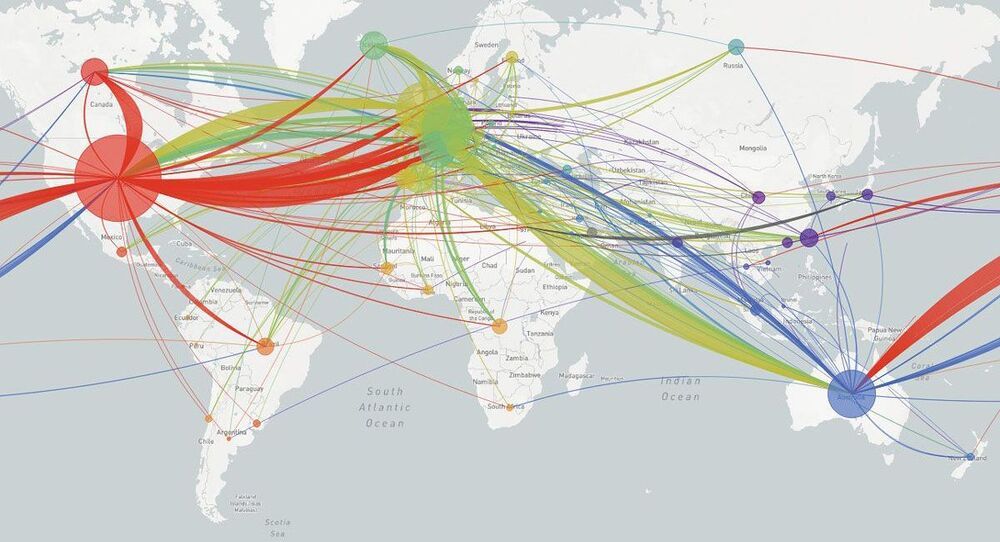

Coronaviruses are enveloped, positive-stranded RNA viruses with a genome of approximately 30 kb. Based on genetic similarities, coronaviruses are classified into three groups. Two group 2 coronaviruses, human coronavirus OC43 (HCoV-OC43) and bovine coronavirus (BCoV), show remarkable antigenic and genetic similarities. In this study, we report the first complete genome sequence (30,738 nucleotides) of the prototype HCoV-OC43 strain (ATCC VR759). Complete genome and open reading frame (ORF) analyses were performed in comparison to the BCoV genome. In the region between the spike and membrane protein genes, a 290-nucleotide deletion is present, corresponding to the absence of BCoV ORFs ns4.9 and ns4.8. Nucleotide and amino acid similarity percentages were determined for the major HCoV-OC43 ORFs and for those of other group 2 coronaviruses. The highest degree of similarity is demonstrated between HCoV-OC43 and BCoV in all ORFs with the exception of the E gene. Molecular clock analysis of the spike gene sequences of BCoV and HCoV-OC43 suggests a relatively recent zoonotic transmission event and dates their most recent common ancestor to around 1890. An evolutionary rate in the order of 4 × 10⁻⁴ nucleotide changes per site per year was estimated. This is the first animal-human zoonotic pair of coronaviruses that can be analyzed in order to gain insights into the processes of adaptation of a nonhuman coronavirus to a human host, which is important for understanding the interspecies transmission events that led to the origin of the severe acute respiratory syndrome outbreak.
Coronaviruses are large (120- to 160-nm), roughly spherical particles with a linear, nonsegmented, capped, and polyadenylated positive-sense single-stranded RNA genome that is encapsidated in a helical nucleocapsid. The envelope is derived from intracellular membranes and contains a characteristic crown of widely spaced club-shaped spikes that are 12 to 24 nm long. The genus Coronavirus (International Committee on the Taxonomy of Viruses database [ICTVdb], virus code 03.019.0.1) belongs to the family Coronaviridae in the order Nidovirales (7, 8).
Before the 2002-to-2003 severe acute respiratory syndrome (SARS) epidemic, coronaviruses were somewhat neglected in human medicine, but they have always been of considerable importance in animal health. Coronaviruses infect a variety of livestock, poultry, and companion animals, in whom they can cause serious and often fatal respiratory, enteric, cardiovascular, and neurologic diseases (25). Most of our understanding about the molecular pathogenic properties of coronaviruses has been achieved by the veterinary virology community.
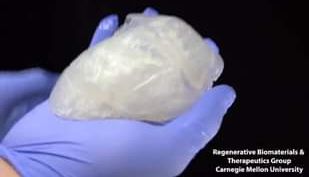
This is something straight out of ‘Westworld.’ With a repurposed 3D printer and a container of gelatin, researchers turned an MRI scan of a human heart into a full-size analog. Squeeze it, and it’ll give like the real thing. Slice it open, and you’ll find chambers. The advance might eventually lead to fully-functioning 3D-printed hearts: https://wired.trib.al/7UZPU68
📽️: Eman Mirdamadi, Daniel Shiwarski, Joshua Tashman.
Exciting momentum!! — Home Depot Founder, Bernie Marcus (age 91), and the Adolph Coors Foundation (beer family), putting millions of $$$ into comprehensive integrative health and wellness — Good to see the trend!!
The Marcus Institute of Integrative Health was established in Philadelphia in 2017 by Thomas Jefferson University and Jefferson Health, and a multi-million $$$ grant from the Marcus Foundation (headed by it’s Chairman, Bernie Marcus, Co-Founder of The Home Depot) to expand the research, education and clinical care profile of Jefferson’s integrative medicine program, and to set the international standard of excellence in evidence-based, patient-centered integrative care.
The institute features a novel curriculum focusing on the clinical applications of integrative medicine with an emphasis on functional biochemistry, nutrient-based therapies, mind-body neuroscience, novel mechanisms of healing and emerging therapies.
Dr. Daniel Monti, MD, MBA is the Founding Director and Chief Executive Officer of the Marcus Institute of Integrative Health — Jefferson Health. He is also Professor and Founding Chair of the historic, first-ever Department of Integrative Medicine and Nutritional Sciences, Sidney Kimmel Medical College, Thomas Jefferson University.
Dr. Monti received his MD from The State University of New York at Buffalo School of Medicine. His Postdoctoral work was in the Research Scholars Program, Department of Psychiatry and Human Behavior, at Jefferson Medical College.