Toggle light / dark theme

New math model could help with systematic predictions like potential coronavirus mutations

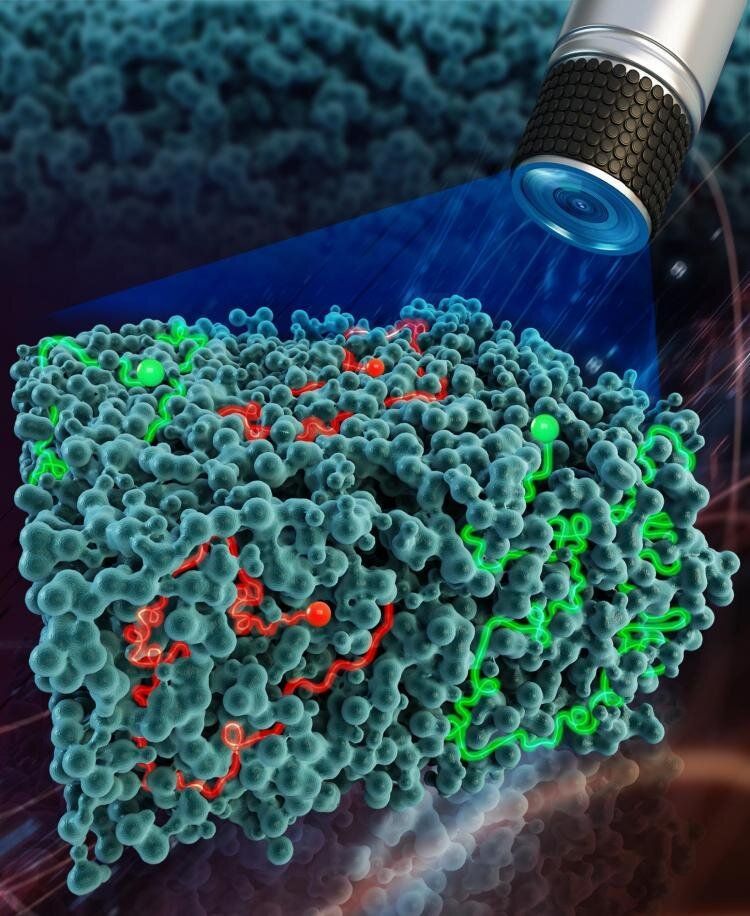
Could a mathematical model help predict future mutations of the coronavirus and guide scientists’ research as they rush to develop an effective vaccine? This is a possibility being considered by researchers at the USC Viterbi School of Engineering—Ph. D. students Ruochen Yang and Xiongye Xiao and Paul Bogdan, an associate professor of electrical and computer engineering.

Over the past year, Yang and Bogdan have worked to develop a model that could be used to investigate the relationship between a network and its parts to find patterns and make predictions. Now, Xiao is applying that successful model to the current pandemic. He is examining the RNA sequence of SARS-CoV-2, also known as coronavirus, to determine whether accurate predictions can be made about how its genetic code might change in the future based on past mutations. This research is still in progress and no conclusions have been reached yet.

Published in Nature Scientific Reports, a sister journal of Nature, Yang and Bogdan’s work is detailed in their paper, “Controlling the Multifractal Generating Measures of Complex Networks.”

Indie Comics Spotlight: Biohacking, transhumanism, and gender identity in ‘The Dark’

Sable co-created the story with artist Kristian Donaldson (Unthinkable, The Guild) and Mey Rude, a transgender woman who served as a consulting editor on the project. Sable took some time to talk to SYFY WIRE about biohacking, transhumanism, and how science fiction often predicts the future.


The Dark, by screenwriter and playwright Mark Sable (Unthinkable, Godkillers), is a graphic novel about a world plunged into chaos when a biotech virus pulls everything offline. The plot twists around government conspiracies, techno warfare, biohacking, and the unlikely pair out to stop it before another world war breaks loose. To make it all the scarier, Sable bases his fiction on fact. As a futurist who has consulted with think tanks and The Art of Future Warfare Project, he is well versed in techno warfare scenarios.

The Dark begins in 2035 and follows Master Sergeant Robert Carter, a N.E.O. (Networked Exoskeleton Operator) Marine whose power armor links him to the world’s technology, and whose implants mentally connect him to his unit. He feels what they feel, which proves torturous when his unit is attacked. The Dark takes on a double meaning as the experience leaves him both physically and technologically blind as the world’s tech crashes.

His world changes when he is sent after Camille — a skilled biohacker and analyst for NSA’s Bumble Hive — who is on a mission to expose the government’s use of bio-hacked surveillance. But she’s also attempting to recode herself in the process. You see, Camille is a trans woman and has discovered a way to change her gender at the molecular level. Camille’s quest to expose the truth and Carter’s pursuit of that very truth throw them together in a race against time to save the world.

Researchers Indicate COVID-19 Mutation Has Made Virus More Contagious

Researchers from Northwest University’s medical school in Chicago believe a mutation in the coronavirus has made it considerably more contagious.

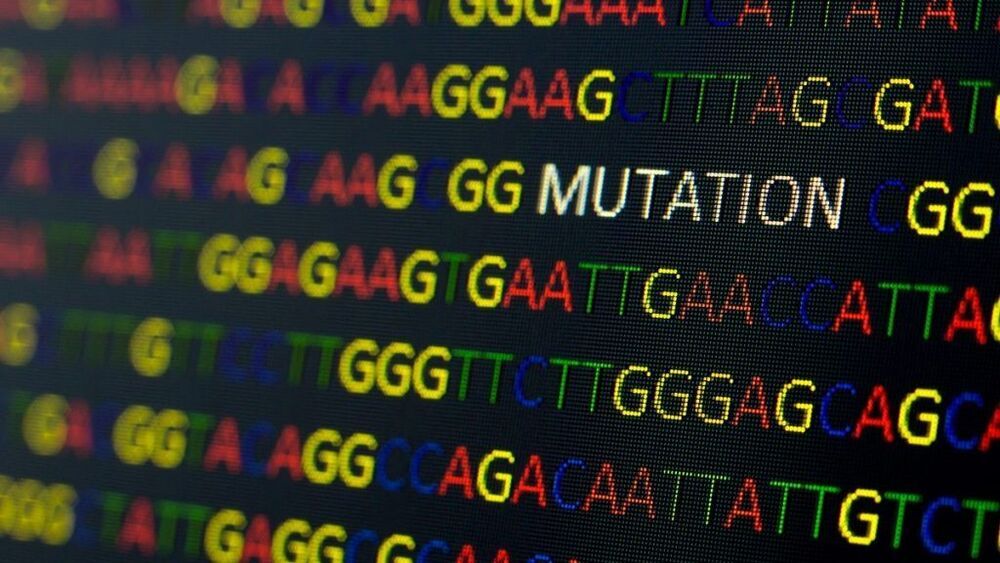
Infection disease special Egon Ozer of the Feinberg School of Medicine has said that upon examining the genetic structure of coronavirus samples, it was evident there was a change in one of the amino acids that allowed a spike in protein on the surface of the virus.

In layman’s terms, this change has allowed the virus to penetrate nearby cells easier, and as a result the virus can replicate faster and be passed on easier.

Age-related heart disease linked to gut bacteria metabolite

New research from the University of Colorado Boulder has offered some of the clearest evidence to date showing how the gut microbiome produces a metabolite that, over time, contributes to age-related declines in cardiovascular health.

High blood levels of trimethylamine-N-Oxide (TMAO), a metabolic byproduct of digestion, have been strongly linked to negative cardiovascular health. When one eats red meat, eggs or other animal proteins, certain types of gut bacteria feed on chemicals in those foods and produce TMA, or trimethylamine, which is then turned into TMAO in the liver.

A number of studies have linked TMAO to heart disease, however, until now it hasn’t been clear exactly how this metabolite causes cardiovascular damage. A robust new study, published in the journal Hypertension, is offering one of the first thorough mechanistic investigations illustrating how TMAO damages the cardiovascular system.

Rare brain-eating amoeba infection confirmed in Florida, health officials say

A person in Florida has been infected with a rare and usually deadly brain-eating amoeba, according to health officials.

The Florida Department of Health announced Friday that one patient in Hillsborough County has been infected with Naegleria fowleri, a water-borne, microscopic single-celled amoeba that attacks the brain.

“Infections can happen when contaminated water enters the body through the nose,” the health department said.

Scientists develop method to reveal the cell types most affected by genetic variation

Scientists at Johns Hopkins Medicine have found types of cells in the brain that are most susceptible to inherited genetic variants linked to schizophrenia. As a result, their work reveals a shortlist of the variants that most likely impact disease risk.

Details of the scientists’ analysis, published April 17, 2020, in Genome Research, compared human genetic studies with data on how DNA is folded in , including a diversity of .

“Every common has a major genetic component at its root,” says Andrew McCallion, Ph.D., professor of genetic medicine at the Johns Hopkins University School of Medicine. “Studying genomes across helps us find the genetic landmarks that are linked to disease, but these often don’t give us the biological insight that pinpoints the cells in which that variation acts to impact disease risk.”

Brain Iron Accumulation Linked to Cognitive Decline in Alzheimer’s

Summary: Iron accumulation in the brain’s neocortex has been linked to cognitive decline in people with Alzheimer’s disease.

Source: RSNA

Researchers using MRI have found that iron accumulation in the outer layer of the brain is associated with cognitive deterioration in people with Alzheimer’s disease, according to a study published in the journal Radiology.

/* */