Toggle light / dark theme

MRI scans of the brains of 130 mammals, including humans, indicate equal connectivity

Researchers at Tel Aviv University, led by Prof. Yaniv Assaf of the School of Neurobiology, Biochemistry and Biophysics and the Sagol School of Neuroscience and Prof. Yossi Yovel of the School of Zoology, the Sagol School of Neuroscience, and the Steinhardt Museum of Natural History, conducted a first-of-its-kind study designed to investigate brain connectivity in 130 mammalian species. The intriguing results, contradicting widespread conjectures, revealed that brain connectivity levels are equal in all mammals, including humans.

“We discovered that —namely the efficiency of information transfer through the —does not depend on either the size or structure of any specific ,” says Prof. Assaf. “In other words, the brains of all mammals, from tiny mice through humans to large bulls and dolphins, exhibit equal connectivity, and information travels with the same efficiency within them. We also found that the brain preserves this balance via a special compensation mechanism: when connectivity between the hemispheres is high, connectivity within each hemisphere is relatively low, and vice versa.”

Participants included researchers from the Kimron Veterinary Institute in Beit Dagan, the School of Computer Science at TAU and the Technion’s Faculty of Medicine. The paper was published in Nature Neuroscience on June 8.

How demand for robots and automation accelerated during the pandemic

The pandemic has accelerated demand for robots and automation. Robots have been regulated to marketing jobs, receptionist duties, and companionship for the elderly. But they’re really starting to come into their own and have practical use. Let’s take a look at how.

Supermarkets started to adopt robots to free up employees who previously spent time taking inventory to focus on disinfecting and sanitizing surfaces and processing deliveries to keep shelves stocked.

These retailers insist the robots are augmenting the work of employees, not replacing them. But as panic buying stops and sales decline in the recession, companies may no longer have a need for these workers.

Formation of quadruple helix DNA tracked in live human cells for the first time

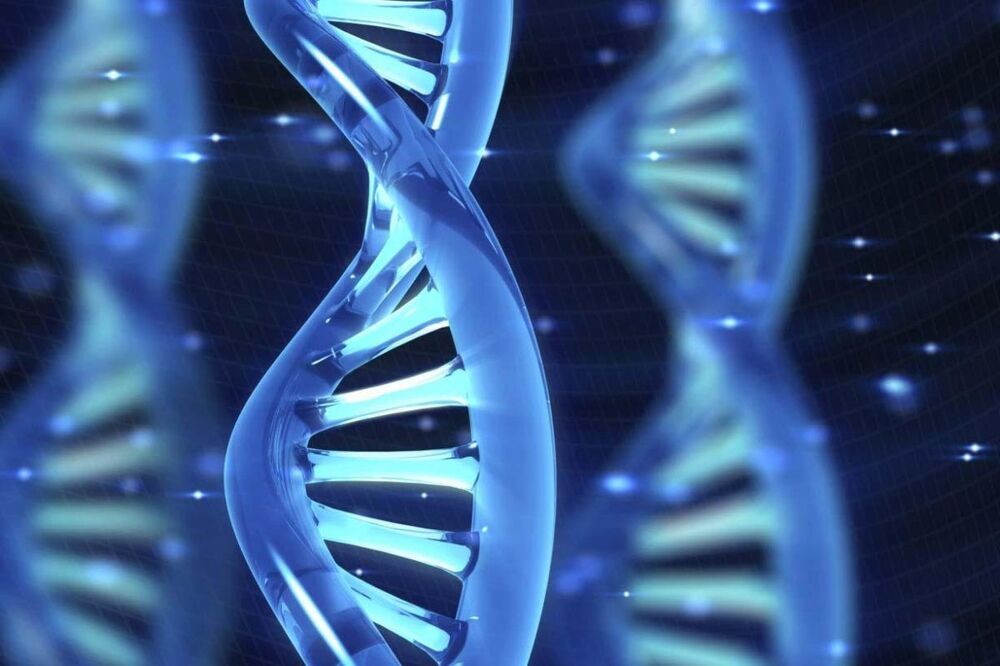
DNA usually forms the classic double helix shape discovered in 1953—two strands wound around each other. Several other structures have been formed in test tubes, but this does not necessarily mean they form within living cells.

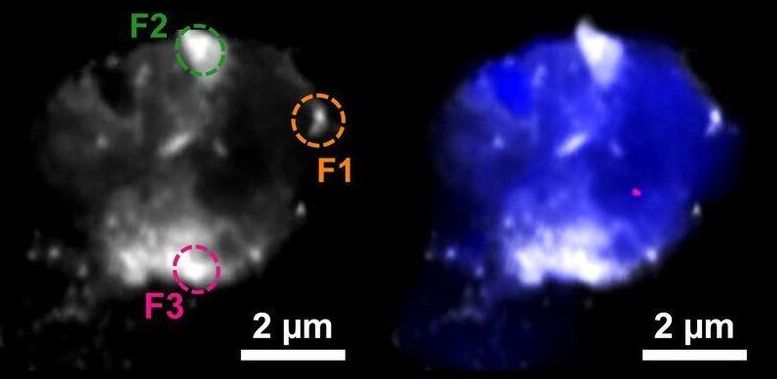
Quadruple helix structures, called DNA G-quadruplexes (G4s), have previously been detected in . However, the technique used required either killing the cells or using high concentrations of chemical probes to visualise G4 formation, so their actual presence within living cells under normal conditions has not been tracked, until now.

A research team from the University of Cambridge, Imperial College London and Leeds University have invented a fluorescent marker that is able to attach to G4s in living human cells, allowing them to see for the first time how the structure forms and what role it plays in cells.

Does green coffee bean extract work? A detailed review

Imagine if this very cheap thing could treat coronavirus 🤔

That would put a wrench in profiteers plans:

Green coffee bean extract is a popular weight loss and health supplement, but does it work, and is it safe?

Green coffee beans, or raw coffee beans, are coffee beans that are not roasted. Green coffee bean extract is a popular weight loss supplement.

Some research also suggests that green coffee bean extract could have health benefits, such as improving blood pressure and cholesterol levels. This belief stems from the antioxidant properties and other pharmacologically active compounds in the unroasted beans.


This article provides a review of green coffee bean extract, a popular weight loss, and health supplement. It looks at the health benefits, research, risks, and dosage.

Fastest spinning object in the world hits 300 billion rpm

Circa 2018


Back in July 2018, researchers at Purdue University created the world’s fastest-spinning object, which whipped around at 60 billion rpm – and now that seems like the teacup ride at Disneyland. The same team has now broken its own record using the same technique, creating a new nano-scale rotor that spins five times faster.

Like the earlier version, the whirling object in question is a dumbbell-shaped silica nanoparticle suspended in a vacuum. When it’s set spinning, this new model hit the blistering speed of over 300 billion rpm. For comparison, dentist drills are known to get up to about 500,000 rpm, while the fastest pulsar – which is the speediest-spinning known natural object – turns at a leisurely 43,000 rpm.

Setting this record involves shining two lasers at the nanoparticle. One holds it in place, while the other starts it spinning. When the photons that make up light strike an object, they exert a tiny amount of force on it, known as radiation pressure. Normally this force is too weak to have any noticeable effect, but in a vacuum where there’s very little friction record speeds can be reached. That’s the case here, and it also applies to the concept of light sails, which could one day propel spacecraft at high speeds.

Israeli startup’s synthetic cornea could restore sight to millions around the world

The Israeli startup CorNeat Vision has received approval to conduct clinical trials of a synthetic cornea that bio-integrates with the human eye.

The Health Ministry-approved trial of the CorNeat KPro will be run at Beilinson Hospital in Petach Tikva on 10 patients suffering from corneal blindness who are either not candidates for or have experienced one or more failed cornea transplants, the company announced last week.

Follow Israel Hayom on Facebook and Twitter

Regeneron Receives $450 Million BARDA Contract for COVID-19 Antibody Cocktail

Yesterday, Regeneron Pharmaceuticals, with the U.S. National Institute of Allergy and Infectious Diseases (NIAID), announced it was launching Phase III trials of REGN-COV2, the company’s two-antibody cocktail for the treatment and prevention of COVID-19. Today, it announced that it had received a $450 million contract to manufacture and supply the antibody cocktail as part of Operation Warp Speed from the Biomedical Advanced Research and Development Authority (BARDA).

BARDA is part of the Office of the Assistant Secretary for Preparedness and Response at the U.S. Department of Health and Human Services. The contract was also with the Department of Defense Joint Program Executive Office for Chemical, Biological, Radiological and Nuclear Defense.


A Phase I trial in 30 hospitalized and non-hospitalized patients with COVID-19 received a positive review from the Independent Data Monitoring Committee.

The Phase III prevention study will be run at about 100 locations and enroll about 2,000 people in the U.S. The Phase II/III treatment trials in hospitalized patients will evaluate about 1,850 hospitalized patients and 1,050 non-hospitalized patients and is planned for about 150 sites in the U.S., Brazil, Mexico, and Chile. It will study virologic and clinical endpoints. Preliminary data is expected later this summer.

The company had begun scaling up manufacturing of REGN-COV2 in the spring at its own expense. This deal with BARDA and the DoD supports continuing the manufacturing in order for it to be immediately available in the U.S. if the clinical trials are successful. That availability would be dependent on efficacy and safety and on the U.S. Food and Drug Administration (FDA)’s granting of an Emergency Use Authorization (EUA) or product approval.

The Answer To Anti-Aging Therapies May Lie In Your Aging Dog

While the issue of aging and DNA methylation is an area that is well-studied, modifications of DNA to reduce or reverse aging remains an area in need of exploration. Studies in mice utilizing interventions such as caloric restriction and the drug rapamycin have reversed and/or slowed age-related DNA methylation by up to 40%. Understanding the cross-species aging based on similar DNA behaviors may open more doors to investigating therapeutics to minimize lifetime risks of age-related illnesses such as Alzheimer’s disease and cancers.


A recent study published in Cell Systems sought to debunk one of the most common myths about dogs: much to our surprise, one “dog year” does not equal seven “human years.” As described in a recent Forbes piece by Sara Tabin, the relationship between dog years and human years is not linear, but is based on a logarithmic formula. The research group, based at the University of California, San Diego (UCSD), created the formula as follows:

Age in human years = 16 ln(age in dog years) +31. (ln means “natural logarithm).

/* */