Toggle light / dark theme

The Incredible Sci-Fi Series You Need To Be Watching Feels Truly Alien

Max’s Scavengers Reign is making waves in the science-fiction world for brilliantly conceptualizing and constructing an alien ecosystem that feels truly out of this world. Since its October 19 streaming premiere, we’ve been presented with a 12-episode run that places an exceptionally strong emphasis on the series’ setting in a way that makes the environment a more compelling character than the actual characters themselves. Scavengers Reign is a visually stunning and surreal take on humanity’s relationship with nature, and die-hard sci-fi fans can’t get enough of it.

YouTube creator NerdWriter1 posted a short breakdown of the series and grapples with the other-worldliness that Scavengers Reign presents. He likens the series’ emphasis on the environment to Werner Herzog’s documentary Burden of Dreams, in which Herzog suggests that nature is indifferent to humanity. In other words, nature has its own agenda, and the idea of harmony between humanity and nature is something that doesn’t necessarily exist when you consider how punishing an unfamiliar ecosystem can be to humans who are trying to traverse the vast landscapes full of unknown flora, fauna, and critters who rule the land.

Much like the real-life chaos that’s found in Burden of Dreams, Scavengers Reign presents a harrowing world in which its protagonists are tasked with navigating through unfamiliar territory.

How to think computationally about AI, the universe and everything

Drawing on his decades-long mission to formulate the world in computational terms, Stephen Wolfram delivers a profound vision of computation and its role in the future of AI. Amid a debut of mesmerizing visuals depicting the underlying structure of the universe, he provides a sweeping survey of his life’s work, offering a new perspective on the applications — and consequences — of AI powered by computational language.

Harvard Professor Says Godlike Aliens May Be Creating Universes in Labs

face_with_colon_three I agree face_with_colon_three


In a new interview, perpetually provocative Harvard astronomer and alien hunter Avi Loeb posited both that super-human aliens could be building “baby universes” in labs and that his haters are just “jealous.”

When discussing his work and theories in a chat with Fox News, Loeb showed his tendency toward imaginative, deeply speculative theories of extraterrestrial life.

“You can imagine that the superhuman civilization that understands how to unify quantum mechanics and gravity might actually be able to create a baby universe in the laboratory,” he told the news outlet, “a quality that we assign to God in religious texts.”

Starship Troopers by Robert A. Heinlein (Christopher Hurt)

Starship Troopers.
by Robert A. Heinlein.
Read by Christopher Hurt.
Originally issued by NLS on cassette in 1982
Can we refrain from inane comments about fascism? Unless you have something constructive to say I’ll probably just delete it and block you from commenting in the future. Or I might turn off comments altogether. With that out of the way, enjoy the book.
“Thousands of years in the future, a young man joins mobile infantry and fights in an interplanetary war against insect-like aliens.“
Chapter list:
00:00:00 — (i) Book info.
00:01:03 — (01)
00:38:44 — (02)
01:17:03 — (03)
01:35:28 — (04)
01:51:35 — (05)
02:24:49 — (06)
03:03:54 — (07)
03:23:54 — (08)
03:49:49 — (09)
04:05:24 — (10)
04:36:24 — (11)
05:13:19 — (12)
06:25:44 — (13)
08:20:23 — (14)

Like these books? Want to help?
These books come from the National Library Services.
I encourage you to donate:
https://www.loc.gov/nls/about/donate/

Are We Actually Living in a Multiverse? The Basic Math May Be Wrong

One of the most startling scientific discoveries of recent decades is that physics appears to be fine-tuned for life. This means that for life to be possible, certain numbers in physics had to fall within a certain, very narrow range.

One of the examples of fine-tuning which has most baffled physicists is the strength of dark energy, the force that powers the accelerating expansion of the universe.

If that force had been just a little stronger, matter couldn’t clump together. No two particles would have ever combined, meaning no stars, planets, or any kind of structural complexity, and therefore no life.

The Expanse Behind the Science Gravity

Buy me a coffee: https://ko-fi.com/chrisdanelon.
My game on Steam: https://store.steampowered.com/app/1550870/The_Indigo_Parallel/
Join my Discord Server: https://discord.gg/NardUX9Hqy.

The Expanse is an American science fiction television series developed by Mark Fergus and Hawk Ostby for the Syfy network, and is based on the series of novels of the same name by James S. A. Corey. The series is set in a future where humanity has colonized the Solar System. It follows a disparate band of protagonists—United Nations Security Council member Chrisjen Avasarala (Shohreh Aghdashloo), police detective Josephus Miller (Thomas Jane), ship’s officer James Holden (Steven Strait) and his crew—as they unwittingly unravel and place themselves at the center of a conspiracy that threatens the system’s fragile state of cold war, while dealing with existential crises brought forth by newly discovered alien technology.

The Expanse has received a positive critical response, with particular praise for its visuals, character development and political narrative. It received a Hugo Award for Best Dramatic Presentation and three Saturn Award nominations for Best Science Fiction Television Series. Syfy cancelled the series after three seasons. Amazon later acquired the series, producing three more seasons, with the sixth and final season premiering on December 10, 2021.

#TheExpanse #scifi #space #syfy #expanse #expanseonprime #amazon

Webb’s Window Into Cosmic Birth: Ice Pebble Drift Sparks Planetary Life

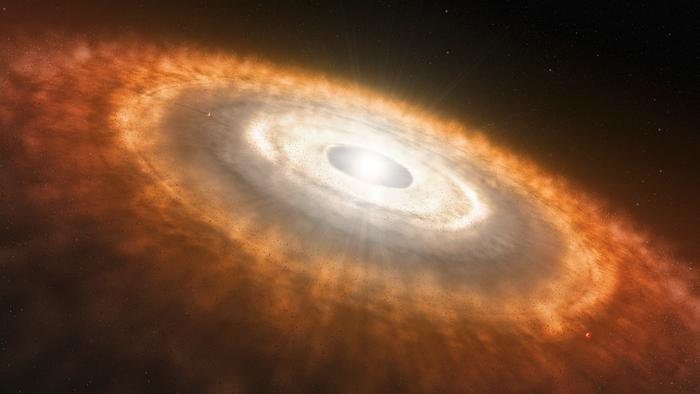
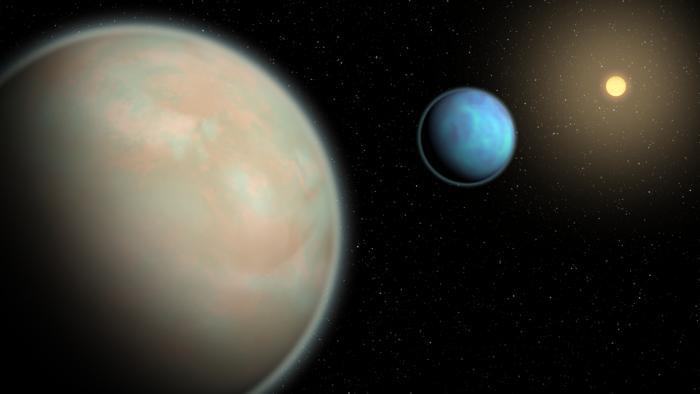
How are planets born? Scientists have long proposed that ice-covered pebbles are the seeds of planet formation. These icy solids are thought to drift toward the newborn star from the cold, outer reaches of the disk surrounding it. The theory predicts that, as these pebbles enter the warmer region closer to the star, they would release significant amounts of cold water vapor, delivering both water and solids to nascent planets.

Now, the James Webb Space Telescope.

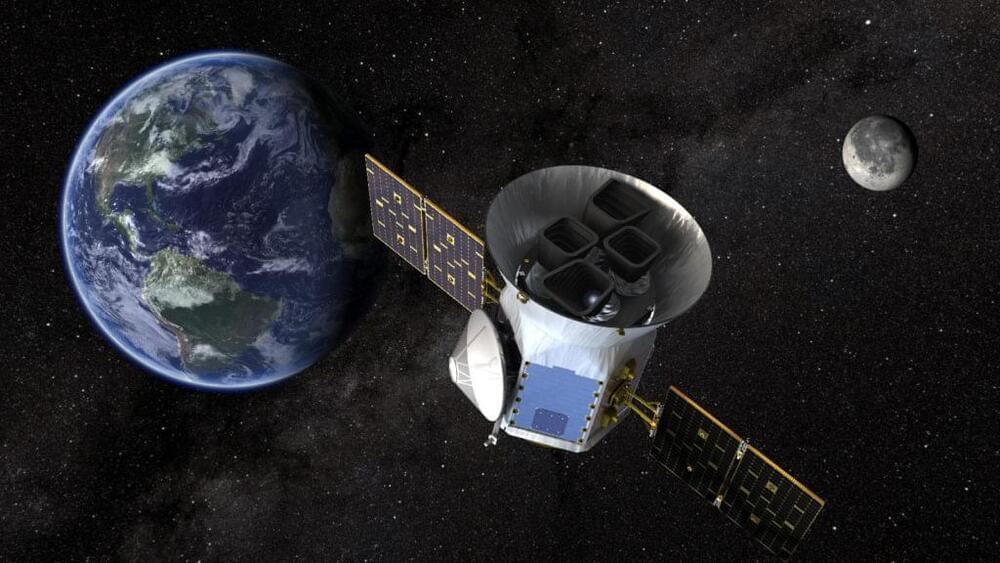
The James Webb Space Telescope (JWST or Webb) is an orbiting infrared observatory that will complement and extend the discoveries of the Hubble Space Telescope. It covers longer wavelengths of light, with greatly improved sensitivity, allowing it to see inside dust clouds where stars and planetary systems are forming today as well as looking further back in time to observe the first galaxies that formed in the early universe.

Unveiling the Secrets of Alien Worlds: The Jurassic-Era Clue That Could Be Key to Finding Habitable Exoplanets

Things may not have ended well for dinosaurs on Earth, but Cornell University astronomers say the “light fingerprint” of the conditions that enabled them to emerge here provide a crucial missing piece in our search for signs of life on planets orbiting alien stars.

Their analysis of the most recent 540 million years of Earth’s evolution, known as the Phanerozoic Eon, finds that telescopes could better detect potential chemical signatures of life in the atmosphere of an Earth-like exoplanet.

An exoplanet (or extrasolar planet) is a planet that is located outside our Solar System, orbiting around a star other than the Sun. The first suspected scientific detection of an exoplanet occurred in 1988, with the first confirmation of detection coming in 1992.

/* */