Toggle light / dark theme

Get the latest international news and world events from around the world.

Log in for authorized contributors

A BCL-xL/BCL-2 PROTAC effectively clears senescent cells in the liver and reduces MASH-driven hepatocellular carcinoma in mice

Yang, Jn-Simon, He et al. report that the dual BCL-xL/BCL-2 PROTAC 753b is a potent and liver-tropic senolytic, which (unlike other inhibitors of BCL-xL) does not cause severe thrombocytopenia. They evaluate its efficacy in natural aging and in reducing progression from steatotic liver disease to hepatocellular carcinoma, using mouse models.

Cyber, AI & Critical Infrastructure Convergence Risks

By Chuck Brooks

#cybersecurity #artificialintelligence #criticalinfrastructure #risks


By Chuck Brooks, president of Brooks Consulting International

Federal agencies and their industry counterparts are moving at a breakneck pace to modernize in this fast-changing digital world. Artificial intelligence, automation, behavioral analytics, and autonomous decision systems have become integral to mission-critical operations. This includes everything from managing energy and securing borders to delivering healthcare, supporting defense logistics, and verifying identities. These technologies are undeniably enhancing capabilities. However, they are also subtly altering the landscape of risk.

The real concern isn’t any one technology in isolation, but rather the way these technologies now intersect and rely on each other. We’re leaving behind a world of isolated cyber threats. Now, we’re facing convergence risk, a landscape where cybersecurity, artificial intelligence, data integrity, and operational resilience are intertwined in ways that often remain hidden until a failure occurs. We’re no longer just securing networks. We’re safeguarding confidence, continuity, and the trust of society.

Carbon monoxide, the ‘silent killer,’ becomes a boon for fuel cell catalysts

Researchers have developed a technology that uses carbon monoxide, typically harmful to humans, to precisely control metal thin films at a thickness of 0.3 nanometers. This technology enables faster and simpler production of core–shell catalysts, a key factor in improving the economic viability of fuel cells, and is expected to significantly boost related industries.

The findings are published in the journal ACS Nano. The team includes Dr. Gu-Gon Park, Dr. Yongmin Kwon, and Dr. Eunjik Lee from the Hydrogen Fuel Cell Laboratory at the Korea Institute of Energy Research.

Researchers confirm new Rickettsia species found in dogs

Researchers from North Carolina State University have confirmed that a species of Rickettsia first seen in dogs in 2018 is a new species of bacteria. The new species, dubbed Rickettsia finnyi, is associated with symptoms similar to those of Rocky Mountain spotted fever (RMSF) in dogs, but has not yet been found in humans.

The work appears in Emerging Infectious Diseases.

Rickettsia pathogens are categorized into four groups; of those, the spotted-fever group Rickettsia (which is transmitted by ticks) is the most commonly known and contains the most identified species. There are more than 25 species of tick-borne, spotted-fever group Rickettsia species worldwide, with R. rickettsii—which causes RMSF—being one of the most virulent and dangerous.

Perseverance Finds Tropical-Style Clays on Mars

Dr. Briony Horgan: “You need so much water that we think these could be evidence of an ancient warmer and wetter climate where there was rain falling for millions of years.”


What was Mars like billions of years ago? This is what a recent study published in Communications Earth & Environment hopes to address as an international team of scientists investigated intriguing evidence from the surface of Mars that could indicate heavy water activity existed long ago. This study has the potential to help scientists better understand ancient conditions on Mars and whether they were favorable for supporting life as we know it.

For the study, the researchers examined aluminum-rich rock fragments that were discovered by NASA’s Perseverance rover within Jezero Crater on Mars, and specifically the processes how they formed. This is because aluminum-rich clay minerals on Earth often form from heavy rainfall or other water-driven activities. Using the rover’s SuperCam and Mastcam-Z instruments, the researchers discovered the fragments—which were composed of aluminum and titanium with depleted traces of iron and magnesium—likely were analogs for heavy rainfall on Earth under greenhouse conditions. Therefore, the researchers concluded they potentially formed under intense wet conditions on Mars.

The unique architecture of umbrella toxins permits a two-tiered molecular bet-hedging strategy for interbacterial antagonism

Umbrella toxin particles produced by Actinobacteria contain five spokes tipped with variable lectin domains. Here, Zhao et al. show that these lectins mediate species-specific binding to a previously unrecognized cell surface carbohydrate polymer and propose that the modular nature of umbrella particles enables bet hedging against unpredictable competitor encounters.

Cell nucleus shape may influence cancer treatment success

Cancer cells with a cell nucleus that is easily deformed are more sensitive to drugs that damage DNA. These are the findings of a new study by researchers at Linköping University in Sweden. The results may also explain why combining certain cancer drugs can produce the opposite of the intended effect. The study has been published in the journal Nature Communications.

A few years ago, a new type of drug was introduced that exploits deficiencies in cancer cells’ ability to repair damage to their DNA. These drugs, called PARP1 inhibitors, are used against cancers that have mutations in genes involved in DNA repair, such as the breast cancer gene 1 (BRCA1).

This gene has such a central role in the cell’s ability to repair serious DNA damage that mutations in it greatly increase the risk of developing cancer, often at a young age. The risk is so high that some women with a mutated BRCA1 gene choose to have their breasts and ovaries surgically removed to prevent cancer.

Plant ‘first responder’ cells warn neighbors about bacterial pathogens

Purdue University researchers found that a subset of epidermal cells in plant leaves serves as early responders to chemical cues from bacterial pathogens and communicate this information to neighbors through a local traveling wave of calcium ions. The properties of this local wave differ from those generated when epidermal cells are wounded, suggesting that distinct mechanisms are used by plants to communicate specific types of pathogen attack, the team reported Dec. 2 in Science Signaling.

The new work from Purdue’s Emergent Mechanisms in Biology of Robustness Integration and Organization (EMBRIO) Institute highlights the importance of calcium ion signatures or patterns in the cytoplasm of cells. Plants and animals use calcium ions to transmit biologically critical sensory information within single cells, across tissues and even between organs.

“When a bacterium infects plant material, or when a fungus tries to invade plant tissue, cells and tissues recognize the presence of an attacker,” said Christopher Staiger, a professor in the Department of Botany and Plant Pathology and Distinguished Professor of Biological Sciences. “They recognize both chemical and mechanical cues. This study is largely about how the chemical cues are sensed.”

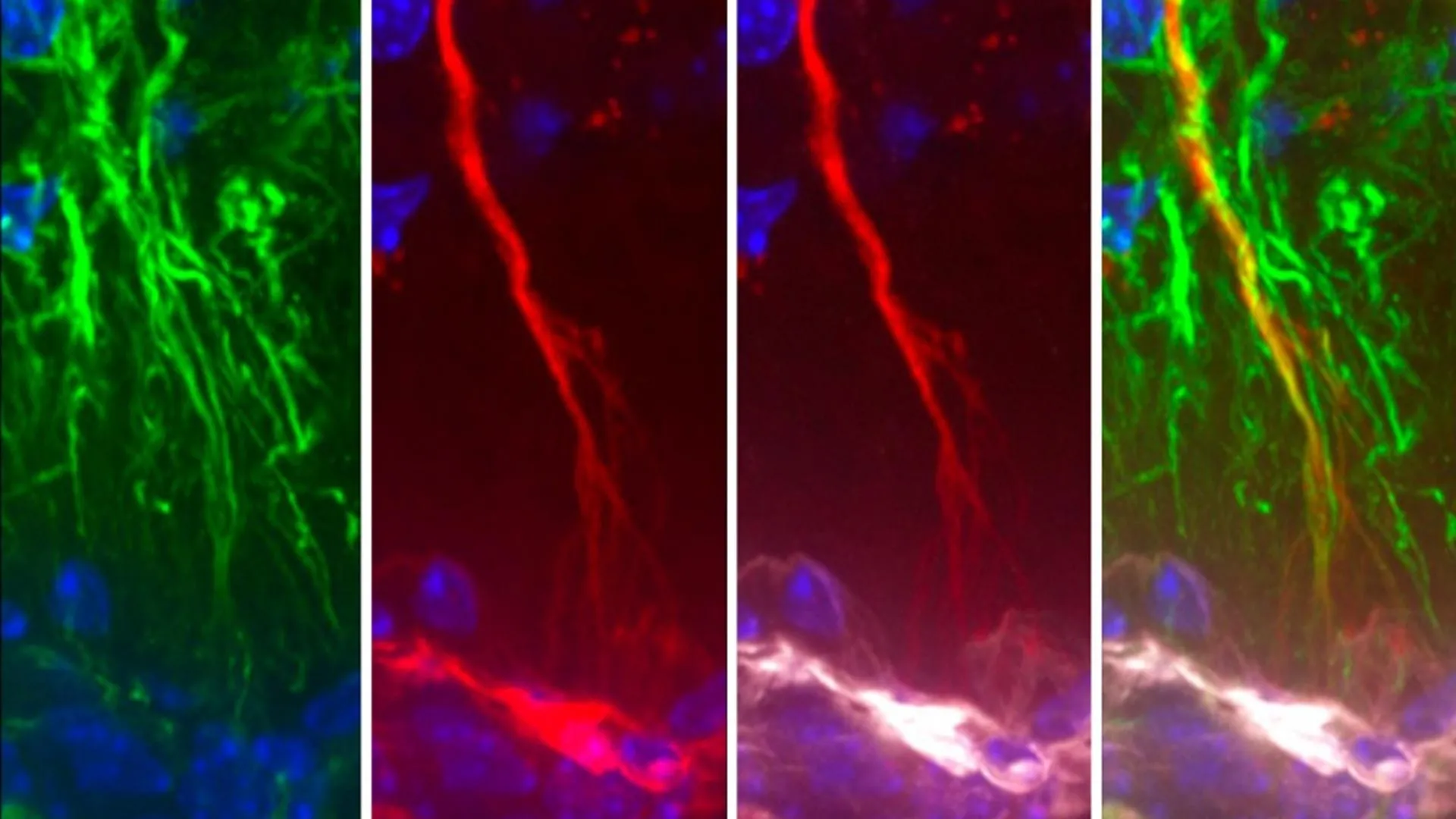
A New Cell Atlas Helps Researchers Navigate the Developing Brain

The phrase “the whole is greater than the sum of its parts” is perfectly emphasized in large, collaborative researcher projects.

Recently, several research teams published a package of studies outlining the most comprehensive map of the mammalian brain during development.

Here, two researchers talk about the challenges and benefits of such teamwork.


Researchers collaborating on a BRAIN Initiative project unveiled the most comprehensive map of developing mammalian brains to date, offering new insights into neurodevelopment.

/* */