FULL Audiobook.
Read more
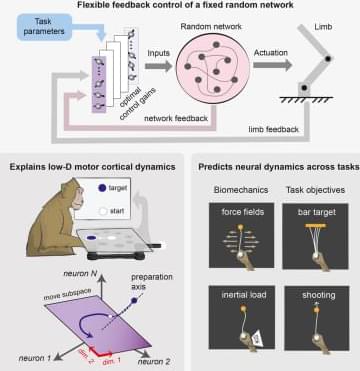
Kalidindi and Crevecoeur develop a computational framework linking feedback-controlled networks to limb dynamics. They demonstrate that optimal control of fixed network reproduces key motor cortical dynamics and predicts neural activity across tasks. Analytical results show low-dimensional patterns emerge from task and biomechanical complexity, thereby bridging neural dynamics with control theory.

The APOE4 allele is the strongest genetic risk factor for sporadic Alzheimer’s disease (sAD), yet its cell-autonomous effects remain poorly understood. While young, asymptomatic APOE4 carriers exhibit abnormal brain metabolism, the mechanistic link between mitochondrial dysfunction and lysosomal-autophagic failure remains unclear. In this study, we conducted a comprehensive analysis of primary human fibroblasts from APOE3 controls, APOE4, and sAD donors to assess mitochondrial bioenergetics, oxidative stress, autophagy, and lysosomal function. APOE4 fibroblasts displayed increased mitochondrial content-associated markers (PGC1α, mtDNA) accompanied by reduced respiratory capacity, elevated proton leak, and excessive mitochondrial ROS. In parallel, APOE4 fibroblasts showed impaired autophagic flux and reduced LC3-TOMM20 colocalization, indicating defective mitophagy. Lysosomal proteolytic activity, assessed using DQ-BSA, was significantly reduced and remained unresponsive under to starvation, in contrast to the partial recovery observed in sAD cells. Pharmacological targeting of mitochondrial ROS with site-specific inhibitors revealed that complex III-derived ROS is the predominant driver of redox stress in APOE4 fibroblasts, while complex I contributes primarily in sAD. Notably, selective inhibition of complex III-derived ROS with S3QEL restored lysosomal degradation, autophagic flux, and mitochondrial respiration in APOE4 cells. Together, these findings demonstrate that mitochondrial oxidative stress disrupts the mitochondria-lysosome axis in an APOE4-specific manner, revealing early and mechanistically distinct vulnerabilities that may precede neurodegeneration. Our results challenge the notion that APOE4 merely amplifies AD pathology and instead identity site-specific redox signaling as a promising target for allele-informed interventions.
Keywords: APOE4; Autophagy; Human fibroblasts; Lysosome; Mitochondria; Mitochondrial complex III; S3QEL.
Copyright © 2024. Published by Elsevier B.V.
In the vast scale of the cosmos, the word “God” takes on a terrifying new meaning. Today, our channel performs a deep dive into the 15 most powerful space gods in fiction, ranking them not just by their size, but by their ability to rewrite the source code of reality itself. From the machine “janitors” of Mass Effect to the narrative-bending power of The One Above All, we break down six tiers of cosmic authority. We explore the “Neural Physics” of the Precursors, the entropic hunger of Unicron, and the conceptual nightmare of the Chaos Gods. In this video, we cover:
Tier 1: The Material Masters (Reapers, C’tan, Precursors)
Tier 2: The Chaos Agents (The Outsider, Bill Cipher)
Tier 3: The Entropic Consumers (Unicron, The Witness)
Tier 4: The Multiversal Shapers (The Q, Zeno, Anti-Spiral)
Tier 5: The Conceptual Deities (Arceus, Chaos Gods, Azathoth)
Tier 6: The Ultimate Sources (The Presence, The One Above All)
Which of these cosmic entities has the best design? Let us know in the comments! Watch Next: [Link] Star Destroyer vs. Mass Effect Reaper: Technical Breakdown Subscribe to Our Channel for more engineering and lore comparisons!
Let’s unravel what happens when AI merges with quantum, and starts knowing EVERYTHING ♾️ Go to https://piavpn.com/beeyondideas to get 83% off from our sponsor Private Internet Access with 4 months free!
Want to support our production? Feel free to join our membership at https://youtu.be/_Z4W6sWDo_4?si=Q8eRZoNFUv7sAd9y Special thanks to our beloved YouTube members this month: Powlin Manuel, Saïd Kadi, Chenxi, Lord, Sudhir Paranjape, Nate Lachae, Alison Rewell, Thomas Lapins, Ahmad Salahudin, Antonio Ferriol Colombram, Anton Nicolas Burger 🚀🚀🚀 Experts featured in this video include Demis Hassabis, Tristan Harris, Aza Raskin, Elon Musk, David Deutsch, Michio Kaku, Brian Greene and Nick Bostrom. Chapter: 0:00 A dangerous truth? 1:29 AI advancement 3:46 AI pretending not to know 7:29 Interactive tutoring 9:37 That’s it from our sponsor! 10:21 The merging of QC and AI 12:03 IBM 100,000 qubits 14:34 AI wipes out humanity? 16:05 Google Willow 17:06 The misuse of AI and QC 18:22 Singularity and Turing test 22:51 Reverse Turing test 29:39 Quantum-AI consequences 32:25 The double slit experiment 36:15 Quantum multiverse 41:05 Computing history 46:49 AGI timeline 51:45 Philosophical consequence #AI #quantumcomputing #singularity.
Special thanks to our beloved YouTube members this month: Powlin Manuel, Saïd Kadi, Chenxi, Lord, Sudhir Paranjape, Nate Lachae, Alison Rewell, Thomas Lapins, Ahmad Salahudin, Antonio Ferriol Colombram, Anton Nicolas Burger 🚀🚀🚀
Experts featured in this video include Demis Hassabis, Tristan Harris, Aza Raskin, Elon Musk, David Deutsch, Michio Kaku, Brian Greene and Nick Bostrom.
Chapter:
0:00 A dangerous truth?
1:29 AI advancement.
3:46 AI pretending not to know.
7:29 Interactive tutoring.
9:37 That’s it from our sponsor!
10:21 The merging of QC and AI
12:03 IBM 100,000 qubits.
14:34 AI wipes out humanity?
16:05 Google Willow.
17:06 The misuse of AI and QC
18:22 Singularity and Turing test.
22:51 Reverse Turing test.
29:39 Quantum-AI consequences.
32:25 The double slit experiment.
36:15 Quantum multiverse.
41:05 Computing history.
46:49 AGI timeline.
51:45 Philosophical consequence.
#AI #quantumcomputing #singularity
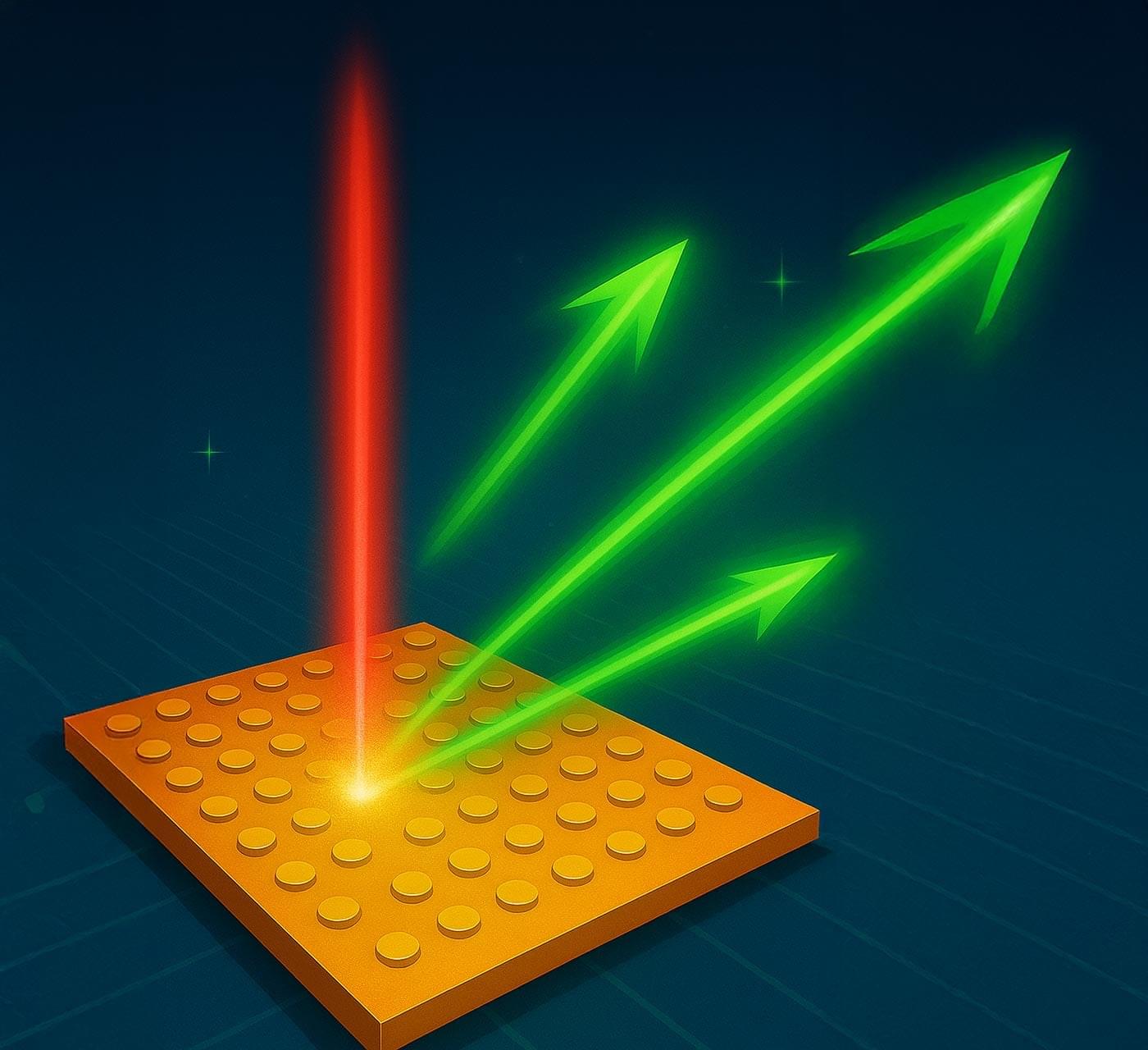
A tiny metasurface chip can turn invisible infrared light into steerable visible beams, opening the door to powerful new optical technologies.
Developing extremely small devices that can precisely guide and manipulate light is critical for many emerging technologies. Scientists at the Advanced Science Research Center at the CUNY Graduate Center (CUNY ASRC) have now demonstrated an important advance by creating a metasurface that can transform invisible infrared light into visible light and send it in different directions—without any moving parts. Their results are described in a study published in the journal eLight.
How the ultra-thin metasurface chip works.
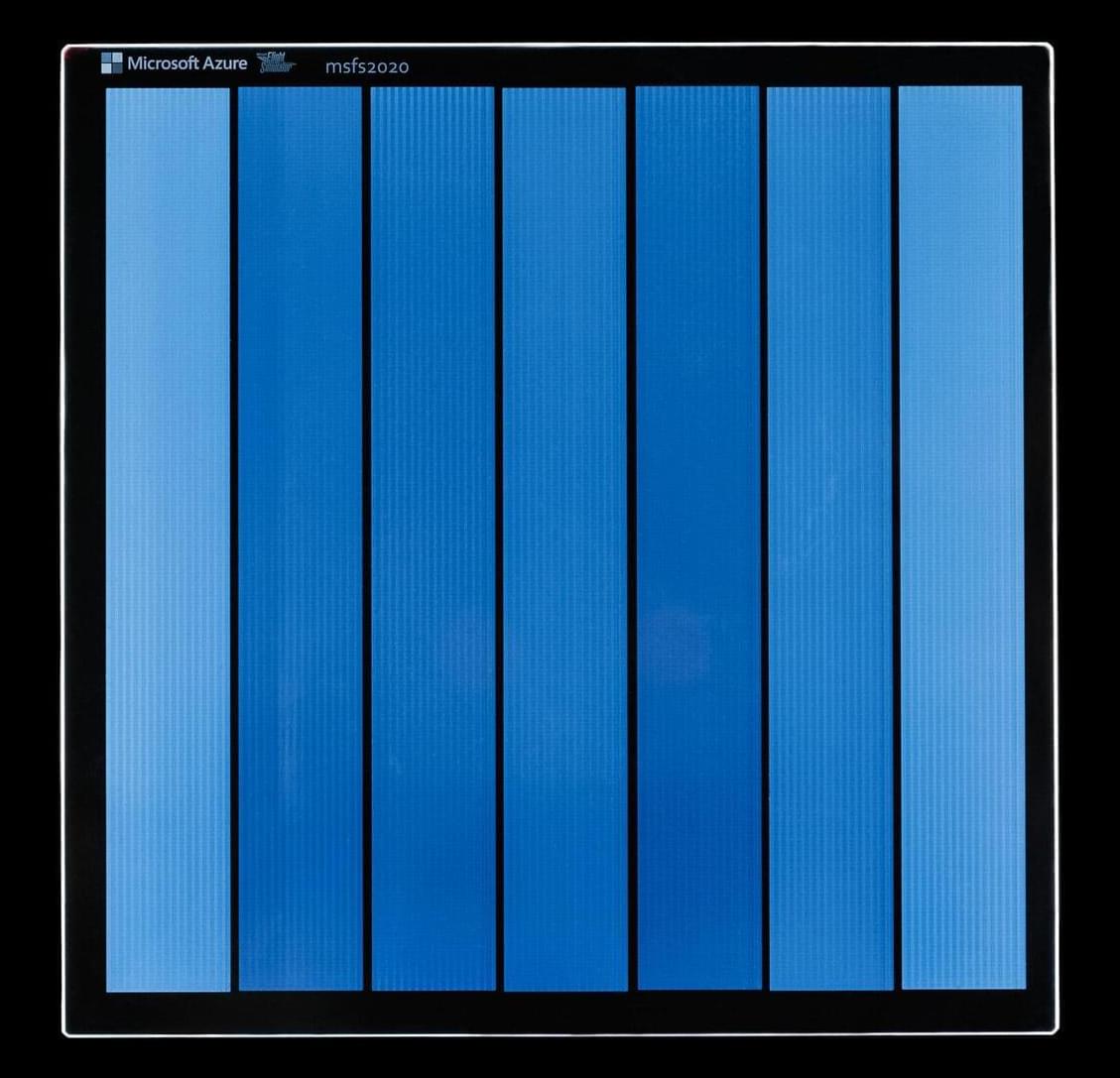
Thousands of years from now, what will remain of our digital era? The ever-growing vastness of human knowledge is no longer stored in libraries, but on hard drives that struggle to last decades, let alone millennia.
However, information written into glass by lasers could allow data to be preserved for more than 10,000 years, Microsoft announced in a study on Wednesday.
Since 2019, Microsoft’s Silica project has been trying to encode data on glass plates, in a throwback to the early days of photography, when negatives were also stored on glass.
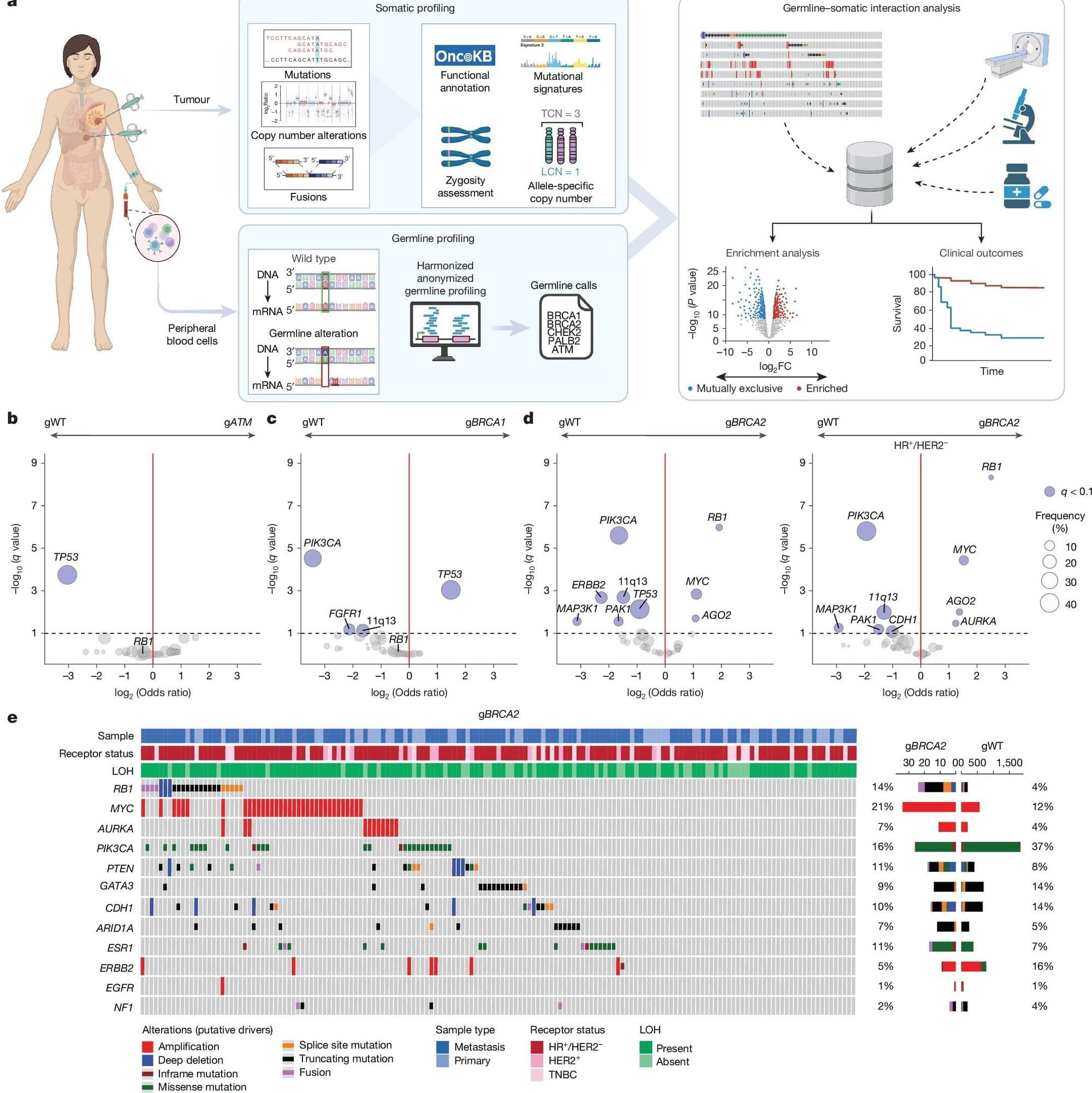
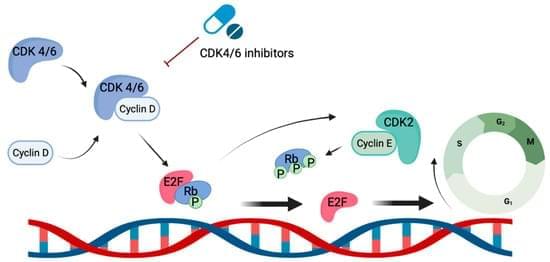
Researchers at Memorial Sloan Kettering Cancer Center (MSK) have made an important discovery about how genetic mutations in breast cancer patients can interact and drive resistance to certain drugs called CDK4/6 inhibitors. This finding, published in Nature, suggests a new strategy for predicting and preventing resistance to specific therapies based on the tumor’s genetic profile.
“This represents a major advance in understanding and predicting cancer behavior in response to treatment,” says physician-scientist Pedram Razavi, MD, Ph.D., who led the study with physician-scientist Sarat Chandarlapaty, MD, Ph.D. The study’s first author was Anton Safonov, MD, a physician-scientist in the MSK Breast Translational Program.
“To our knowledge, this is the first example showing that a complete genomic analysis of breast cancer, including both inherited and tumor-specific alterations, can predict the precise biological mechanism of resistance before therapy even begins,” Dr. Razavi adds.