Toggle light / dark theme

Get the latest international news and world events from around the world.

Log in for authorized contributors

Single molecular membrane can make lithium batteries safer and longer-lasting

A team of Korean scientists has developed a separator technology that dramatically reduces the explosion risk of lithium batteries while doubling their lifespan. Like an ultra-thin bulletproof vest protecting both sides, this molecularly engineered membrane stabilizes both the anode and cathode in next-generation lithium-metal batteries.

The joint research, led by Professor Soojin Park and Dr. Dong-Yeob Han from the Department of Chemistry at POSTECH, together with Professor Tae Kyung Lee of Gyeongsang National University and Dr. Gyujin Song of the Korea Institute of Energy Research (KIER), was recently published in Energy & Environmental Science.

Conventional lithium-ion batteries, which power today’s electric vehicles and energy storage systems, are approaching their theoretical energy limits. In contrast, lithium-metal batteries can store about 1.5 times more energy within the same volume, potentially extending an electric vehicle’s driving range from 400 km to approximately 700 km per charge. However, their practical use has been hindered by serious safety issues.

Stem cell organoids mimic aspects of early limb development

Scientists at EPFL have created a scalable 3D organoid model that captures key features of early limb development, revealing how a specialized signaling center shapes both cell identity and tissue organization.

During early development, the embryo builds the body’s organs by exchanging chemical signals between different cell types. When developing limbs, a thin band of skin cells at the limb’s surface, called the “apical ectodermal ridge” (AER), sends signals that guide the underlying population as it grows and forms bone, cartilage, and connective tissue.

The AER is hard to study because it forms only briefly in the embryo and secretes several types of signaling molecules at once. Studying these interactions in embryos is difficult, so scientists often turn to organoids, tiny lab-grown organs that offer researchers a controlled way to study how cells behave and interact as tissues form.

Electrotherapy using injectable nanoparticles offers hope for glioblastoma treatment

Electrotherapy using injectable nanoparticles delivered directly into the tumor could pave the way for new treatment options for glioblastoma, according to a new study from Lund University in Sweden.

Glioblastoma is the most common and most aggressive form of brain tumor among adults. Even with intensive treatment, the average survival period is 15 months. The tumor has a high genetic variation with multiple mutations, which often makes it resistant to radiation therapy, chemotherapy and many targeted drugs. The prognosis for glioblastoma has not improved over the past few decades despite extensive research.

Ancient dirty dishes reveal decades of questionable findings

Olive oil is the Swiss army knife of foodstuffs. It can dress salads, sauté vegetables, even grease squeaky hinges. And for archaeologists, its ubiquitous presence in excavated pottery offers a window into the economic, political and social organization of the ancient world.

But perhaps, in certain environments, that prevalence has been overstated.

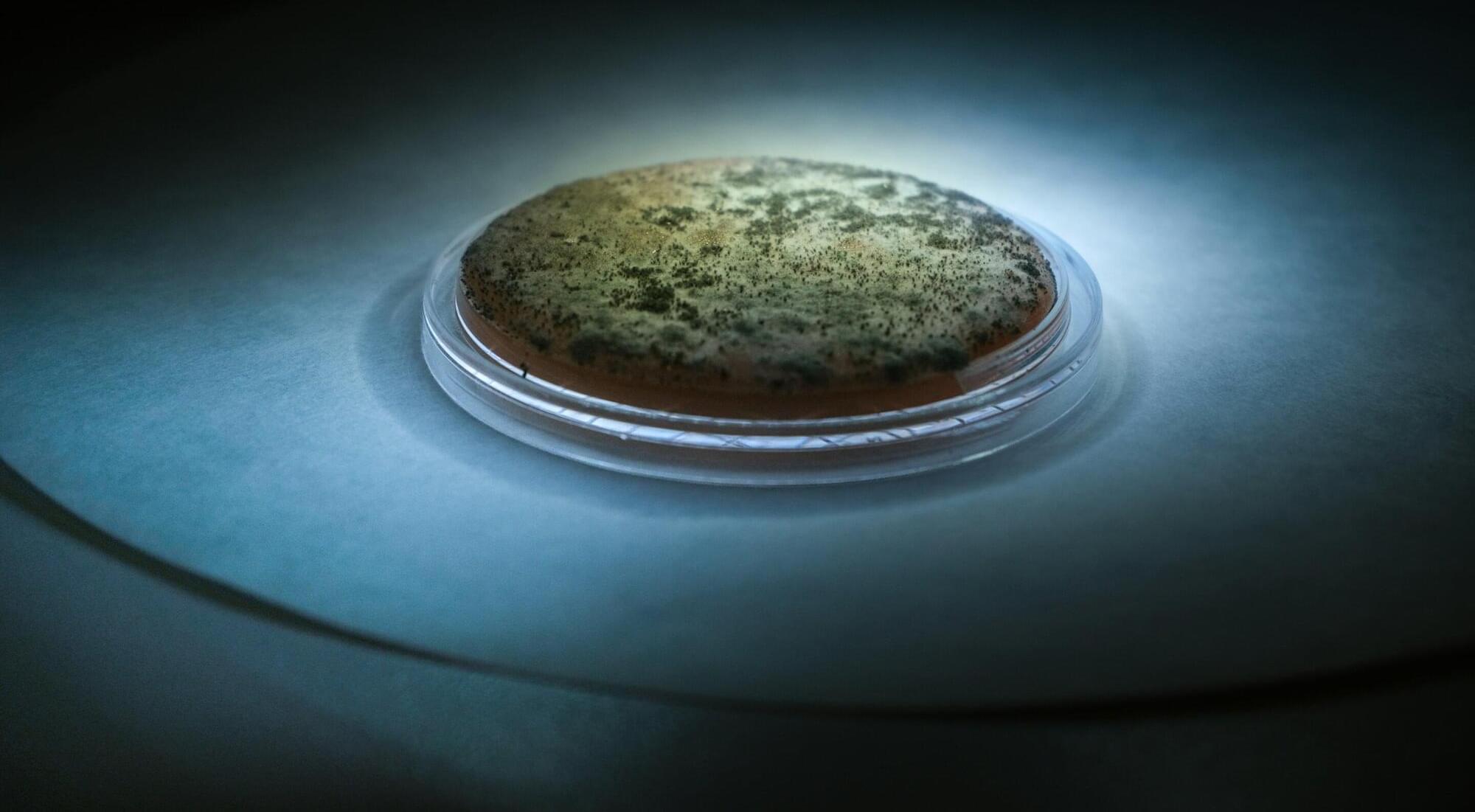
An interdisciplinary team of Cornell researchers—ranging from classicists to food scientists to engineers—has determined that organic residues of plant oils are poorly preserved in calcareous soils from the Mediterranean. This means decades of archaeologists have likely misidentified olive oil in ceramics, failing to recognize other plant oils or perhaps mistaking them for animal fat.

Switching risk and protective alleles improves Alzheimer’s-disease-like signatures and disruptions in mice

Alzheimer’s disease (AD) is a neurodegenerative disorder characterized by the progressive degradation of brain cells, as well as an associated decline in memory and other mental functions. Earlier research found that different forms (i.e., alleles) of a gene known as apolipoprotein E (APOE) are associated with an increased or decreased risk of developing AD.

The APOE gene can be mutated into different variants (i.e., alleles), including APOE2, APOE3 and APOE4. Past studies have linked the presence of two APOE4 alleles to a higher risk of developing AD, while two APOE2 alleles were linked to a significantly lower risk of AD.

Researchers at the University of Kentucky and other institutes genetically engineered a type of mouse that carries a genetic “switch” that can be activated with a drug and that converts the harmful APOE4 allele into the protective APOE2 allele.

Hormone-disrupting chemicals from plastics shown to promote a chronic inflammatory skin condition

A Johns Hopkins Medicine study involving a dozen people with the inflammatory skin disease hidradenitis suppurativa (HS), which mostly affects skin folds, is believed to be the first to provide evidence that hormone-disrupting chemicals commonly found in ultra-processed food and single-use water bottles may contribute to the development of or worsen the condition in some people.

The new findings about the disorder build on previous reports about the role of endocrine-disrupting chemicals, a common environmental contaminant known to mimic, block or alter the body’s hormones, in human health. Researchers believe their findings suggest that reducing exposure could ease HS symptom severity and provide a new avenue of relief for a disease with limited FDA-approved treatment options that include biologic therapy and surgery.

The full report on the study was published in Nature Communications on Nov. 28 and includes insights into the molecular mechanisms that are involved in the disease.

Artificial tendons give muscle-powered robots a boost

Our muscles are nature’s actuators. The sinewy tissue is what generates the forces that make our bodies move. In recent years, engineers have used real muscle tissue to actuate “biohybrid robots” made from both living tissue and synthetic parts. By pairing lab-grown muscles with synthetic skeletons, researchers are engineering a menagerie of muscle-powered crawlers, walkers, swimmers, and grippers.

But for the most part, these designs are limited in the amount of motion and power they can produce. Now, MIT engineers are aiming to give bio-bots a power lift with artificial tendons.

In a study published in the journal Advanced Science, the researchers developed artificial tendons made from tough and flexible hydrogel. They attached the rubber band-like tendons to either end of a small piece of lab-grown muscle, forming a “muscle-tendon unit.” Then they connected the ends of each artificial tendon to the fingers of a robotic gripper.

Samsung launches its first multi-folding phone as competition from Chinese brands intensifies

Samsung Electronics’s Galaxy Z TriFold media day at Samsung Gangnam in Seoul, South Korea, on Dec. 2, 2025.

Anadolu | anadolu | getty images.

Samsung Electronics on Monday announced the launch of its first multi-folding smartphone as it races to keep pace with innovations from fast-moving rivals.

Unexpected pathway for IgA antibody production may help improve vaccines

Scientists led by Stephanie Eisenbarth, MD, Ph.D., the Roy and Elaine Patterson Professor of Medicine and director of the Center for Human Immunobiology, have discovered how critical IgA antibodies are produced through unexpected cellular pathways, findings that may help inform the design of more effective vaccines to prevent infections, according to a recent study published in Immunity.

Immunoglobulin (Ig)A is an antibody that serves as the first line of defense for mucosal tissues that comprise the inner lining of organs in the respiratory system and digestive system. IgA antibodies play a role in humoral immunity, in which IgA and other antibodies produced by B-cells fight off and prevent the spread of infection.

However, inducing an IgA-specific immune response, particularly through vaccines, has remained unsuccessful, according to Eisenbarth.

Factor-H-related protein 1 (FHR1), a promotor of para-inflammation in age-related macular degeneration

Age-related macular degeneration (AMD), a multifactorial type of retinal degeneration represents the most common cause for blindness in elderly. Polymorphisms in complement factor-H increase, while absence of factor-H-related protein-1 (FHR1) decreases the AMD risk, currently explained by their opposing relationship. Here we identify a FHR1-driven pathway fostering chronic cellular inflammation. FHR1 accumulates below the retinal pigment epithelium (RPE) in AMD donor tissue and similarly the murine homolog, muFHR1 is abundant in three AMD-relevant mouse models. These mouse models express the muFHR1 receptor EGF-like module-containing mucin-like hormone receptor 1 (Emr1) on the RPE and on invading mononuclear phagocytes (MP), where both cells form clusters via muFHR1/Emr1.

/* */