Toggle light / dark theme

Scientists have created a leather clothing alternative made entirely from mushrooms that looks and feels like the real thing

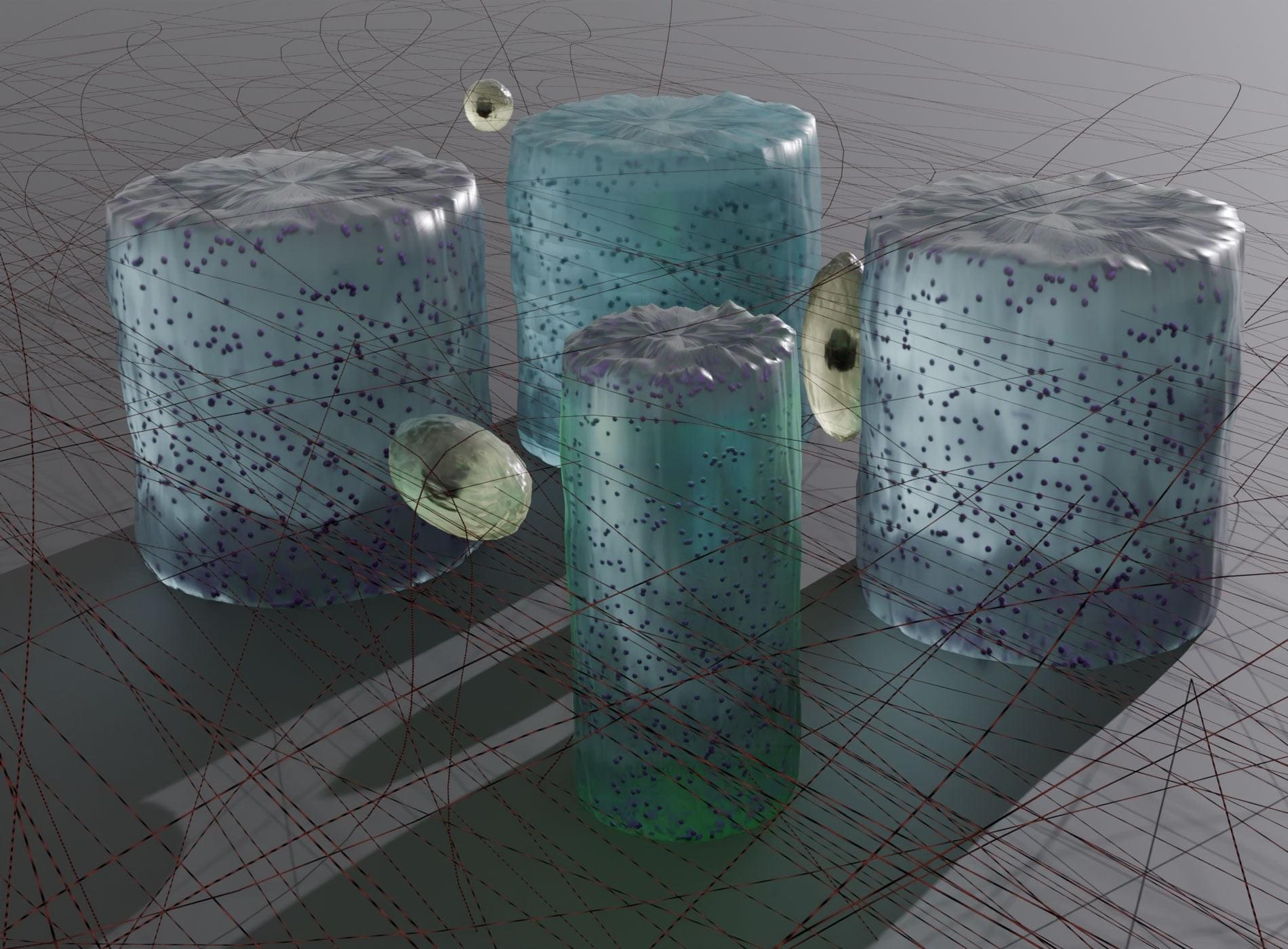
Austria’s scientists have created a leather made from mycelium. Growing mushrooms in low-oxygen chambers allows researchers to craft an alternative material that feels and looks like traditional leather. The finished textile is strong, flexible, and even fire-resistant.

Manufacturers grow the material instead of harvesting it from animals. After it reaches the desired thickness, they apply non-toxic enzymes to keep it fully biodegradable. The vegetative part of the fungus grows into a dense mat over a matter of days. Above all, it avoids the environmental impact of traditional leather production…

…This is not science fiction; fungal fabric has grown from a curiosity into reality. A 2025 report listed the benefits of mushroom leather as having a lower carbon footprint. It begins with a substantial reduction in water use. Growing mushrooms, compared to raising cattle, requires a fraction of the water.


Scientists created a mushroom leather made from mycelium that looks and feels like traditional leather. It’s grown in a matter of days.


Material previously thought to be quantum is actually a new, non-quantum state of matter

Magnetic materials in a quantum spin liquid phase are of great interest in the pursuit of exotic state of matter and quantum computation. But in the quantum realm, things are not always what they seem. A study, published in Science Advances and co-led by Rice University’s Pengcheng Dai, found that the material cerium magnesium hexalluminate (CeMgAl11 O19) was not actually in a quantum spin liquid phase despite evidence suggesting it was.

“The material had been classified as a quantum spin liquid due to two properties: observation of a continuum of states and lack of magnetic ordering,” said Bin Gao, co-first author and a research scientist at Rice. “But closer observation of the material showed that the underlying cause of these observations wasn’t a quantum spin liquid phase.”

Scientists create a hexagonal diamond that could be even harder than the real thing

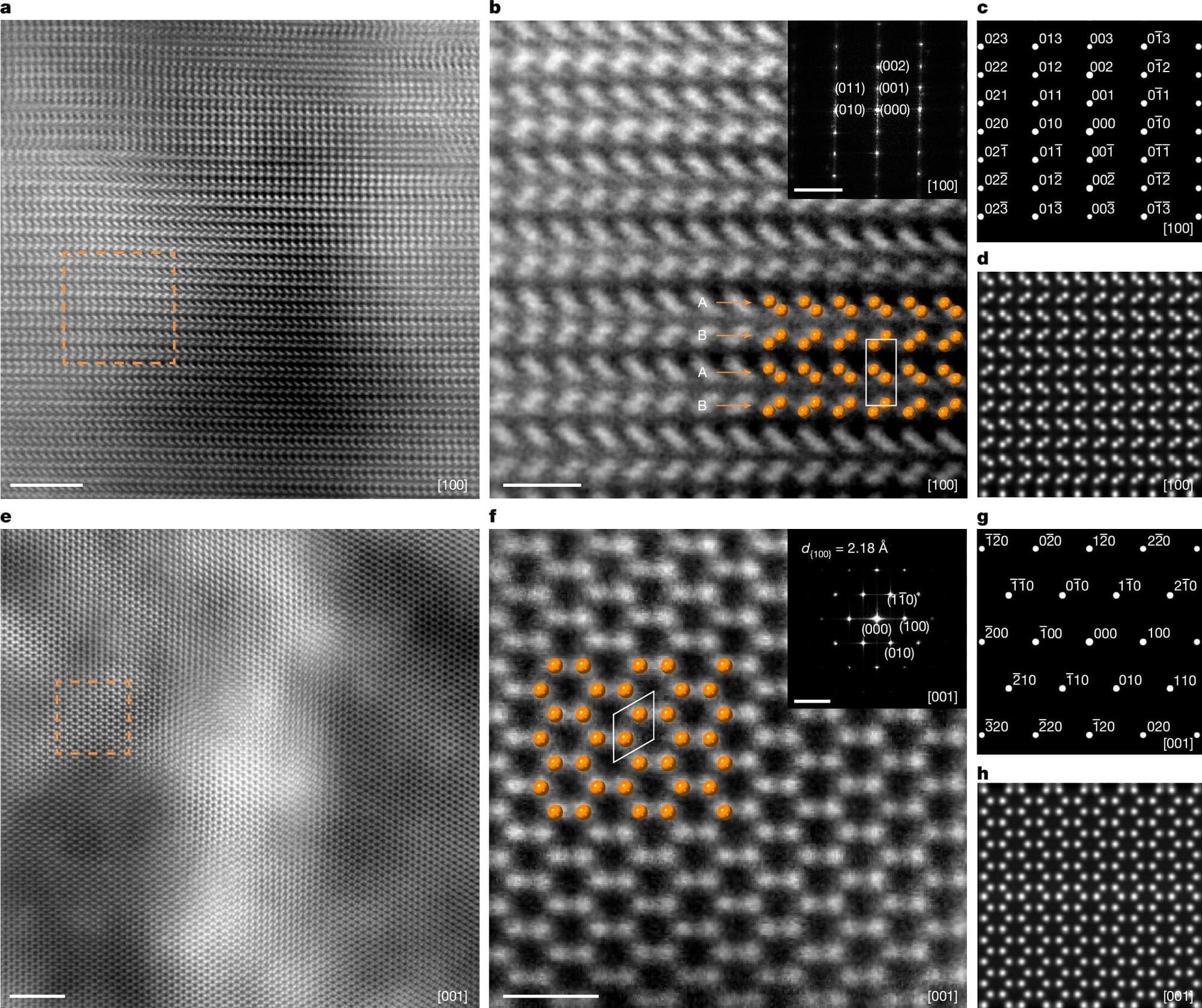
To misquote a famous song, “Diamonds are industry’s best friend.” Cubic diamond is the hardest mineral on Earth and is used in everything from precision cutting tools to high-performance semiconductors as well as expensive jewelry. But there is a rare and potentially tougher form called hexagonal diamond (HD), which has long been the subject of theories and debate over its actual existence. But now researchers from China claim to have created this elusive form of carbon in the lab.

Hexagonal diamond (also known as lonsdaleite) is usually found at sites of meteorite impacts. But because the quantities are so small and mixed with minerals, some scientists doubted it was a distinct material. In a paper published in the journal Nature, researchers describe how they made a bulk piece of pure HD using extreme pressure and heat.

Electric field tunes vibrations to ease heat transfer

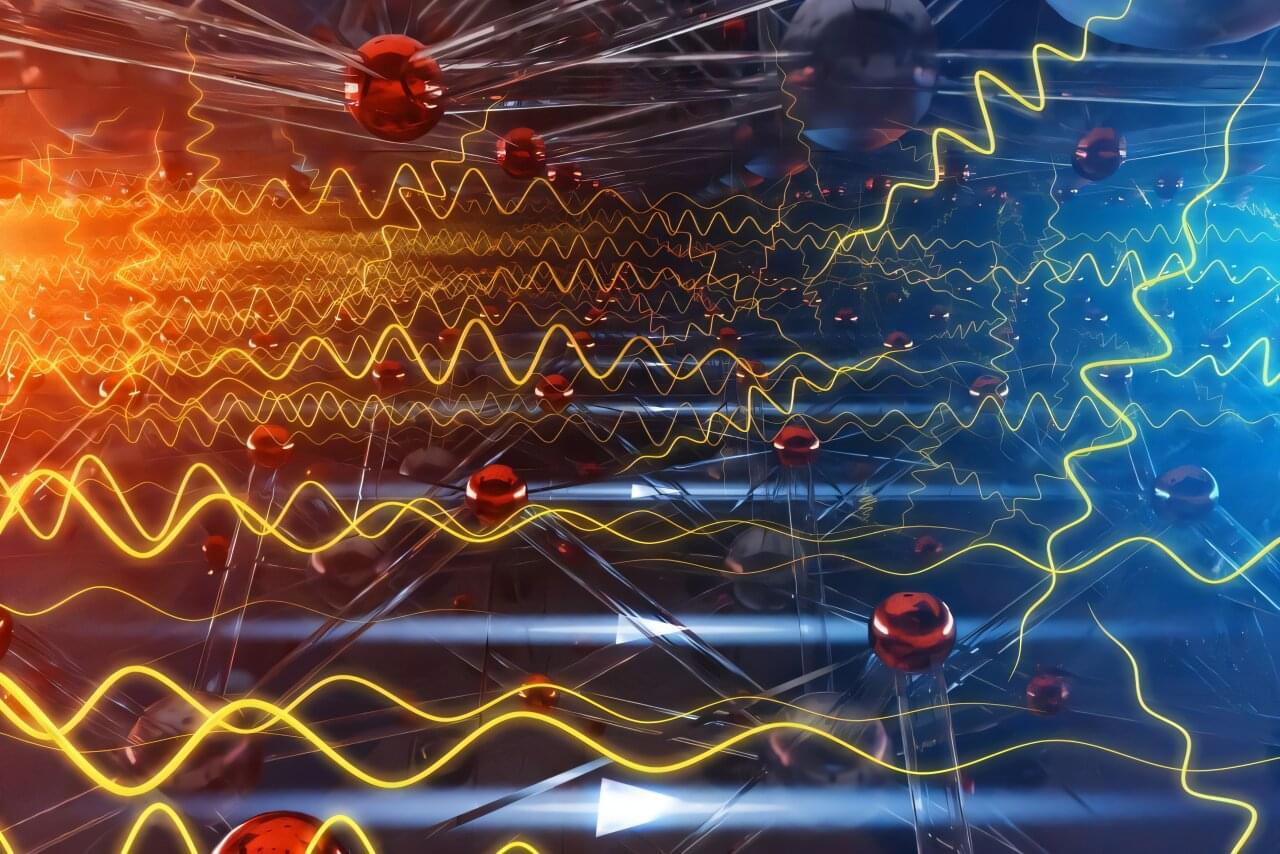
New research from the Department of Energy’s Oak Ridge National Laboratory, in collaboration with The Ohio State University and Amphenol Corporation, challenges conventional understanding about controlling heat flow in solid materials. The study, published in PRX Energy, shows that applying an electric field to a ceramic material changes how phonons (tiny vibrations that carry heat) behave.

Phonons with atoms moving along the field direction (poling direction) last longer than those with atoms moving perpendicular to the field. As a result, the material conducts heat almost three times more efficiently along the field direction than in perpendicular directions. This promising approach could lead to new solid-state devices that control heat flow in everyday technologies.

“Being able to control both how fast and in what manner heat flows could lead to devices that manage thermal energy far more efficiently,” said Puspa Upreti, an ORNL postdoctoral research associate.

Möbius-inspired surface controls light in two directions

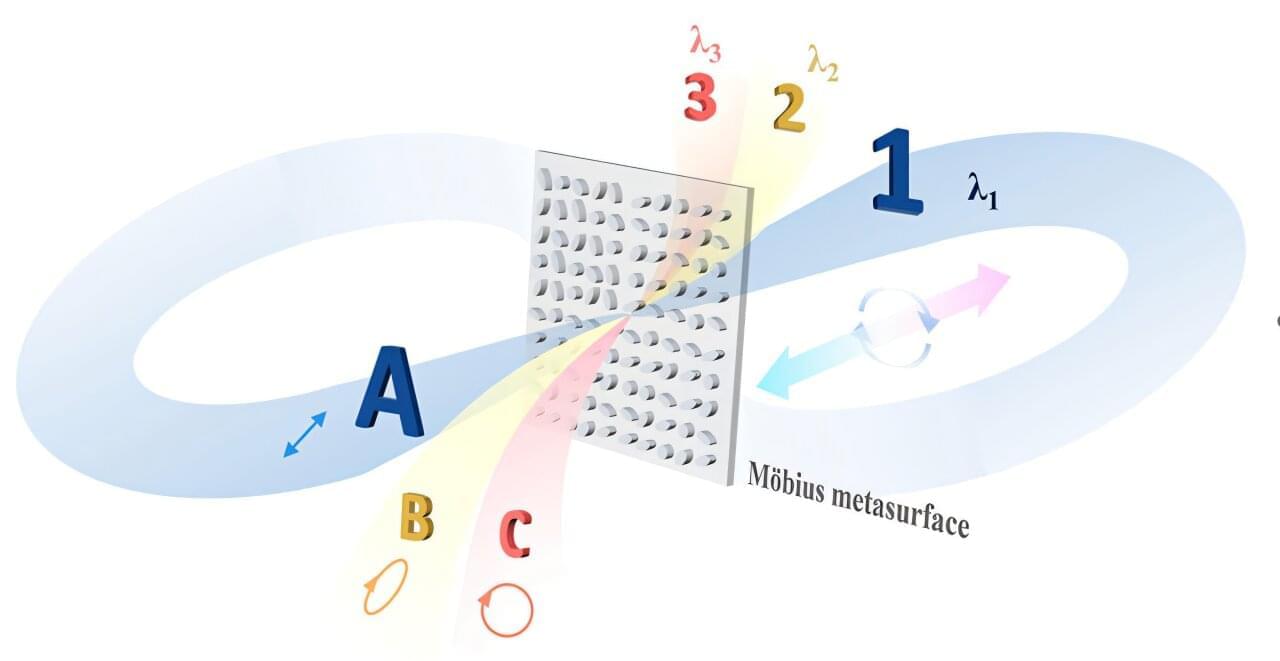
Light is an unusually rich carrier of information. Its direction of travel, wavelength, and polarization can all be used to encode signals or images. Yet controlling these properties independently remains difficult, especially when light can enter a device from either side.

In most optical materials—and even in many metasurfaces—the laws of reciprocity and time-reversal symmetry tightly link how a device behaves for forward and backward illumination. As a result, truly different responses in the two directions are hard to achieve in a compact optical element.

The challenge grows sharper when polarization is included. Many metasurfaces work only with simple polarization states, such as horizontal and vertical or left-and right-circular polarization.

How “Empty Space” Is Supercharging Atomically Thin Semiconductors

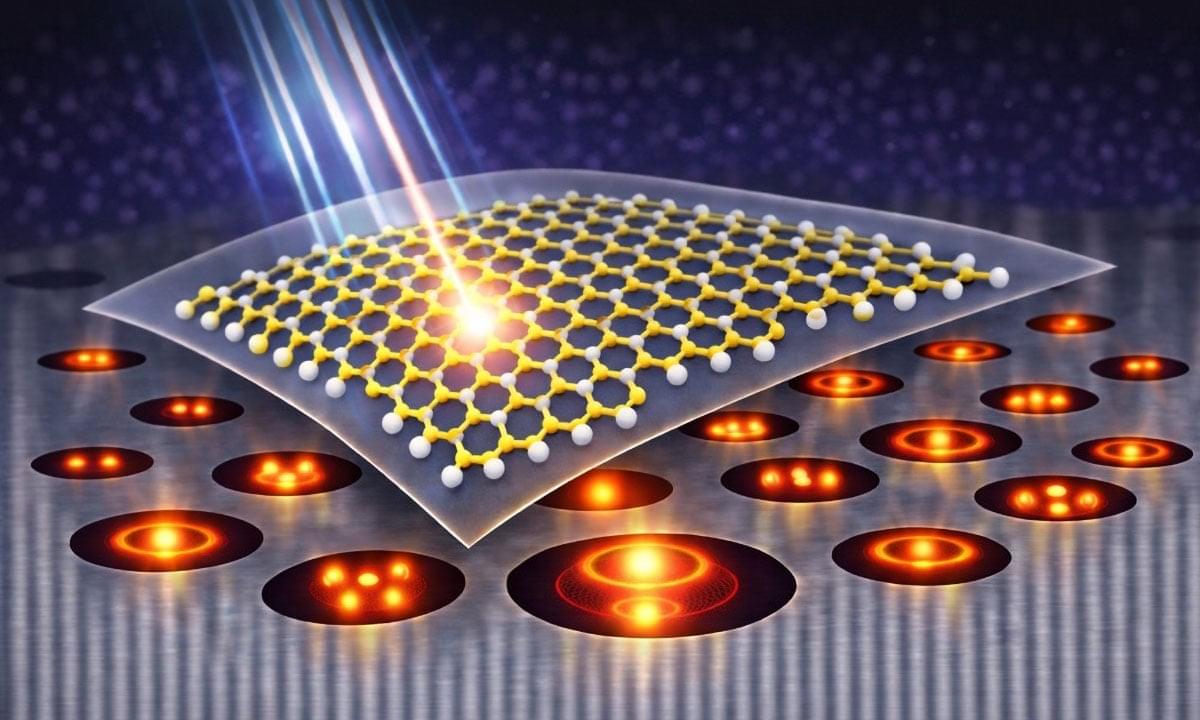
A single layer of atoms may seem too thin to meaningfully interact with light, yet materials like tungsten disulfide are reshaping what is possible in nanophotonics. Researchers have now found a way to dramatically strengthen these interactions. Atomically thin semiconductors such as tungsten dis

/* */