Toggle light / dark theme

The Immune Cell Atlas of “Longevity Molecular Tag”: Identification of Principal Immune Cell Subsets and Their Underlying Molecular Regulatory Mechanisms

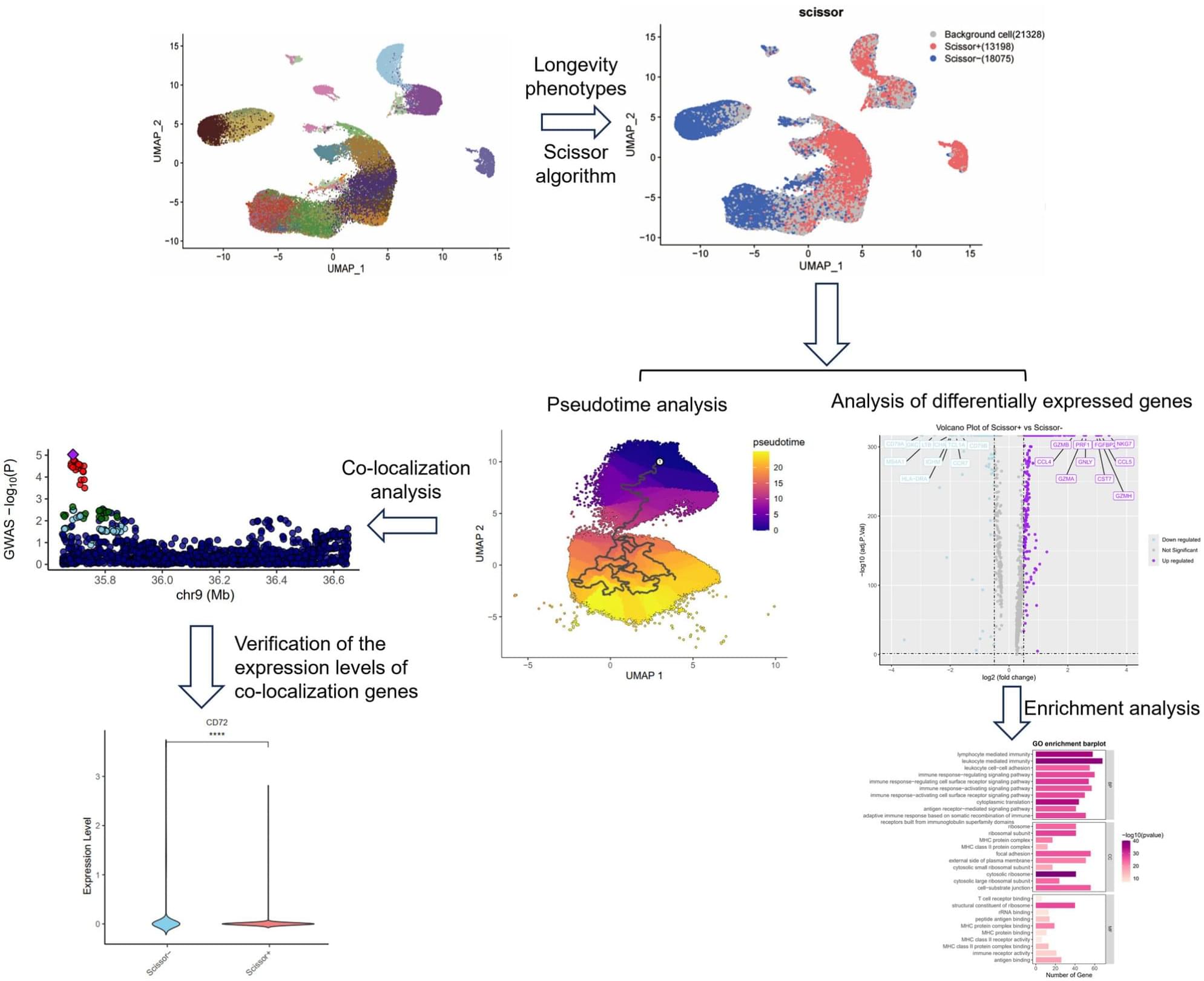
Immunosenescence represents a critical aspect of the aging process. Centenarians, serving as a nature model of “healthy aging,” demonstrate a distinctive immune “compensatory adaptation” mechanism that contributes to the maintenance of immune homeostasis. However, the specific immune cell subsets involved and the molecular mechanisms underlying these phenotypic traits remain incompletely understood. In this study, we integrated single-cell RNA sequencing data spanning the entire lifespan of East Asian populations with bulk transcriptomic data from a centenarian cohort in Guangxi. Utilizing the Scissor algorithm, we identified immune cell subpopulations positively (Scissor+) and negatively (Scissor) associated with longevity phenotypes, thereby constructing an immune cell atlas of “Longevity Molecular Tag.” Our findings indicate that Scissor+ cells predominantly comprise natural killer (NK) cells, CD8+ T cells, and γδ T cells, characterized by enhanced cytotoxic and immunomodulatory functions. Conversely, Scissor cells mainly include CD4+ T cells, B cells, and dendritic cells (DCs), which are linked to inflammatory signaling pathways and Th17/Th1 differentiation. Trajectory analysis elucidated the differentiation pathways of NK, CD8+ T cells, CD4+ T cells, and B cells. Differentially expressed genes were enriched in pathways such as NF-κB signaling, T cell receptor signaling, and NK cell cytotoxicity. Furthermore, co-localization analysis revealed five eQTL-colocalized events (rs3793537–GLIPR2/CD72/TLN1 and rs8019902–TRDV2/TRDC) associated with longevity. Collectively, these results suggest that centenarians achieve immune equilibrium by remodeling cytotoxic immune lineages and finely tuning inflammatory responses, thereby promoting health span and longevity. This study offers novel insights into potential strategies for modulating immunosenescence.
The Multifaceted Paradigm of Rectal Cancer

“In a world where trimodality therapy has been the standard of care for so long, it’s remarkable to think that some of these cancers can be cured with a single systemic agent alone.”

🔗


The world of cancer treatment is a rapidly evolving creature, and rectal cancer is no exception. In particular, locally advanced rectal cancer has a number of valid treatment options. While it’s traditionally a surgical disease, in some cases we now have evidence for watch-and-wait approaches that spare patients the morbidity and toxicity associated with oncologic resections. But even when the goal is to get the patient to a total mesorectal excision (TME), several nuances can influence decision making. Suddenly, talking to a patient about rectal cancer has become as lengthy a discussion as those we have with intermediate-risk prostate cancer patients.

We currently have good evidence to suggest that total neoadjuvant therapy (TNT) should be standard of care for locally advanced rectal cancers. But even within this algorithm of chemotherapy and chemoradiation followed by surgery, questions abound. Which treatment should we start with? Which chemotherapy should be used? What radiation fractionation should we employ? And which concurrent chemotherapy should be paired with radiation? While the 5-year follow-up of the RAPIDO trial demonstrated a statistically significant increase in the locoregional recurrence rate (10% vs 6%) with short course radiation,1 this must be viewed through a critical lens, given that the two arms did not directly compare short-and long-course radiation. Perhaps it was the addition of neoadjuvant chemotherapy, delaying surgery, that resulted in a detriment to the locoregional control. Thus, short-course radiation is still indicated as a reasonable treatment option per NCCN guidelines.

What’s going on inside quantum computers? New method simplifies process tomography

Quantum computers work by applying quantum operations, such as quantum gates, to delicate quantum states. Ideally, quantum computers can solve complex equations at staggeringly fast speeds that vastly outpace regular computers. In real hardware, the operations of quantum computers often deviate from the ideal behavior because of device imperfections and unwanted noise from the environment. To build reliable quantum machines, researchers need a way to accurately determine what a quantum device is actually doing.

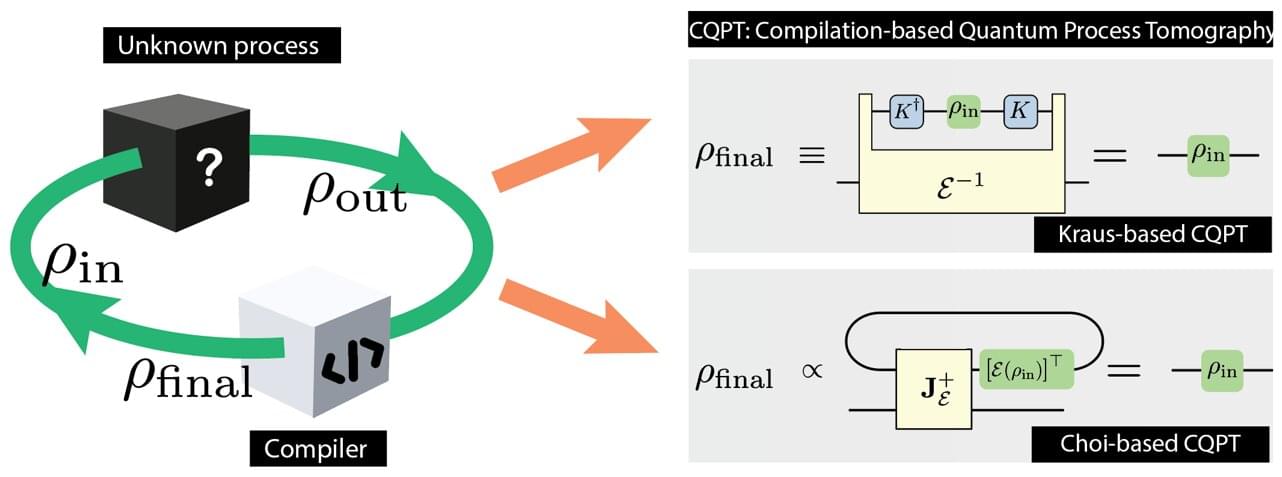
Quantum process tomography (QPT) is a standard method for this. However, traditional QPT becomes very costly as the system grows, because the number of required measurements and calculations increases rapidly with the number of qubits.

To address this challenge, a research team from Tohoku University, the Nara Institute of Science and Technology (NAIST), and the University of Information Technology (Vietnam National University, Ho Chi Minh City) has introduced a new framework called compilation-based quantum process tomography (CQPT). The work is published in Advanced Quantum Technologies.

All-in-Focus Fourier Ptychographic Microscopy via 3D Implicit Neural Representation

Microscopy has long been essential to biomedical research, enabling detailed analyses of complex samples. Fourier ptychographic microscopy (FPM), a computational imaging technique, provides high-resolution, wide-field images without requiring extensive hardware modifications. However, current FPM algorithms struggle with samples exhibiting depth variations, such as tilted or 3-dimensional (3D) objects. The limited depth of field (DoF) leads to images with only focal-plane areas in sharp focus, while regions outside appear blurred. To address this limitation, we propose an all-in-focus FPM algorithm using physics-informed 3D neural representations to reconstruct sharp, wide-field images of 3D objects under limited DoF. Unlike previous methods, our approach samples the full depth range to create a 3D feature volume that incorporates spatial and depth information.

Biology, not physics, holds the key to reality

Three centuries after Newton described the universe through fixed laws and deterministic equations, science may be entering an entirely new phase.

According to biochemist and complex systems theorist Stuart Kauffman and computer scientist Andrea Roli, the biosphere is not a predictable, clockwork system. Instead, it is a self-organising, ever-evolving web of life that cannot be fully captured by mathematical models.

Organisms reshape their environments in ways that are fundamentally unpredictable. These processes, Kauffman and Roli argue, take place in what they call a “Domain of No Laws.”

This challenges the very foundation of scientific thought. Reality, they suggest, may not be governed by universal laws at all—and it is biology, not physics, that could hold the answers.

Tap here to read more.

Brain organoids can be trained to solve a goal-directed task

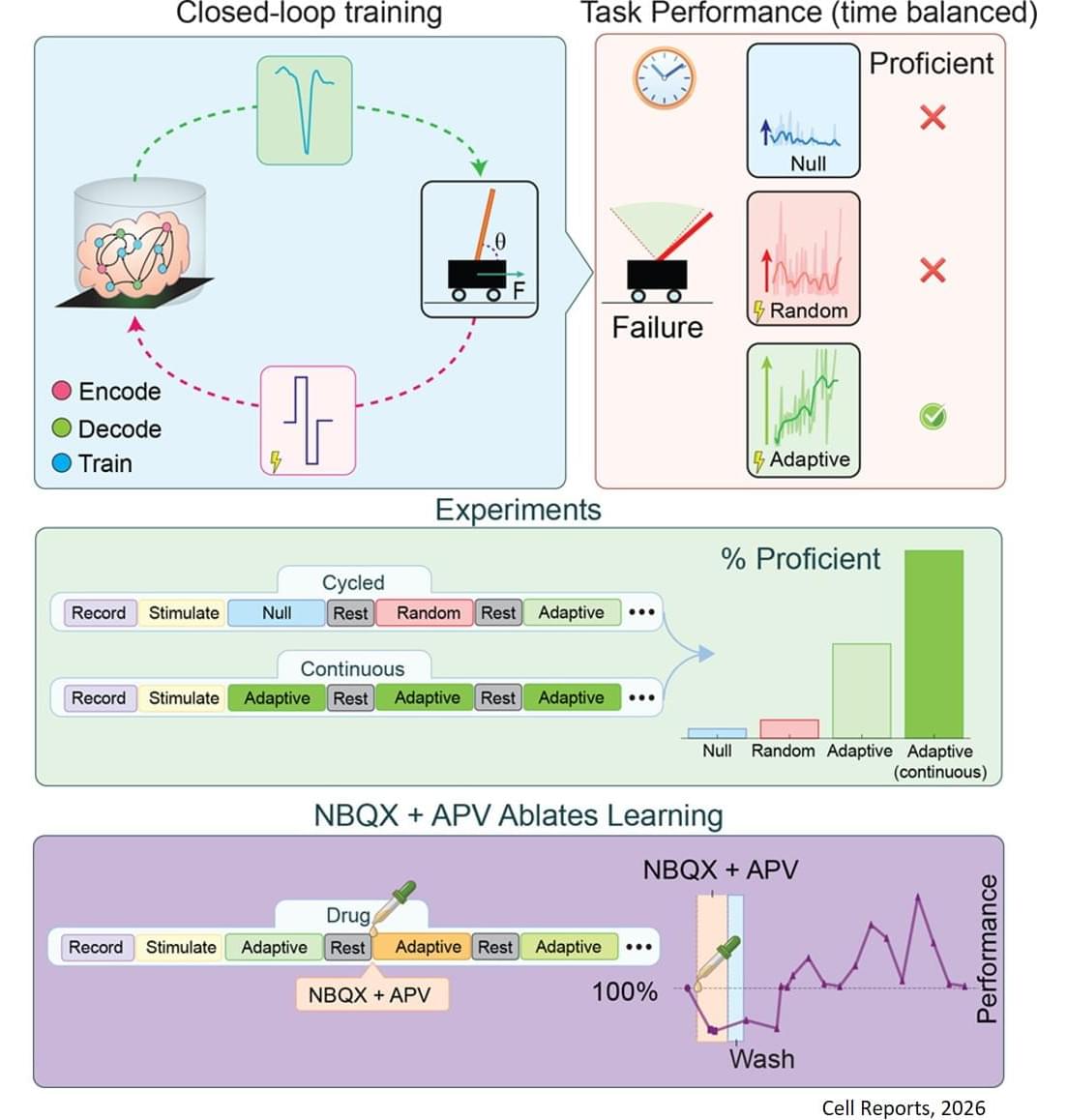
This research is the first rigorous academic demonstration of goal-directed learning in lab-grown brain organoids, and lays the foundation for adaptive organoid computation—exploring the capacity of lab-grown brain organoids to learn and solve tasks.

Using organoids derived from mouse stem cells and an electrophysiology system developed by industry partners Maxwell Biosciences, the researchers use electrical simulation to send and receive information to and from neurons. By using stronger or weaker signals, they communicate to the organoid the angle of the pole, which exists in a virtual environment, as it falls in one direction or the other. As this happens, the researchers observe as the organoid sends back signals of how to apply force to balance the pole, and they apply this force to the virtual pole.

For their pole-balancing experiments, the researchers observe as the organoid controls the pole until it drops, which is called an episode. Then, the pole is reset and a new episode begins. In essence, the organoid plays a video game in which the goal is to balance the pole upright for as long as possible.

The researchers observe the organoid’s progress in five-episode increments. If the organoid keeps the pole upright for longer on average in the past five episodes as compared to the past 20, it receives no training signal since it has been improving. If it does not improve the average time it keeps the pole upright, it receives a training signal.

Training feedback is not given to the organoid while it is balancing the pole—only at the end of an episode. An AI algorithm called reinforcement learning is used to select which neurons within the organoid get the training signal.

The results of this study prove that the reinforcement learning algorithm can guide the brain organoids toward improved performance at the cart-pole task—meaning organoids can learn to balance the pole for longer periods of time.

The researchers adopted a rigorous framework for success to make sure they were observing true improvement, and not just random success, including a threshold for the minimum time an organoid needs to balance the pole to “win” the game.

/* */