Hintze, A., Adami, C. Promoting cooperation in the public goods game using artificial intelligent agents. npj Complex 3, 3 (2026). https://doi.org/10.1038/s44260-025-00065-9
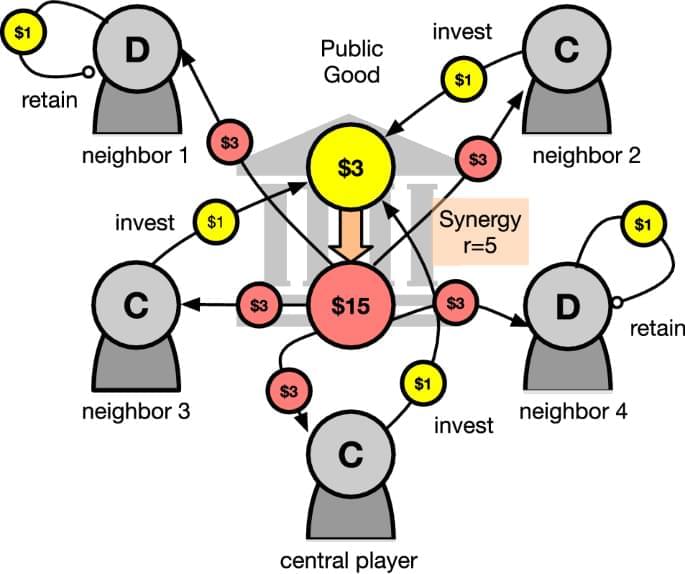
Hintze, A., Adami, C. Promoting cooperation in the public goods game using artificial intelligent agents. npj Complex 3, 3 (2026). https://doi.org/10.1038/s44260-025-00065-9


Scientists have successfully reconstructed videos purely from the brain activity of mice, showing what the mice were seeing, in a new study led by University College London (UCL) researchers. The findings, published in eLife, could help shed light on the intricate workings of how the brain processes visual information and open new avenues for exploring how different species perceive the world.
Over recent years, there has been a growing interest in understanding exactly how the human brain interprets signals from the eye. Images and movies have been played to people in fMRI machines and researchers around the world have tried to decode the brain’s representations of visual information on a pixel level.
Samsung is expanding its 3D gaming ecosystem and HDR10+ pipeline through partnerships with major games like Cyberpunk 2077 and Crimson Desert, alongside new Odyssey monitor technology.

Scientists at the University of Manchester have discovered that placing magnetic films on atomically thin molybdenum disulfide (MoS₂) fundamentally changes how they lose energy, a finding that could bring 2D‑material spintronics a step closer to real devices. The team found that growing a widely used magnetic alloy, permalloy, on ultra‑thin MoS₂ alters the film’s internal crystal structure, changing how and where energy is lost as magnetic spins move. By separating energy losses that occur at the surface of the film from those arising within its internal structure, the researchers provide new design insights for devices that use two‑dimensional (2D) materials to control magnetism more efficiently.
Crucially, the work uses large‑area, manufacturing‑compatible MoS₂, showing that these effects are not confined to laboratory‑scale samples but are relevant for real, scalable spintronic technologies. The study, published in Physical Review Applied, demonstrates that transition‑metal dichalcogenides (TMDs) can alter the fundamental properties of magnetic films. The results highlight the importance of careful comparison with control materials when assessing the impact of 2D layers on magnetic behavior.
Spintronics is an alternative to conventional electronics that uses not only the charge of electrons, but also their spin, to store and process information. This approach underpins emerging technologies for magnetic memory and has potential applications in energy‑efficient, high‑speed computing. A major challenge in spintronics, however, is energy loss: as magnetic spins move, some energy is inevitably dissipated as heat, limiting device speed and efficiency.
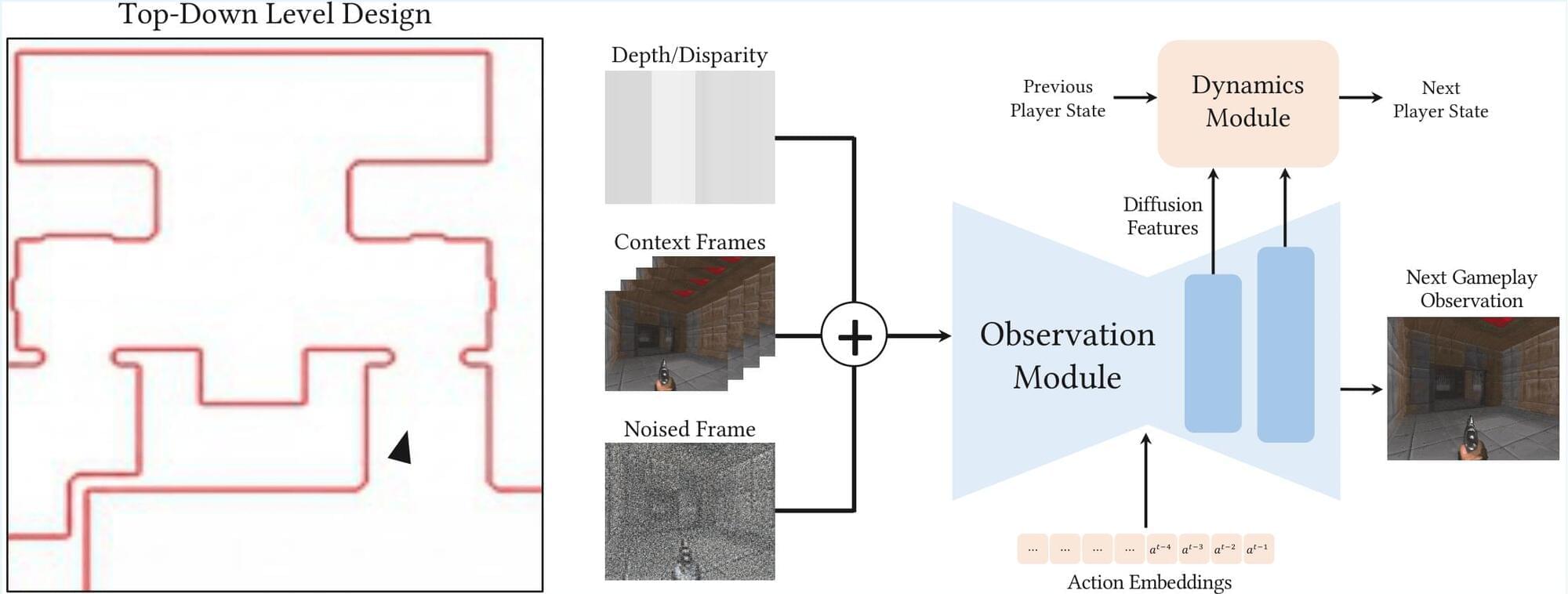
Think of a video game that doesn’t just run on code, but is “dreamed up” in real-time by an AI—much like how AI generates videos or images today. While this technology (known as a Diffusion Game Engine) is incredibly exciting, it has long faced two major hurdles: you couldn’t easily “edit” the world once it was generated, and you couldn’t play in that world with friends because the AI couldn’t keep the environment consistent for everyone at once.
Traditional AI game engines work like “next-frame predictors.” They look at what’s happening right now and guess what the very next split-second should look like. Because they have a short memory (a “context window”), the world often feels like a shifting dream—turn around, and the door you just walked through might have disappeared or changed color. This makes it impossible to design a specific “level” or play with others, as the AI can’t keep a steady map in its head.
In this episode of MythVision, we dive into one of the most intense debates in New Testament textual criticism.
If we have more manuscripts of the New Testament than any other ancient book — why do scholars estimate up to 500,000 textual variants?
Are we actually close to the original text?
Do the Gospels contradict each other?
Do these differences matter — or are they just minor copying mistakes?
In this discussion we explore:
The “embarrassment of riches” argument.
The variant reading “Today I have begotten you” (Luke 3:22)
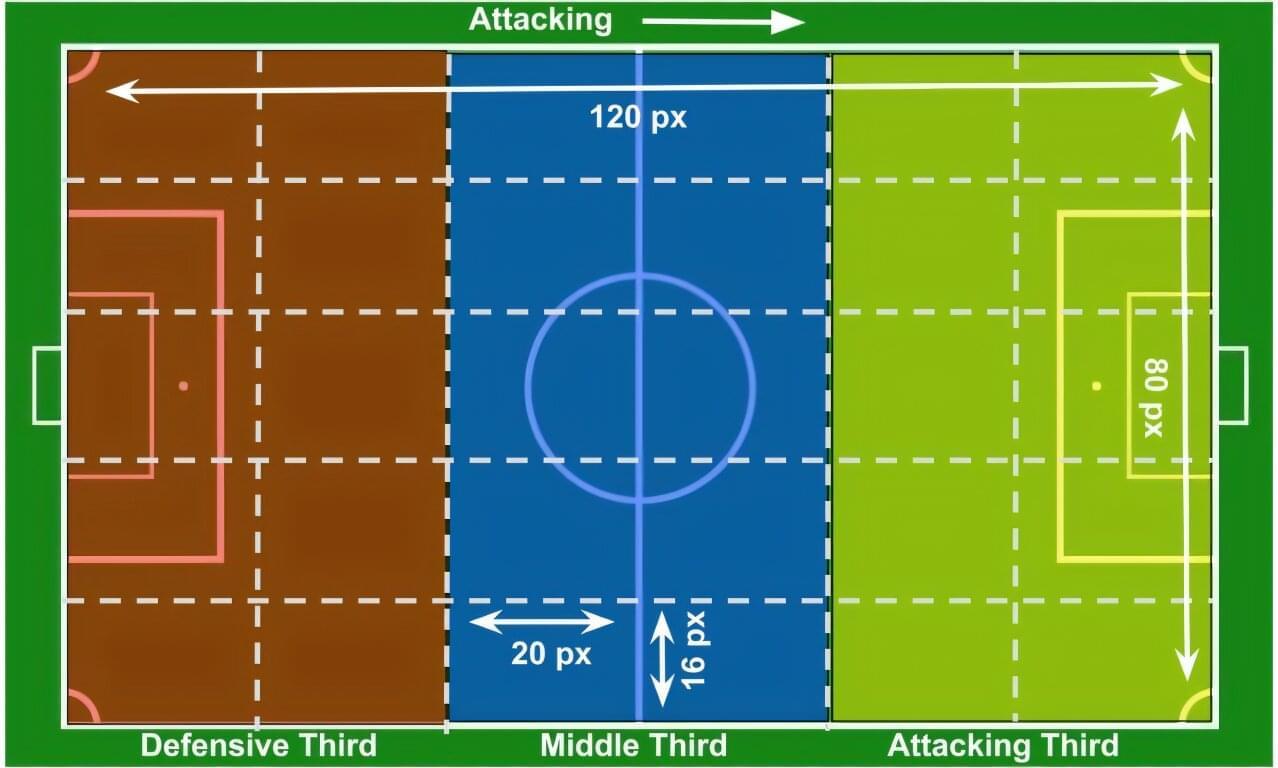
A comprehensive game plan and strategic tactics are critical to winning soccer, but how much does a team’s unpredictability in moving the soccer ball around the pitch matter? In a new article published in PLOS One, an international team of researchers analyzed event data from top-tier association soccer competitions to provide insights into match analysis, player tactics and game strategy.
“Soccer is low-scoring, so a couple of moments can swing a match, and simple statistics like possession or shot counts do not always capture who performed better. Our approach measures how unpredictably and widely a team moves the ball across a match,” says Dr. Sergiy Shelyag, Associate Professor in Applied Mathematics and Data Science at Flinders University.
We found that ‘all zones count’ metric, the one that values every region of the field equally, including rarely used areas, aligns best with winning.

Threat actors are luring unsuspecting users into running trojanized gaming utilities that are distributed via browsers and chat platforms to distribute a remote access trojan (RAT).
“A malicious downloader staged a portable Java runtime and executed a malicious Java archive (JAR) file named jd-gui.jar,” the Microsoft Threat Intelligence team said in a post on X. “This downloader used PowerShell and living-off-the-land binaries (LOLBins) like cmstp.exe for stealthy execution.”
The attack chain is also designed to evade detection by deleting the initial downloader and by configuring Microsoft Defender exclusions for the RAT components.

This is not about a lack of imagination – it’s about the limitations of classical computing and its inability to handle complexity.
The way in which quantum computing can be used to transform game development, and address the limitations imposed by traditional computing, is often misunderstood. People imagine quantum computers running entire games in real time. This is not how it’s used.
Quantum computing won’t power your frame rate or respond to controller input. Instead it exists to solve certain complex problems far more efficiently than conventional machines. The real opportunity is earlier in the process – helping developers explore ideas, pre-render complex systems and check that complex worlds actually work before players ever see them.